



Gifting Made Simple
Give the Gift of ChoiceClick below to purchase a Bramalea City Centre eGift Card that can be used at participating retailers at Bramalea City Centre.Purchase HereHome
Women at Work Italy (1750-1950): Their Economic Thought and Actions
Coles
Loading Inventory...
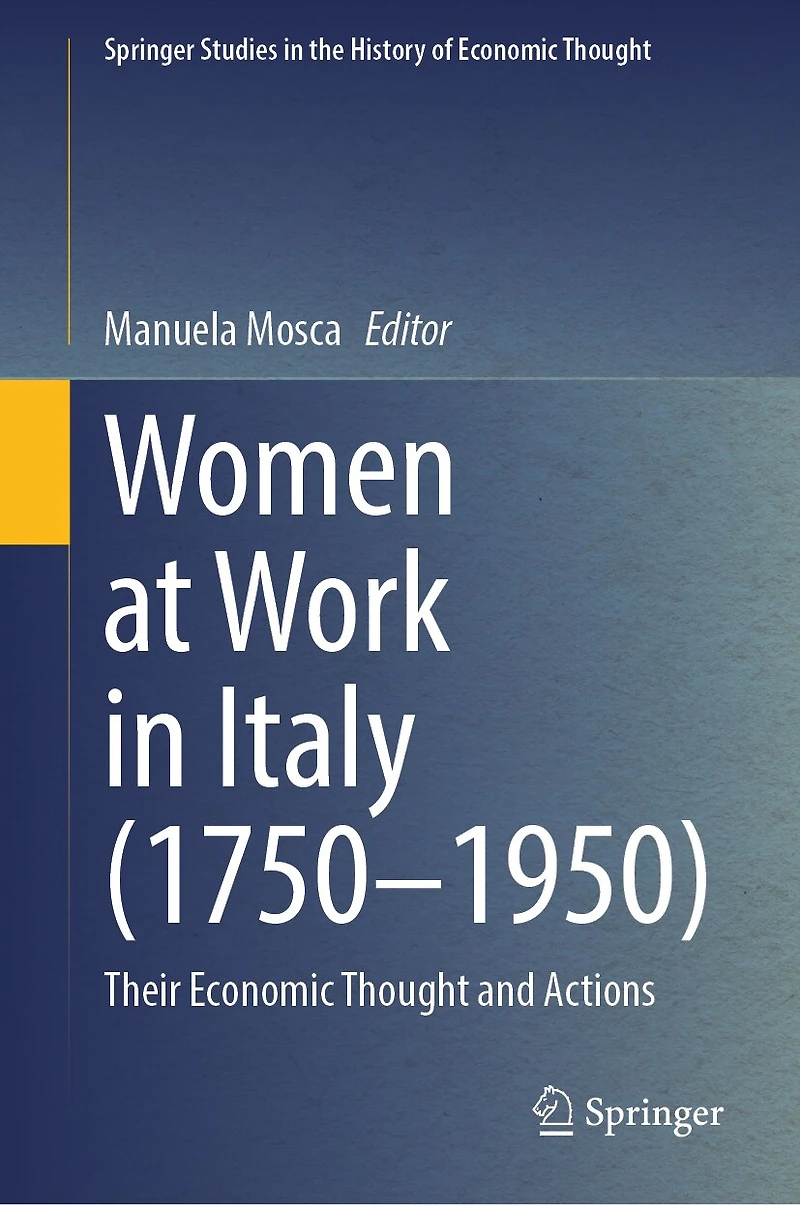
Women at Work Italy (1750-1950): Their Economic Thought and Actions in Brampton, ON
Current price: $291.95
Coles
Women at Work Italy (1750-1950): Their Economic Thought and Actions in Brampton, ON
Current price: $291.95
Loading Inventory...
Size: Hardcover
*Product information and pricing may vary - to confirm current pricing, availability, shipping, and return information please contact Coles. In the event of a pricing discrepancy, the retailer's price will apply.
This book reconstructs the economic thought of Italian women who produced written sources, and of those whose "only" legacy was their actions. The conceptual tools of economic history and the history of economic thought alike are used to reveal the economic ideas of women overlooked by historiography in four fields, namely as entrepreneurs, workers, educators, and politicians. As for the entrepreneurs, the book examines the businesswoman Isabella De Mari Doria (eighteenth century) and other figures active in both the industrialized and the informal sectors in the nineteenth century. The important issues of female employment and wage discrimination based on gender are analyzed, taking into account the debates of the period. In turn, the role of women in economic education in the first half of the twentieth century is reconstructed through the figure of Aurelia Josz, an educational entrepreneur who trained female agricultural entrepreneurs, managers, and teachers, and by exploring the presence of women at universities, both as students of economics and as educators and researchers. Lastly, the book takes a closer look at women involved in politics who dealt with economic issues: the socialist Anna Kuliscioff, the fascist Margherita Grassini Sarfatti, and the 21 women who took part in the Italian Constituent Assembly in June 1946. Given its scope, the book appeals to scholars and students of the history of economic thought, economic history, and women's studies.
This book reconstructs the economic thought of Italian women who produced written sources, and of those whose "only" legacy was their actions. The conceptual tools of economic history and the history of economic thought alike are used to reveal the economic ideas of women overlooked by historiography in four fields, namely as entrepreneurs, workers, educators, and politicians. As for the entrepreneurs, the book examines the businesswoman Isabella De Mari Doria (eighteenth century) and other figures active in both the industrialized and the informal sectors in the nineteenth century. The important issues of female employment and wage discrimination based on gender are analyzed, taking into account the debates of the period. In turn, the role of women in economic education in the first half of the twentieth century is reconstructed through the figure of Aurelia Josz, an educational entrepreneur who trained female agricultural entrepreneurs, managers, and teachers, and by exploring the presence of women at universities, both as students of economics and as educators and researchers. Lastly, the book takes a closer look at women involved in politics who dealt with economic issues: the socialist Anna Kuliscioff, the fascist Margherita Grassini Sarfatti, and the 21 women who took part in the Italian Constituent Assembly in June 1946. Given its scope, the book appeals to scholars and students of the history of economic thought, economic history, and women's studies.
You May Also Like













Find at Bramalea City Centre in Brampton, ON
Visit at Bramalea City Centre in Brampton, ON