



Gifting Made Simple
Give the Gift of ChoiceClick below to purchase a Bramalea City Centre eGift Card that can be used at participating retailers at Bramalea City Centre.Purchase HereHome
Webb's Cosmos: Images and Discoveries from the James Webb Space Telescope
Coles
Loading Inventory...
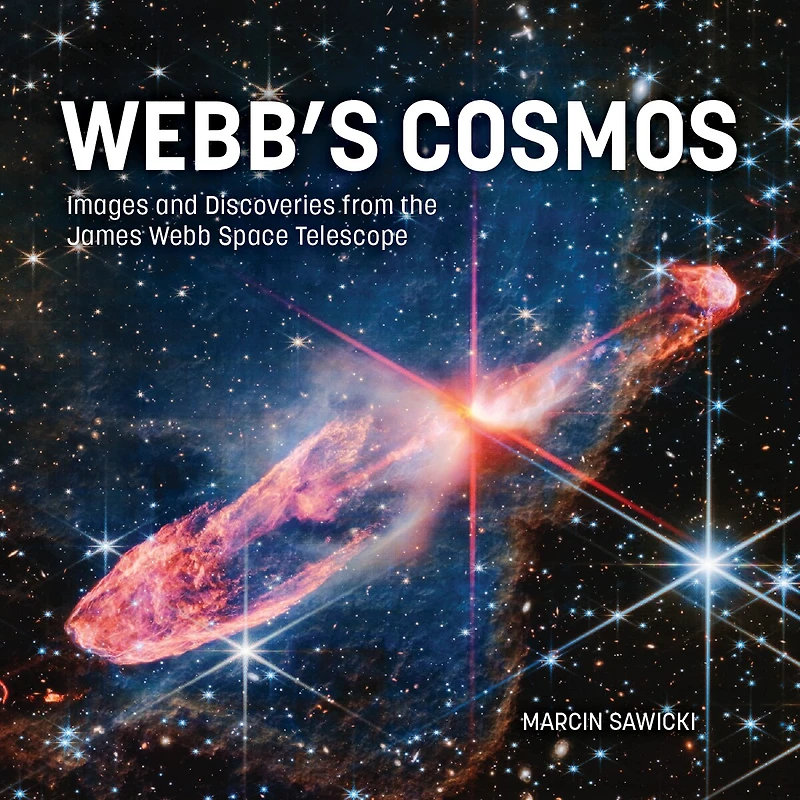
Webb's Cosmos: Images and Discoveries from the James Webb Space Telescope in Brampton, ON
Current price: $49.95
Coles
Webb's Cosmos: Images and Discoveries from the James Webb Space Telescope in Brampton, ON
Current price: $49.95
Loading Inventory...
Size: Hardcover
*Product information and pricing may vary - to confirm current pricing, availability, shipping, and return information please contact Coles. In the event of a pricing discrepancy, the retailer's price will apply.
The James Webb Space Telescope took three decades from conception to launch but the wait has been worth it. The results of the most anticipated telescope of the 21st century have been nothing short of spectacular. The idea for the James Webb Space Telescope (JWST) was first raised in 1989, well before the enormously successful Hubble Space Telescope was launched. The infrared telescope with a mirror larger than four meters was launched on Christmas Day 2021. In the summer of 2022, NASA released the first scientific images from Webb to the amazement of more than 300,000 viewers who watched the event live, and hundreds of millions around the world who have viewed Webb's images since then. Webb's Cosmos is written in the spirit of Terry Dickinson's enormously popular book Hubble's Universe , which has sold over 100,000 copies. This book contains both the classic Webb images that have already become famous and the latest images from the frontiers of science taken by Webb, some of which appear here for the first time. Author Marcin Sawicki is a professional astronomer who is an active user of Webb's images and data. He brings a wealth of knowledge and personal experience to the book and explains the science behind the images in accurate but accessible and engaging language. Webb's Cosmos first provides the needed historical and scientific background to understand how the telescope works and what it can do. The book then presents a curated selection of some 200 photographs with descriptive captions that narrate these images of the distant universe. Chapters include: Stars and gas clouds Galaxies both near and far Planets and our solar system Exoplanets.
The James Webb Space Telescope took three decades from conception to launch but the wait has been worth it. The results of the most anticipated telescope of the 21st century have been nothing short of spectacular. The idea for the James Webb Space Telescope (JWST) was first raised in 1989, well before the enormously successful Hubble Space Telescope was launched. The infrared telescope with a mirror larger than four meters was launched on Christmas Day 2021. In the summer of 2022, NASA released the first scientific images from Webb to the amazement of more than 300,000 viewers who watched the event live, and hundreds of millions around the world who have viewed Webb's images since then. Webb's Cosmos is written in the spirit of Terry Dickinson's enormously popular book Hubble's Universe , which has sold over 100,000 copies. This book contains both the classic Webb images that have already become famous and the latest images from the frontiers of science taken by Webb, some of which appear here for the first time. Author Marcin Sawicki is a professional astronomer who is an active user of Webb's images and data. He brings a wealth of knowledge and personal experience to the book and explains the science behind the images in accurate but accessible and engaging language. Webb's Cosmos first provides the needed historical and scientific background to understand how the telescope works and what it can do. The book then presents a curated selection of some 200 photographs with descriptive captions that narrate these images of the distant universe. Chapters include: Stars and gas clouds Galaxies both near and far Planets and our solar system Exoplanets.
You May Also Like










Find at Bramalea City Centre in Brampton, ON
Visit at Bramalea City Centre in Brampton, ON