



Gifting Made Simple
Give the Gift of ChoiceClick below to purchase a Bramalea City Centre eGift Card that can be used at participating retailers at Bramalea City Centre.Purchase HereHome
Vibration Behavior Ceramic-Matrix Composites
Coles
Loading Inventory...
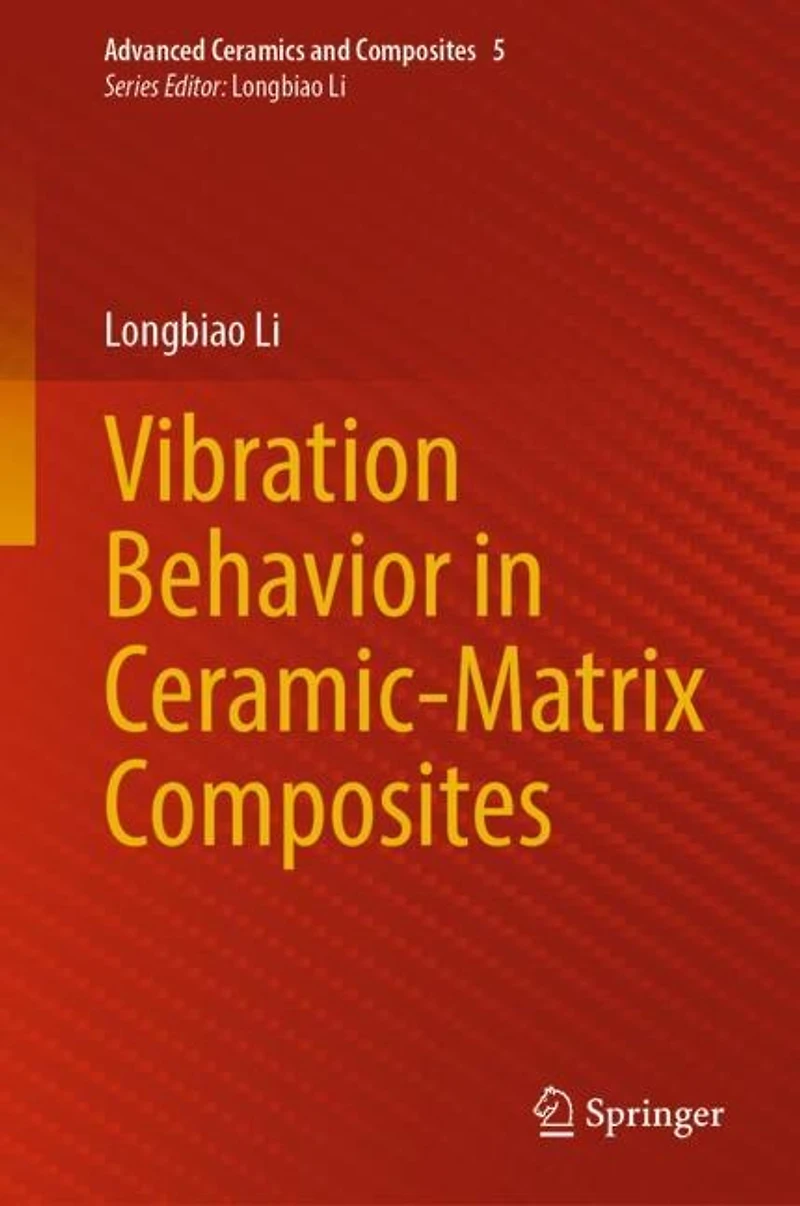
Vibration Behavior Ceramic-Matrix Composites in Brampton, ON
Current price: $291.95
Coles
Vibration Behavior Ceramic-Matrix Composites in Brampton, ON
Current price: $291.95
Loading Inventory...
Size: Hardcover
*Product information and pricing may vary - to confirm current pricing, availability, shipping, and return information please contact Coles. In the event of a pricing discrepancy, the retailer's price will apply.
This book focuses on the vibration behavior of ceramic-matrix composites (CMCs), including (1) vibration natural frequency of intact and damaged CMCs; (2) vibration damping of CMCs considering fibers debonding and fracture; (3) temperature-dependent vibration damping of CMCs; (4) time-dependent vibration damping of CMCs; and (5) cyclic-dependent vibration damping of CMCs. Ceramic-matrix composites (CMCs) possess low material density (i.e., only 1/4 or 1/3 of high-temperature alloy) and high-temperature resistance, which can reduce cooling air and improve structure efficiency. Understanding the failure mechanisms and internal damage evolution represents an important step to ensure reliability and safety of CMCs. Relationships between microstructure, damage mechanisms, vibration natural frequency, and vibration damping of CMCs are established. This book helps the material scientists and engineering designers to understand and master the vibration behavior of CMCs at room and elevated temperatures.
This book focuses on the vibration behavior of ceramic-matrix composites (CMCs), including (1) vibration natural frequency of intact and damaged CMCs; (2) vibration damping of CMCs considering fibers debonding and fracture; (3) temperature-dependent vibration damping of CMCs; (4) time-dependent vibration damping of CMCs; and (5) cyclic-dependent vibration damping of CMCs. Ceramic-matrix composites (CMCs) possess low material density (i.e., only 1/4 or 1/3 of high-temperature alloy) and high-temperature resistance, which can reduce cooling air and improve structure efficiency. Understanding the failure mechanisms and internal damage evolution represents an important step to ensure reliability and safety of CMCs. Relationships between microstructure, damage mechanisms, vibration natural frequency, and vibration damping of CMCs are established. This book helps the material scientists and engineering designers to understand and master the vibration behavior of CMCs at room and elevated temperatures.
You May Also Like











Find at Bramalea City Centre in Brampton, ON
Visit at Bramalea City Centre in Brampton, ON