



Gifting Made Simple
Give the Gift of ChoiceClick below to purchase a Bramalea City Centre eGift Card that can be used at participating retailers at Bramalea City Centre.Purchase HereHome
The Geometry of Multivariate Statistics
Coles
Loading Inventory...
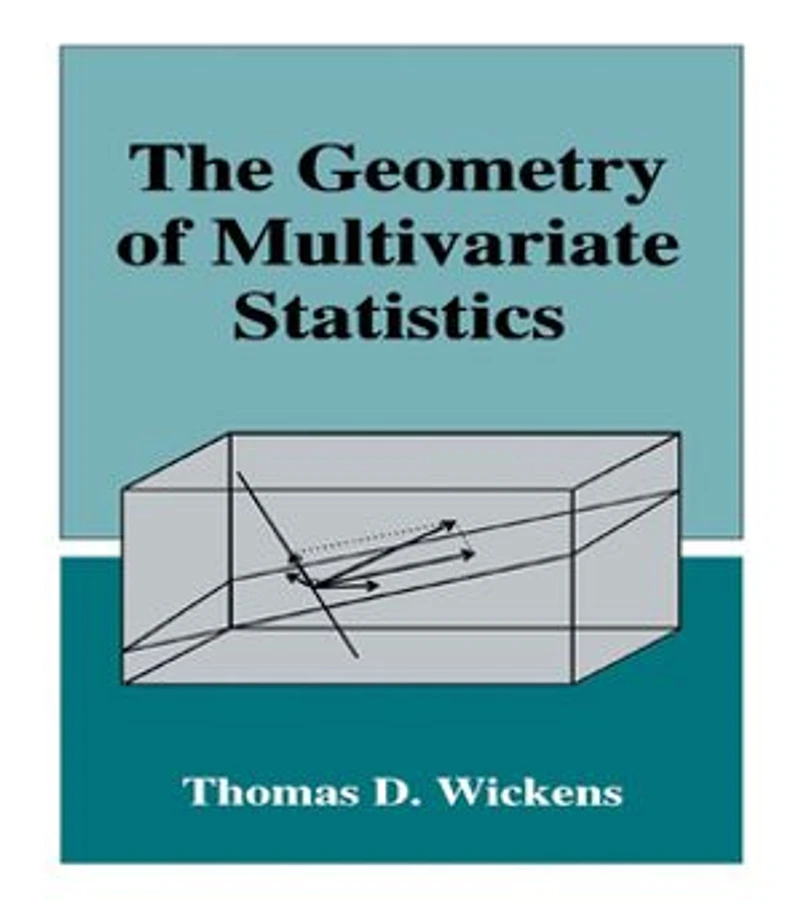
The Geometry of Multivariate Statistics in Brampton, ON
Current price: $115.35
Coles
The Geometry of Multivariate Statistics in Brampton, ON
Current price: $115.35
Loading Inventory...
Size: Kobo eBook
*Product information and pricing may vary - to confirm current pricing, availability, shipping, and return information please contact Coles. In the event of a pricing discrepancy, the retailer's price will apply.
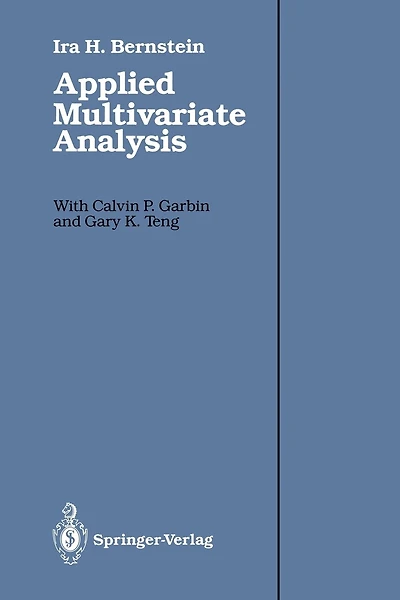
A traditional approach to developing multivariate statistical theory is algebraic. Sets of observations are represented by matrices, linear combinations are formed from these matrices by multiplying them by coefficient matrices, and useful statistics are found by imposing various criteria of optimization on these combinations. Matrix algebra is the vehicle for these calculations. A second approach is computational. Since many users find that they do not need to know the mathematical basis of the techniques as long as they have a way to transform data into results, the computation can be done by a package of computer programs that somebody else has written. An approach from this perspective emphasizes how the computer packages are used, and is usually coupled with rules that allow one to extract the most important numbers from the output and interpret them. Useful as both approaches are--particularly when combined--they can overlook an important aspect of multivariate analysis. To apply it correctly, one needs a way to conceptualize the multivariate relationships that exist among variables.
This book is designed to help the reader develop a way of thinking about multivariate statistics, as well as to understand in a broader and more intuitive sense what the procedures do and how their results are interpreted. Presenting important procedures of multivariate statistical theory geometrically, the author hopes that this emphasis on the geometry will give the reader a coherent picture into which all the multivariate techniques fit.
A traditional approach to developing multivariate statistical theory is algebraic. Sets of observations are represented by matrices, linear combinations are formed from these matrices by multiplying them by coefficient matrices, and useful statistics are found by imposing various criteria of optimization on these combinations. Matrix algebra is the vehicle for these calculations. A second approach is computational. Since many users find that they do not need to know the mathematical basis of the techniques as long as they have a way to transform data into results, the computation can be done by a package of computer programs that somebody else has written. An approach from this perspective emphasizes how the computer packages are used, and is usually coupled with rules that allow one to extract the most important numbers from the output and interpret them. Useful as both approaches are--particularly when combined--they can overlook an important aspect of multivariate analysis. To apply it correctly, one needs a way to conceptualize the multivariate relationships that exist among variables.
This book is designed to help the reader develop a way of thinking about multivariate statistics, as well as to understand in a broader and more intuitive sense what the procedures do and how their results are interpreted. Presenting important procedures of multivariate statistical theory geometrically, the author hopes that this emphasis on the geometry will give the reader a coherent picture into which all the multivariate techniques fit.









Find at Bramalea City Centre in Brampton, ON
Visit at Bramalea City Centre in Brampton, ON