



Gifting Made Simple
Give the Gift of ChoiceClick below to purchase a Bramalea City Centre eGift Card that can be used at participating retailers at Bramalea City Centre.Purchase HereHome
The Galactic and Extragalactic Background Radiation: Proceedings of the 139th Symposium of the International Astronomical Union Held in Heidelberg, F.R.G., June 12-16, 1989
Coles
Loading Inventory...
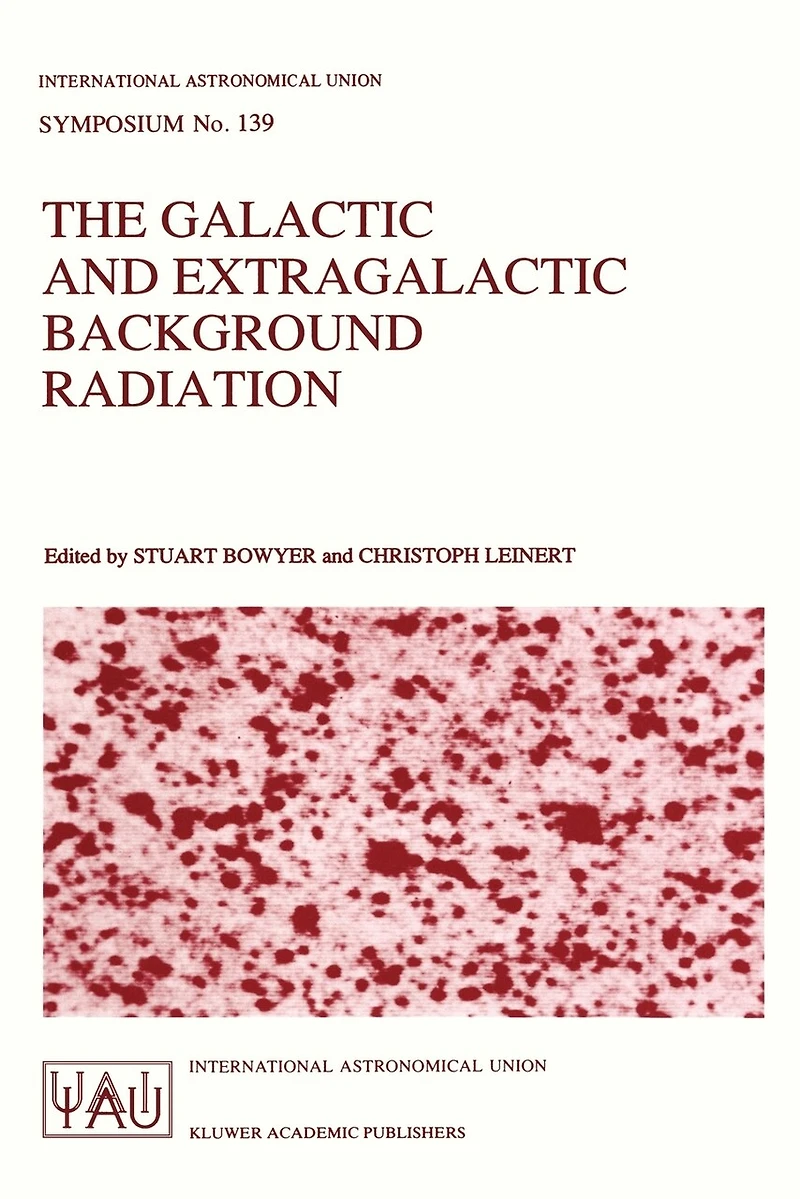
The Galactic and Extragalactic Background Radiation: Proceedings of the 139th Symposium of the International Astronomical Union Held in Heidelberg, F.R.G., June 12-16, 1989 in Brampton, ON
Current price: $142.95
Coles
The Galactic and Extragalactic Background Radiation: Proceedings of the 139th Symposium of the International Astronomical Union Held in Heidelberg, F.R.G., June 12-16, 1989 in Brampton, ON
Current price: $142.95
Loading Inventory...
Size: Paperback
*Product information and pricing may vary - to confirm current pricing, availability, shipping, and return information please contact Coles. In the event of a pricing discrepancy, the retailer's price will apply.
The galactic and extragalactic background radiation components are of major importance in astrophysical studies of a variety of problems related to galactic structure, interstellar matter, the distribution and evolution of galaxies and intergalactic matter, and cosmology. The back- ground radiation is a unique source of information in cases where the source is of a truly diffuse nature, as with scattering and emission by interstellar dust and gas, or where the discrete emission sources are so faint (e. g., very distant galaxies) that they can be observed only by their integrated emission. The galactic and extragalactic background must be discussed together because they are observationally entangled and their proper separation requires a knowledge of both components. The above points are equally valid for the entire electromag- netic spectrum, from gamma rays to long radio waves. Thus, the study of the galactic and extragalactic background radiation is interdisciplinary in its character, and a multi wavelength approach would appear to be dictated by the nature of the topic. The proper separation of the galactic and extragalactic background components requires a knowledge of both. In addition, the foreground components, i. e., zodiacal light, airglow, and atmospheric scattered light, must be treated carefully.
The galactic and extragalactic background radiation components are of major importance in astrophysical studies of a variety of problems related to galactic structure, interstellar matter, the distribution and evolution of galaxies and intergalactic matter, and cosmology. The back- ground radiation is a unique source of information in cases where the source is of a truly diffuse nature, as with scattering and emission by interstellar dust and gas, or where the discrete emission sources are so faint (e. g., very distant galaxies) that they can be observed only by their integrated emission. The galactic and extragalactic background must be discussed together because they are observationally entangled and their proper separation requires a knowledge of both components. The above points are equally valid for the entire electromag- netic spectrum, from gamma rays to long radio waves. Thus, the study of the galactic and extragalactic background radiation is interdisciplinary in its character, and a multi wavelength approach would appear to be dictated by the nature of the topic. The proper separation of the galactic and extragalactic background components requires a knowledge of both. In addition, the foreground components, i. e., zodiacal light, airglow, and atmospheric scattered light, must be treated carefully.
You May Also Like











Find at Bramalea City Centre in Brampton, ON
Visit at Bramalea City Centre in Brampton, ON