



Gifting Made Simple
Give the Gift of ChoiceClick below to purchase a Bramalea City Centre eGift Card that can be used at participating retailers at Bramalea City Centre.Purchase HereHome
Planetary Giant Impacts: Simulating Collisions And Their Consequences
Coles
Loading Inventory...
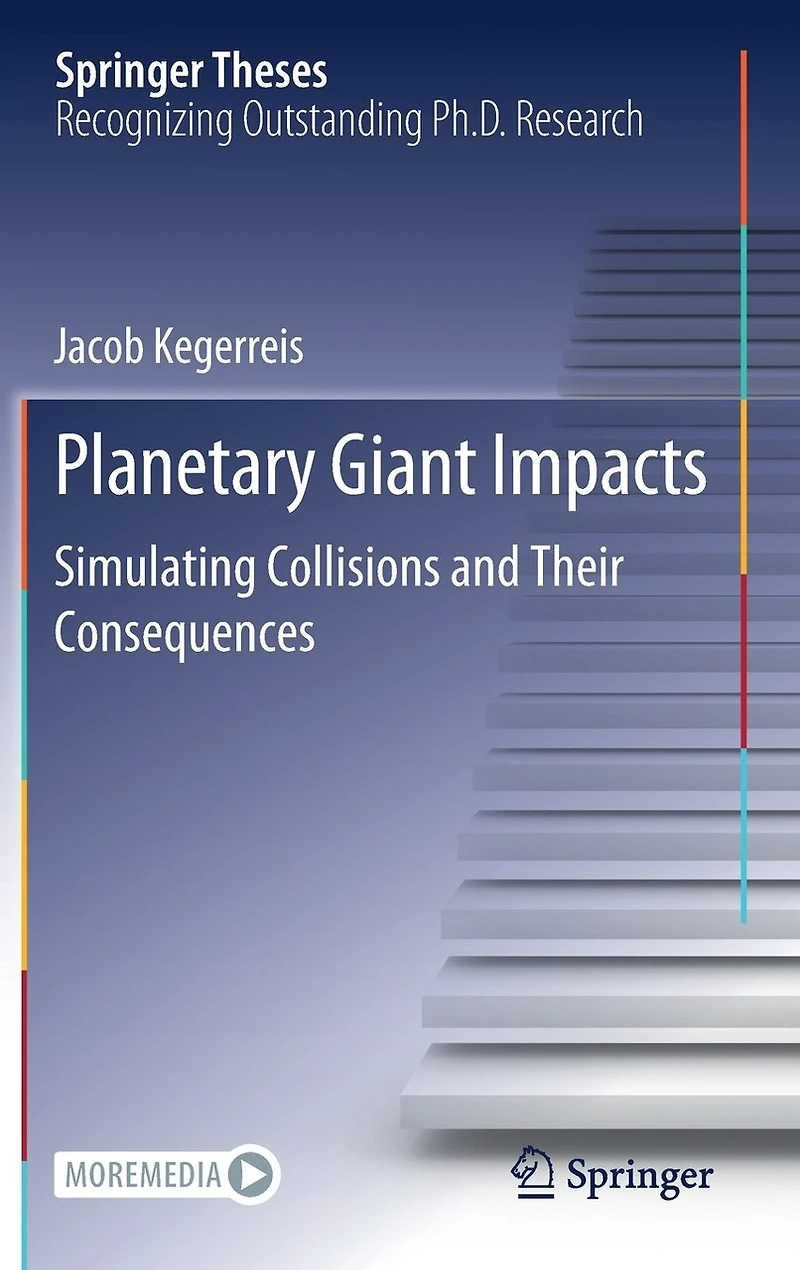
Planetary Giant Impacts: Simulating Collisions And Their Consequences in Brampton, ON
Current price: $160.95
Coles
Planetary Giant Impacts: Simulating Collisions And Their Consequences in Brampton, ON
Current price: $160.95
Loading Inventory...
Size: Hardcover
*Product information and pricing may vary - to confirm current pricing, availability, shipping, and return information please contact Coles. In the event of a pricing discrepancy, the retailer's price will apply.
Based on 3D smoothed particle hydrodynamics simulations performed with unprecedented high resolution, this book examines the giant impacts that dominate many planets' late accretion and evolution. The numerical methods developed are now publicly available, greatly facilitating future studies of planetary impacts in our solar system and exoplanetary systems. The book focuses on four main topics: (1) The development of new methods to construct initial conditions as well as a hydrodynamical simulation code to evolve them, using 1000 times more simulation particles than the previous standard. (2) The numerical convergence of giant impact simulations -- standard-resolution simulations fail to converge on even bulk properties like the post-impact rotation period. (3) The collision thought to have knocked over the planet Uranus causing it to spin on its side. (4) The erosion of atmospheres by giant impacts onto terrestrial planets, and the first full 3D simulations ofcollisions in this regime.
Based on 3D smoothed particle hydrodynamics simulations performed with unprecedented high resolution, this book examines the giant impacts that dominate many planets' late accretion and evolution. The numerical methods developed are now publicly available, greatly facilitating future studies of planetary impacts in our solar system and exoplanetary systems. The book focuses on four main topics: (1) The development of new methods to construct initial conditions as well as a hydrodynamical simulation code to evolve them, using 1000 times more simulation particles than the previous standard. (2) The numerical convergence of giant impact simulations -- standard-resolution simulations fail to converge on even bulk properties like the post-impact rotation period. (3) The collision thought to have knocked over the planet Uranus causing it to spin on its side. (4) The erosion of atmospheres by giant impacts onto terrestrial planets, and the first full 3D simulations ofcollisions in this regime.
You May Also Like













Find at Bramalea City Centre in Brampton, ON
Visit at Bramalea City Centre in Brampton, ON