



Gifting Made Simple
Give the Gift of ChoiceClick below to purchase a Bramalea City Centre eGift Card that can be used at participating retailers at Bramalea City Centre.Purchase HereHome
Noether's Theorem and Symmetry
Coles
Loading Inventory...
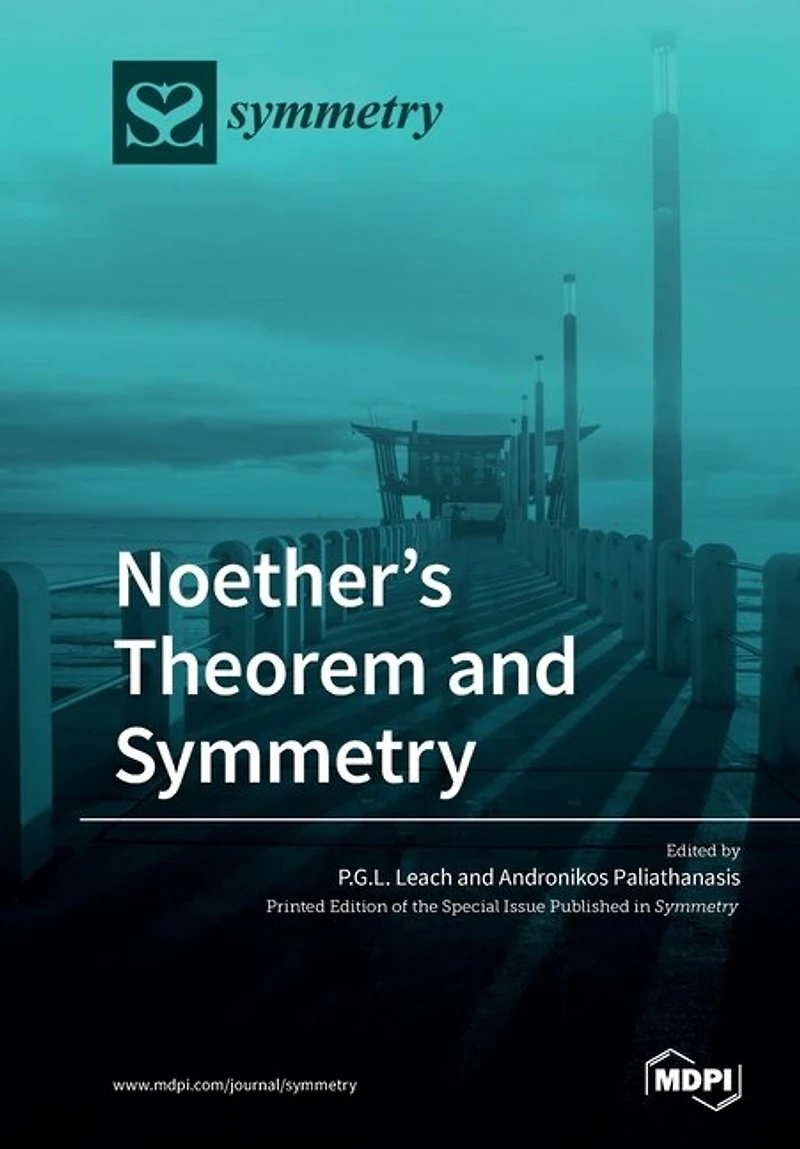
Noether's Theorem and Symmetry in Brampton, ON
Current price: $72.40
Coles
Noether's Theorem and Symmetry in Brampton, ON
Current price: $72.40
Loading Inventory...
Size: Paperback
*Product information and pricing may vary - to confirm current pricing, availability, shipping, and return information please contact Coles. In the event of a pricing discrepancy, the retailer's price will apply.
In Noether's original presentation of her celebrated theorem of 1918, allowances were made for the dependence of the coefficient functions of the differential operator which generated the infinitesimal transformation of the Action Integral upon the derivatives of the dependent variable(s), the so-called generalized, or dynamical, symmetries. A similar allowance is to be found in the variables of the boundary function, often termed a gauge function by those who have not read the original paper. This generality was lost after texts such as those of Courant and Hilbert or Lovelock and Rund confined attention to only point transformations. In recent decades, this diminution of the power of Noether's Theorem has been partly countered, in particular, in the review of Sarlet and Cantrijn. In this Special Issue, we emphasize the generality of Noether's Theorem in its original form and explore the applicability of even more general coefficient functions by allowing for nonlocal terms. We also look at the application of these more general symmetries to problems in which parameters or parametric functions have a more general dependence upon the independent variables.
In Noether's original presentation of her celebrated theorem of 1918, allowances were made for the dependence of the coefficient functions of the differential operator which generated the infinitesimal transformation of the Action Integral upon the derivatives of the dependent variable(s), the so-called generalized, or dynamical, symmetries. A similar allowance is to be found in the variables of the boundary function, often termed a gauge function by those who have not read the original paper. This generality was lost after texts such as those of Courant and Hilbert or Lovelock and Rund confined attention to only point transformations. In recent decades, this diminution of the power of Noether's Theorem has been partly countered, in particular, in the review of Sarlet and Cantrijn. In this Special Issue, we emphasize the generality of Noether's Theorem in its original form and explore the applicability of even more general coefficient functions by allowing for nonlocal terms. We also look at the application of these more general symmetries to problems in which parameters or parametric functions have a more general dependence upon the independent variables.
You May Also Like











Find at Bramalea City Centre in Brampton, ON
Visit at Bramalea City Centre in Brampton, ON