



Gifting Made Simple
Give the Gift of ChoiceClick below to purchase a Bramalea City Centre eGift Card that can be used at participating retailers at Bramalea City Centre.Purchase HereHome
Neuro-Fuzzy Architectures and Hybrid Learning
Coles
Loading Inventory...
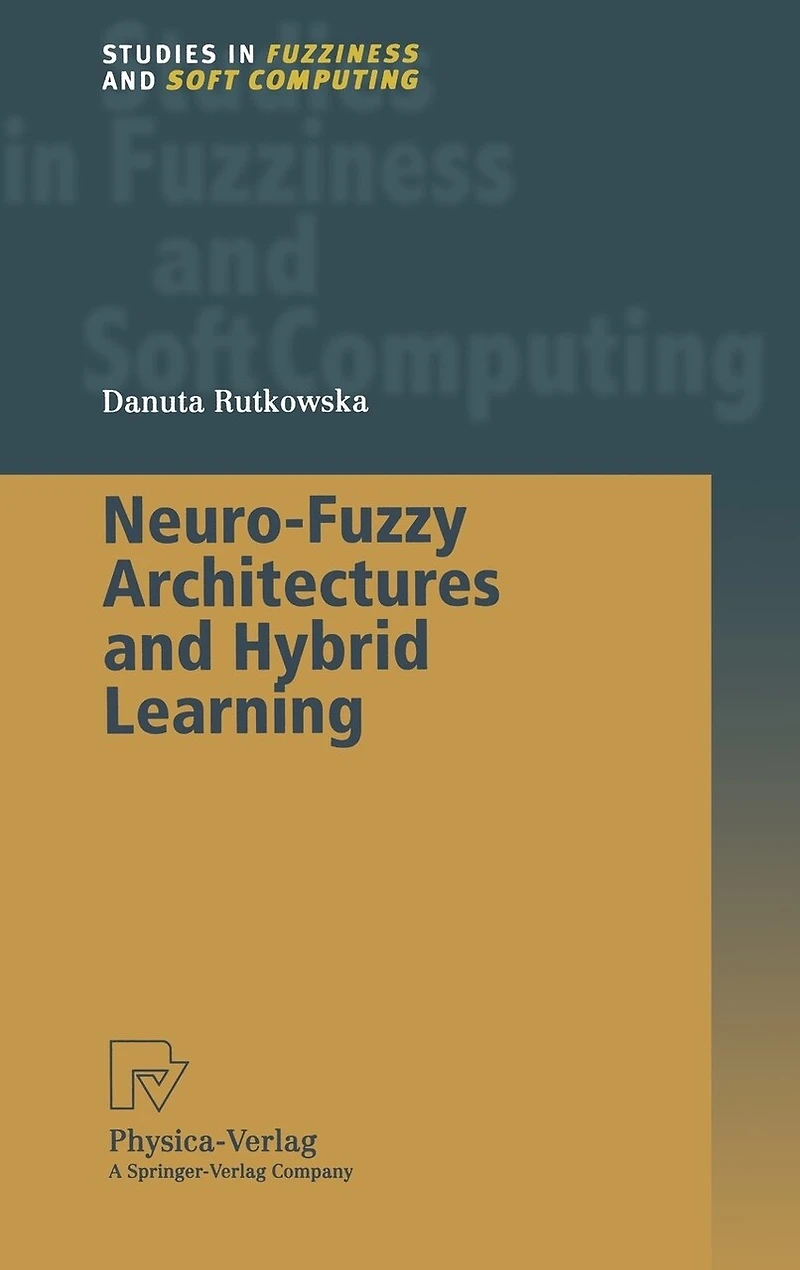

Neuro-Fuzzy Architectures and Hybrid Learning in Brampton, ON
Current price: $248.50
Coles
Neuro-Fuzzy Architectures and Hybrid Learning in Brampton, ON
Current price: $248.50
Loading Inventory...
Size: Hardcover
*Product information and pricing may vary - to confirm current pricing, availability, shipping, and return information please contact Coles. In the event of a pricing discrepancy, the retailer's price will apply.
The advent of the computer age has set in motion a profound shift in our perception of science -its structure, its aims and its evolution. Traditionally, the principal domains of science were, and are, considered to be mathe matics, physics, chemistry, biology, astronomy and related disciplines. But today, and to an increasing extent, scientific progress is being driven by a quest for machine intelligence - for systems which possess a high MIQ (Machine IQ) and can perform a wide variety of physical and mental tasks with minimal human intervention. The role model for intelligent systems is the human mind. The influ ence of the human mind as a role model is clearly visible in the methodolo gies which have emerged, mainly during the past two decades, for the con ception, design and utilization of intelligent systems. At the center of these methodologies are fuzzy logic (FL); neurocomputing (NC); evolutionary computing (EC); probabilistic computing (PC); chaotic computing (CC); and machine learning (ML). Collectively, these methodologies constitute what is called soft computing (SC). In this perspective, soft computing is basically a coalition of methodologies which collectively provide a body of concepts and techniques for automation of reasoning and decision-making in an environment of imprecision, uncertainty and partial truth.
The advent of the computer age has set in motion a profound shift in our perception of science -its structure, its aims and its evolution. Traditionally, the principal domains of science were, and are, considered to be mathe matics, physics, chemistry, biology, astronomy and related disciplines. But today, and to an increasing extent, scientific progress is being driven by a quest for machine intelligence - for systems which possess a high MIQ (Machine IQ) and can perform a wide variety of physical and mental tasks with minimal human intervention. The role model for intelligent systems is the human mind. The influ ence of the human mind as a role model is clearly visible in the methodolo gies which have emerged, mainly during the past two decades, for the con ception, design and utilization of intelligent systems. At the center of these methodologies are fuzzy logic (FL); neurocomputing (NC); evolutionary computing (EC); probabilistic computing (PC); chaotic computing (CC); and machine learning (ML). Collectively, these methodologies constitute what is called soft computing (SC). In this perspective, soft computing is basically a coalition of methodologies which collectively provide a body of concepts and techniques for automation of reasoning and decision-making in an environment of imprecision, uncertainty and partial truth.
You May Also Like
















Find at Bramalea City Centre in Brampton, ON
Visit at Bramalea City Centre in Brampton, ON