



Gifting Made Simple
Give the Gift of ChoiceClick below to purchase a Bramalea City Centre eGift Card that can be used at participating retailers at Bramalea City Centre.Purchase HereHome
Monumentality and the Roman Empire: Architecture in the Antonine Age
Coles
Loading Inventory...
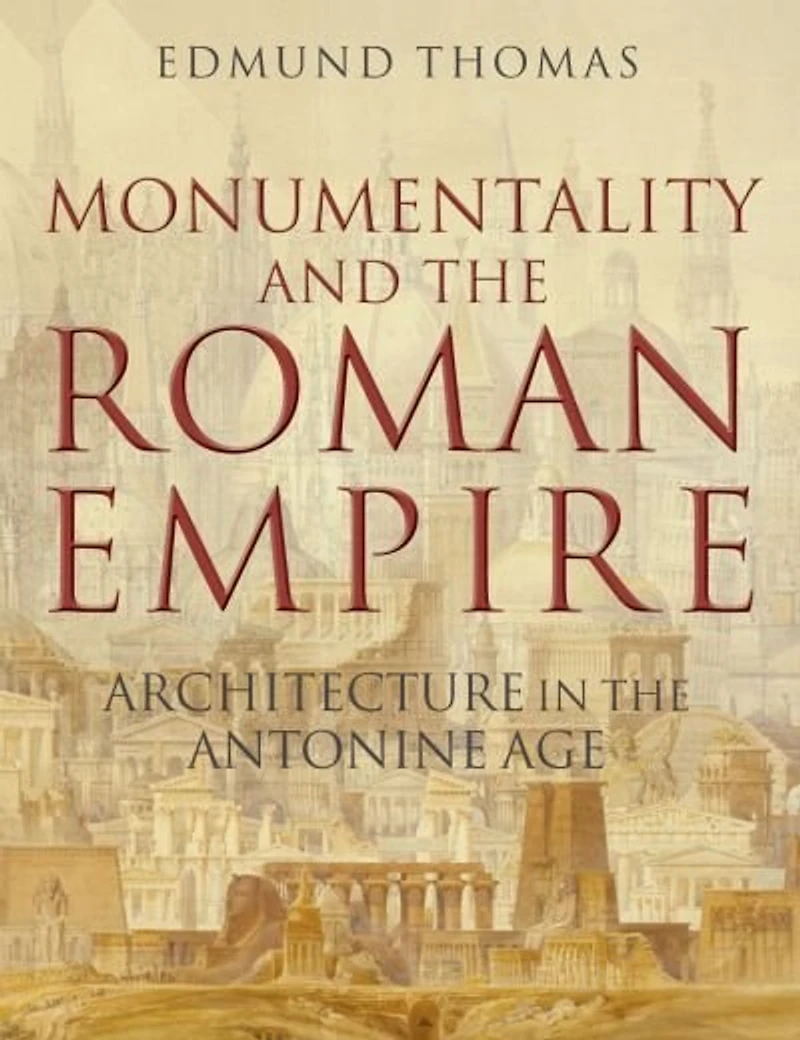
Monumentality and the Roman Empire: Architecture in the Antonine Age in Brampton, ON
Current price: $787.50
Coles
Monumentality and the Roman Empire: Architecture in the Antonine Age in Brampton, ON
Current price: $787.50
Loading Inventory...
Size: Hardcover
*Product information and pricing may vary - to confirm current pricing, availability, shipping, and return information please contact Coles. In the event of a pricing discrepancy, the retailer's price will apply.
The quality of ''monumentality'' is attributed to the buildings of few historical epochs or cultures more frequently or consistently than to those of the Roman Empire. It is this quality that has helped to make them enduring models for builders of later periods. This extensively illustrated
book, the first full-length study of the concept of monumentality in Classical Antiquity, asks what it is that the notion encompasses and how significant it was for the Romans themselves in moulding their individual or collective aspirations and identities. Although no single word existed in
antiquity for the qualities that modern authors regard as making up that term, its Latin derivation - from monumentum, ''a monument'' - attests plainly to the presence of the concept in the mentalities of ancient Romans, and the development of that notion through the Roman era laid the foundation for
the classical ideal of monumentality, which reached a height in early modern Europe. This book is also the first full-length study of architecture in the Antonine Age - when it is generally agreed the Roman Empire was at its height. By exploring the public architecture of Roman Italy and both
Western and Eastern provinces of the Roman Empire from the point of view of the benefactors who funded such buildings, the architects who designed them, and the public who used and experienced them, Edmund Thomas analyses the reasons why Roman builders sought to construct monumental buildings and
uncovers the close link between architectural monumentality and the identity and ideology of the Roman Empire itself.
The quality of ''monumentality'' is attributed to the buildings of few historical epochs or cultures more frequently or consistently than to those of the Roman Empire. It is this quality that has helped to make them enduring models for builders of later periods. This extensively illustrated
book, the first full-length study of the concept of monumentality in Classical Antiquity, asks what it is that the notion encompasses and how significant it was for the Romans themselves in moulding their individual or collective aspirations and identities. Although no single word existed in
antiquity for the qualities that modern authors regard as making up that term, its Latin derivation - from monumentum, ''a monument'' - attests plainly to the presence of the concept in the mentalities of ancient Romans, and the development of that notion through the Roman era laid the foundation for
the classical ideal of monumentality, which reached a height in early modern Europe. This book is also the first full-length study of architecture in the Antonine Age - when it is generally agreed the Roman Empire was at its height. By exploring the public architecture of Roman Italy and both
Western and Eastern provinces of the Roman Empire from the point of view of the benefactors who funded such buildings, the architects who designed them, and the public who used and experienced them, Edmund Thomas analyses the reasons why Roman builders sought to construct monumental buildings and
uncovers the close link between architectural monumentality and the identity and ideology of the Roman Empire itself.
You May Also Like








Find at Bramalea City Centre in Brampton, ON
Visit at Bramalea City Centre in Brampton, ON