



Gifting Made Simple
Give the Gift of ChoiceClick below to purchase a Bramalea City Centre eGift Card that can be used at participating retailers at Bramalea City Centre.Purchase HereHome
Mathematics is (mostly) Analytic
Coles
Loading Inventory...
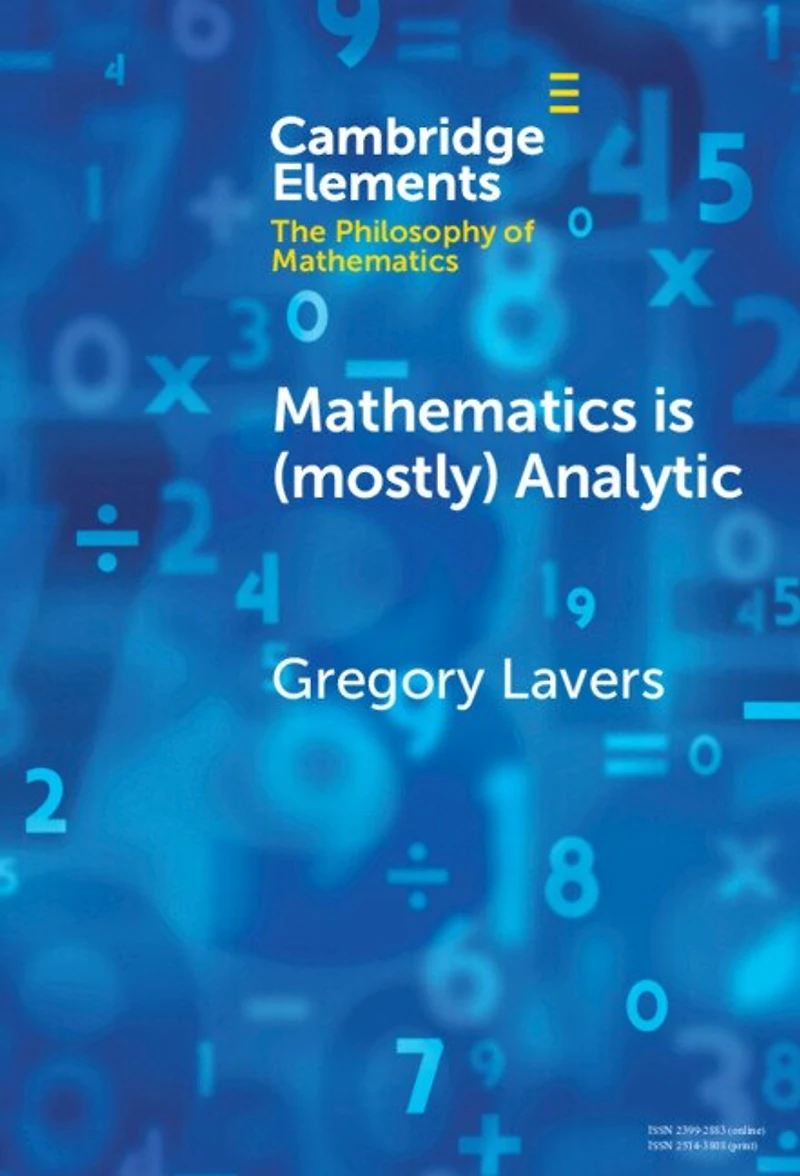
Mathematics is (mostly) Analytic in Brampton, ON
Current price: $94.73
Coles
Mathematics is (mostly) Analytic in Brampton, ON
Current price: $94.73
Loading Inventory...
Size: Hardcover
*Product information and pricing may vary - to confirm current pricing, availability, shipping, and return information please contact Coles. In the event of a pricing discrepancy, the retailer's price will apply.
This Element outlines and defends an account of analyticity according to which mathematics is, for the most part, analytic. The author begins by looking at Quine's arguments against the concepts of analyticity. He shows how Quine's position on analyticity is related to his view on explication and shows how this suggests a way of defining analyticity that would meet Quine's own standards for explication. The author then looks at Boghossian and his distinction between epistemic and metaphysical accounts of analyticity. Here he argues that there is a straightforward way of eliminating the confusion Boghossian sees with what he calls metaphysical accounts. The author demonstrates that the epistemic dimension of his epistemic account is almost entirely superfluous. The author then discusses how analyticity is related to truth, necessity, and questions of ontology. Finally, he discusses the vagueness of analyticity and also the relation of analyticity to the axiomatic method in mathematics.
This Element outlines and defends an account of analyticity according to which mathematics is, for the most part, analytic. The author begins by looking at Quine's arguments against the concepts of analyticity. He shows how Quine's position on analyticity is related to his view on explication and shows how this suggests a way of defining analyticity that would meet Quine's own standards for explication. The author then looks at Boghossian and his distinction between epistemic and metaphysical accounts of analyticity. Here he argues that there is a straightforward way of eliminating the confusion Boghossian sees with what he calls metaphysical accounts. The author demonstrates that the epistemic dimension of his epistemic account is almost entirely superfluous. The author then discusses how analyticity is related to truth, necessity, and questions of ontology. Finally, he discusses the vagueness of analyticity and also the relation of analyticity to the axiomatic method in mathematics.
You May Also Like














Find at Bramalea City Centre in Brampton, ON
Visit at Bramalea City Centre in Brampton, ON