



Gifting Made Simple
Give the Gift of ChoiceClick below to purchase a Bramalea City Centre eGift Card that can be used at participating retailers at Bramalea City Centre.Purchase HereHome
Mathematics Education Atlas: Mapping the Field of Mathematics Education Research
Coles
Loading Inventory...
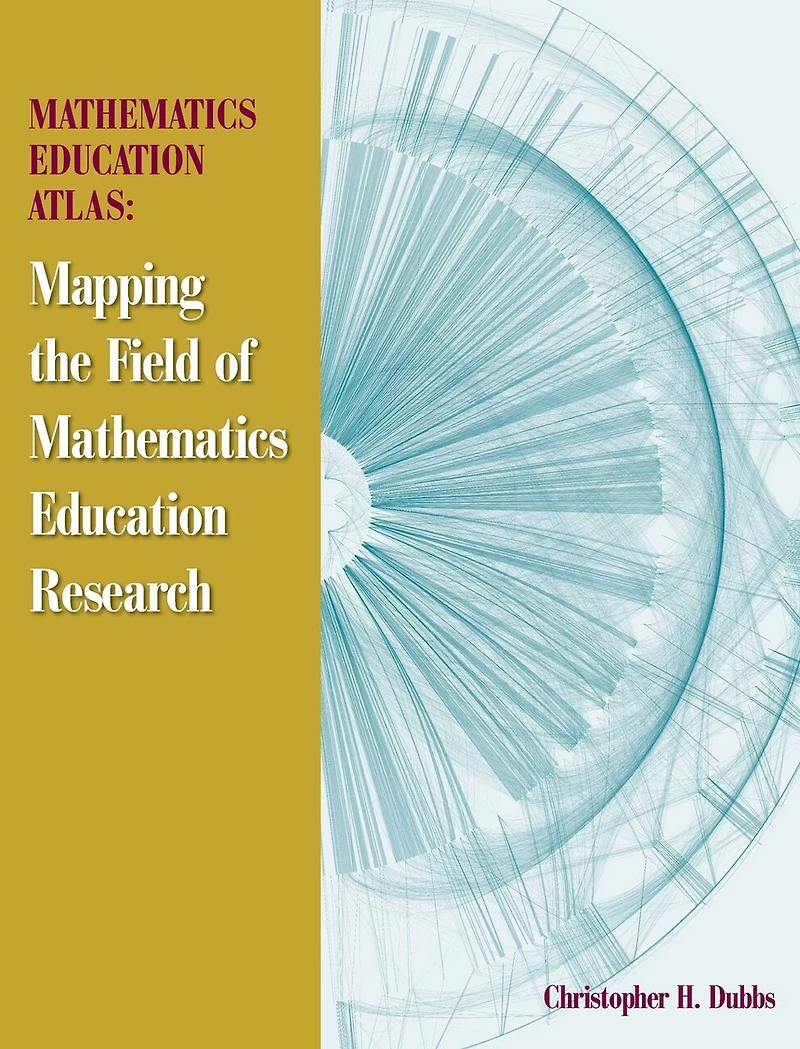
Mathematics Education Atlas: Mapping the Field of Mathematics Education Research in Brampton, ON
Current price: $90.95
Coles
Mathematics Education Atlas: Mapping the Field of Mathematics Education Research in Brampton, ON
Current price: $90.95
Loading Inventory...
Size: Hardcover
*Product information and pricing may vary - to confirm current pricing, availability, shipping, and return information please contact Coles. In the event of a pricing discrepancy, the retailer's price will apply.
The field of mathematics education is the product of many people writing around some (disparate) ideas that have congealed into the semblance of a thing that looks solid, that looks fixed. The field is, however, a foam: a volatile substance made from many bubbles (foci) emerging, popping, merging, and splitting. Following in the genealogical tradition of Michel Foucault, I look back at the emergence of this field called mathematics education research to trace the emergence of foci of study. By looking at those articles published between 1970 and 2019 in the Journal for Research in Mathematics Education (JRME), as well as those published since 2010 in for the learning of mathematics (flm) and Educational Studies in Mathematics (ESM), the results of this citation network analysis show that the foci of the field have not been fixed nor is there consensus around so-called proper foci today. This fluid and dissensual nature of our evolving field gives me hope. What mathematics education research is today is not a natural inevitability, but the product of human action, the collision of incident, orthogonal, and/or opposite forces, and while its trajectory is tied to its origins, it is not tied to it deterministically. The field of mathematics education research, as it has been, limits what we can say is mathematics education research, see as counting as mathematics education research, think as mathematics education, and do in the name of mathematics education research. These limits on what can be seen, said, thought, and done in the name of mathematics education research, what is (non)sensical, constitute a distribution of the sensible. This book serves as an outline and perturbation of those sensible limits.
The field of mathematics education is the product of many people writing around some (disparate) ideas that have congealed into the semblance of a thing that looks solid, that looks fixed. The field is, however, a foam: a volatile substance made from many bubbles (foci) emerging, popping, merging, and splitting. Following in the genealogical tradition of Michel Foucault, I look back at the emergence of this field called mathematics education research to trace the emergence of foci of study. By looking at those articles published between 1970 and 2019 in the Journal for Research in Mathematics Education (JRME), as well as those published since 2010 in for the learning of mathematics (flm) and Educational Studies in Mathematics (ESM), the results of this citation network analysis show that the foci of the field have not been fixed nor is there consensus around so-called proper foci today. This fluid and dissensual nature of our evolving field gives me hope. What mathematics education research is today is not a natural inevitability, but the product of human action, the collision of incident, orthogonal, and/or opposite forces, and while its trajectory is tied to its origins, it is not tied to it deterministically. The field of mathematics education research, as it has been, limits what we can say is mathematics education research, see as counting as mathematics education research, think as mathematics education, and do in the name of mathematics education research. These limits on what can be seen, said, thought, and done in the name of mathematics education research, what is (non)sensical, constitute a distribution of the sensible. This book serves as an outline and perturbation of those sensible limits.
You May Also Like









Find at Bramalea City Centre in Brampton, ON
Visit at Bramalea City Centre in Brampton, ON