



Gifting Made Simple
Give the Gift of ChoiceClick below to purchase a Bramalea City Centre eGift Card that can be used at participating retailers at Bramalea City Centre.Purchase HereHome
Mathematical Ecology: An Introduction
Coles
Loading Inventory...
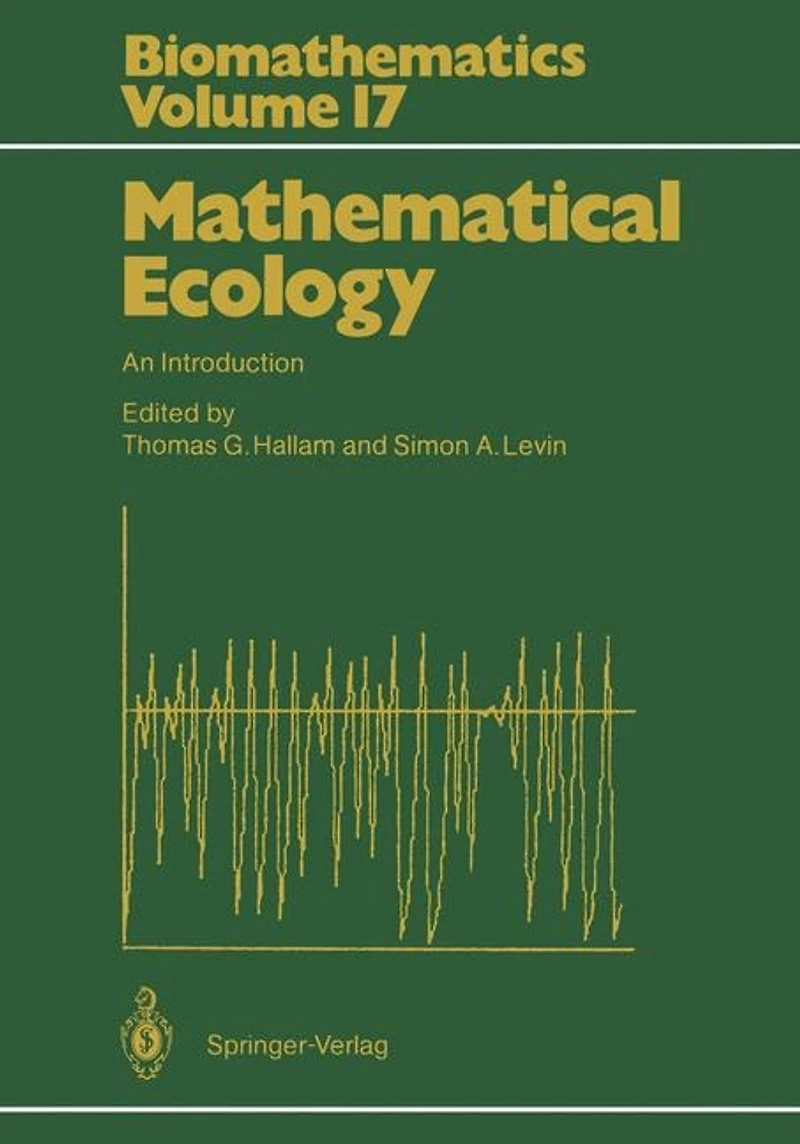
Mathematical Ecology: An Introduction in Brampton, ON
Current price: $72.95
Coles
Mathematical Ecology: An Introduction in Brampton, ON
Current price: $72.95
Loading Inventory...
Size: Paperback
*Product information and pricing may vary - to confirm current pricing, availability, shipping, and return information please contact Coles. In the event of a pricing discrepancy, the retailer's price will apply.
There isprobably no more appropriate location to hold a course on mathematical ecology than Italy, the countryofVito Volterra, a founding father ofthe subject. The Trieste 1982Autumn Course on Mathematical Ecology consisted of four weeksofvery concentrated scholasticism and aestheticism. The first weeks were devoted to fundamentals and principles ofmathematicalecology.A nucleusofthe material from the lectures presented during this period constitutes this book. The final week and a half of the Course was apportioned to the Trieste Research Conference on Mathematical Ecology whose proceedings have been published as Volume 54, Lecture Notes in Biomathematics, Springer-Verlag. The objectivesofthe first portionofthe course wereambitious and, probably, unattainable. Basic principles of the areas of physiological, population, com munitY,and ecosystem ecology that have solid ecological and mathematical foundations were to be presented. Classical terminology was to be introduced, important fundamental topics were to be developed, some past and some current problems of interest were to be presented, and directions for possible research were to be provided. Due to time constraints, the coverage could not be encyclopedic;many areas covered already have merited treatises of book length. Consequently, preliminary foundation material was covered in some detail, but subject overviewsand area syntheseswerepresented when research frontiers were being discussed. These lecture notes reflect this course philosophy.
There isprobably no more appropriate location to hold a course on mathematical ecology than Italy, the countryofVito Volterra, a founding father ofthe subject. The Trieste 1982Autumn Course on Mathematical Ecology consisted of four weeksofvery concentrated scholasticism and aestheticism. The first weeks were devoted to fundamentals and principles ofmathematicalecology.A nucleusofthe material from the lectures presented during this period constitutes this book. The final week and a half of the Course was apportioned to the Trieste Research Conference on Mathematical Ecology whose proceedings have been published as Volume 54, Lecture Notes in Biomathematics, Springer-Verlag. The objectivesofthe first portionofthe course wereambitious and, probably, unattainable. Basic principles of the areas of physiological, population, com munitY,and ecosystem ecology that have solid ecological and mathematical foundations were to be presented. Classical terminology was to be introduced, important fundamental topics were to be developed, some past and some current problems of interest were to be presented, and directions for possible research were to be provided. Due to time constraints, the coverage could not be encyclopedic;many areas covered already have merited treatises of book length. Consequently, preliminary foundation material was covered in some detail, but subject overviewsand area syntheseswerepresented when research frontiers were being discussed. These lecture notes reflect this course philosophy.
You May Also Like









Find at Bramalea City Centre in Brampton, ON
Visit at Bramalea City Centre in Brampton, ON