



Gifting Made Simple
Give the Gift of ChoiceClick below to purchase a Bramalea City Centre eGift Card that can be used at participating retailers at Bramalea City Centre.Purchase HereHome
Kant's Intuitionism: A Commentary on the Transcendental Aesthetic
Coles
Loading Inventory...
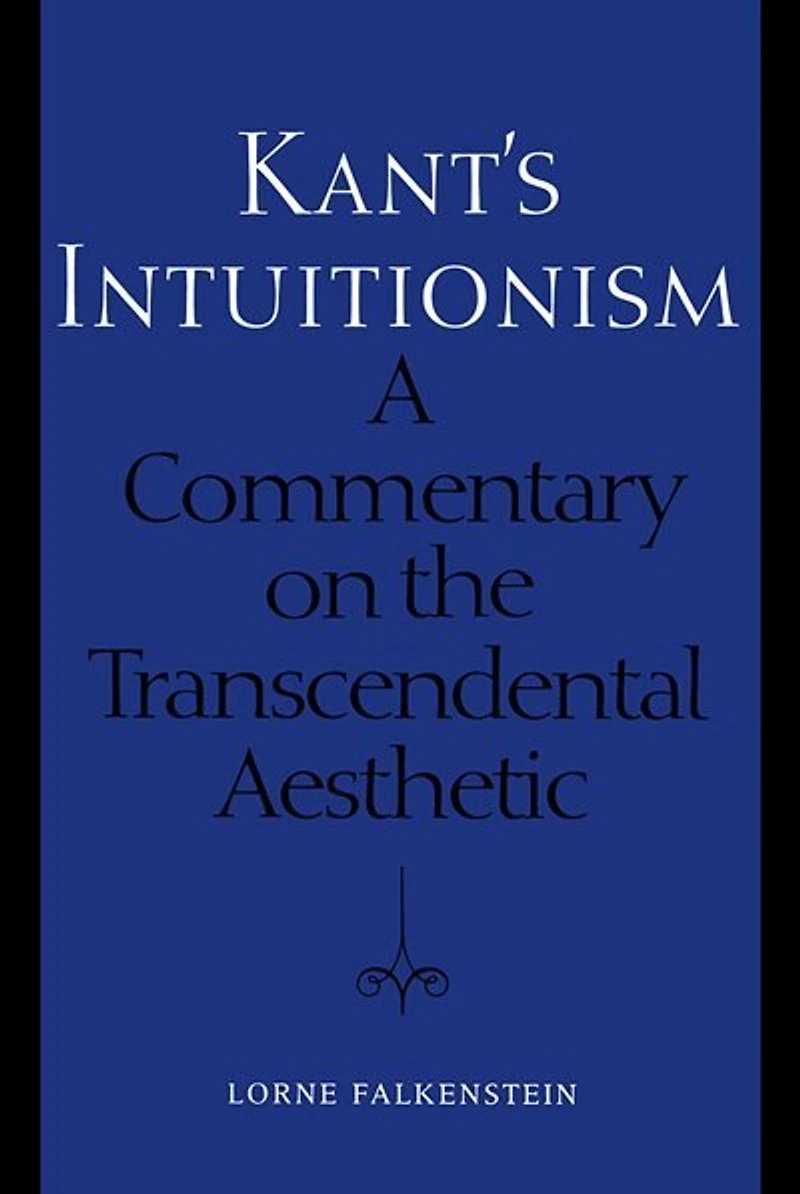
Kant's Intuitionism: A Commentary on the Transcendental Aesthetic in Brampton, ON
Current price: $66.00
Coles
Kant's Intuitionism: A Commentary on the Transcendental Aesthetic in Brampton, ON
Current price: $66.00
Loading Inventory...
Size: Paperback
*Product information and pricing may vary - to confirm current pricing, availability, shipping, and return information please contact Coles. In the event of a pricing discrepancy, the retailer's price will apply.
Ever since the publication of his Critique of Pure Reason in 1781, Immanuel Kant has occupied a central position in the philosophical world. In Kant's Intuitionism – the most detailed study of Kant's views on the opening sections of the Critique since Hans Vaihinger's Commentar zur Kants Kritik der reinen Vernunft more than a century ago – Lorne Falkenstein focuses on one aspect of Kant's Transcendental Aesthetic, namely, his position on how we manage to intuit the properties and relations of objects as they exist in space and time. The question of how much structure sensory input has of itself and how much we give it through processing is a major problem not only in philosophy, but in cognitive science in general. How much do our faculties do to structure our knowledge of objects and to give them their spatial and temporal existence? Recent interpretations of Kant's doctrine of intuition have emphasized the constructivist answer to this question, but Falkenstein argues that our knowledge of objects in space and time is not grounded in concepts but in the quasi-physiological constitution of our senses. Kant's Intuitionism examines Kant's account of the human cognitive faculties, his views on space, and his reasons for denying that we have knowledge of things as they are in themselves. It is key to understanding the thinking of the philosopher and revitalizes the debate about the implications of the Transcendental Aesthetic.
Ever since the publication of his Critique of Pure Reason in 1781, Immanuel Kant has occupied a central position in the philosophical world. In Kant's Intuitionism – the most detailed study of Kant's views on the opening sections of the Critique since Hans Vaihinger's Commentar zur Kants Kritik der reinen Vernunft more than a century ago – Lorne Falkenstein focuses on one aspect of Kant's Transcendental Aesthetic, namely, his position on how we manage to intuit the properties and relations of objects as they exist in space and time. The question of how much structure sensory input has of itself and how much we give it through processing is a major problem not only in philosophy, but in cognitive science in general. How much do our faculties do to structure our knowledge of objects and to give them their spatial and temporal existence? Recent interpretations of Kant's doctrine of intuition have emphasized the constructivist answer to this question, but Falkenstein argues that our knowledge of objects in space and time is not grounded in concepts but in the quasi-physiological constitution of our senses. Kant's Intuitionism examines Kant's account of the human cognitive faculties, his views on space, and his reasons for denying that we have knowledge of things as they are in themselves. It is key to understanding the thinking of the philosopher and revitalizes the debate about the implications of the Transcendental Aesthetic.
You May Also Like










Find at Bramalea City Centre in Brampton, ON
Visit at Bramalea City Centre in Brampton, ON