



Gifting Made Simple
Give the Gift of ChoiceClick below to purchase a Bramalea City Centre eGift Card that can be used at participating retailers at Bramalea City Centre.Purchase HereHome
John Colet on the Ecclesiastical Hierarchy of Dionysius: A New Edition and Translation with Introduction and Notes
Coles
Loading Inventory...
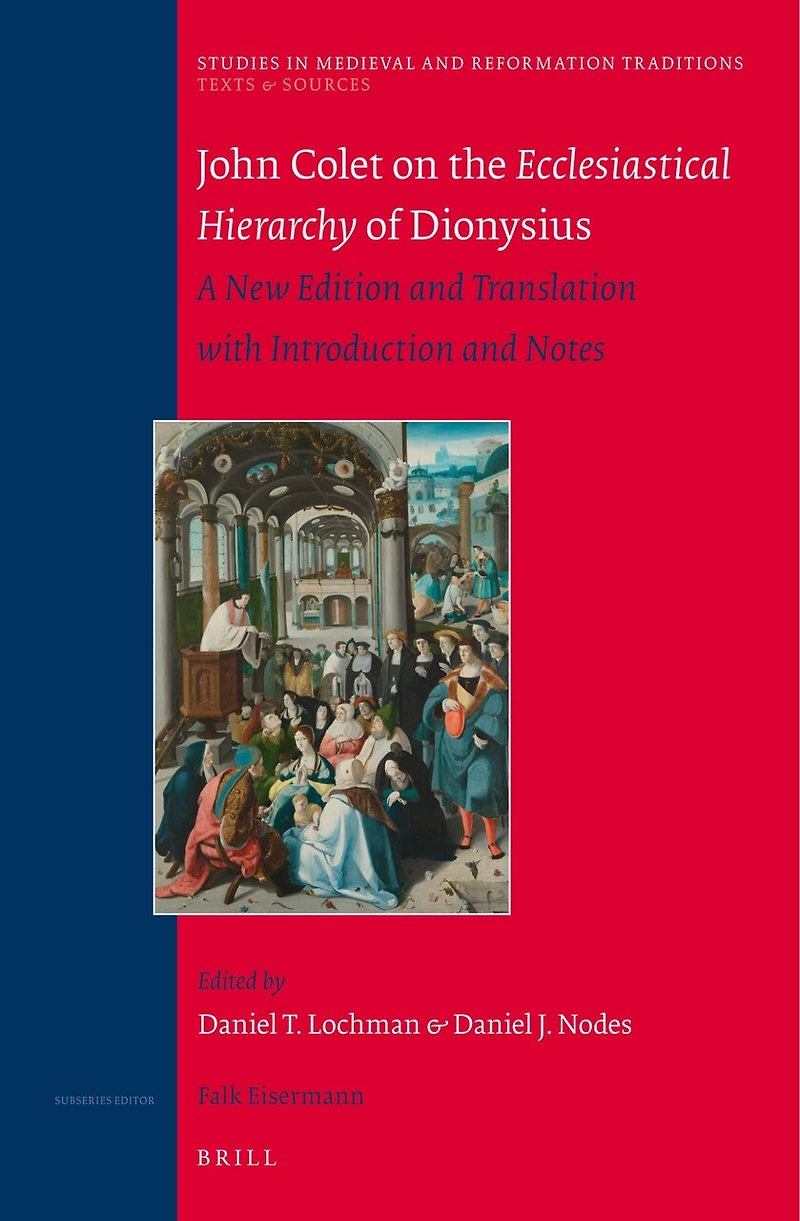
John Colet on the Ecclesiastical Hierarchy of Dionysius: A New Edition and Translation with Introduction and Notes in Brampton, ON
Current price: $307.99
Coles
John Colet on the Ecclesiastical Hierarchy of Dionysius: A New Edition and Translation with Introduction and Notes in Brampton, ON
Current price: $307.99
Loading Inventory...
Size: Hardcover
*Product information and pricing may vary - to confirm current pricing, availability, shipping, and return information please contact Coles. In the event of a pricing discrepancy, the retailer's price will apply.
The commentary of John Colet (1467-1519) on Dionysius the Areopagite’s Ecclesiastical Hierarchy adapts a work widely neglected by medieval theologians to the early sixteenth century. Dionysius’s “apostolic” model allowed Colet to set ecclesiastical corruption against the ideas for re-forming the mind as well as the church. The commentary reveals Colet’s fascination with the Kabbalah and re-emergent Galenism, but it subordinates all to harmonizing Dionysius and his supposed teacher, Paul. This first new edition in almost 150 years and first edition of the complete manuscript is edited critically, translated expertly, and provided with an apparatus that advances historical, theological, and rhetorical contexts. It resituates study of Colet by identifying a coherent center for his theology and agenda for reform in Tudor England.
The commentary of John Colet (1467-1519) on Dionysius the Areopagite’s Ecclesiastical Hierarchy adapts a work widely neglected by medieval theologians to the early sixteenth century. Dionysius’s “apostolic” model allowed Colet to set ecclesiastical corruption against the ideas for re-forming the mind as well as the church. The commentary reveals Colet’s fascination with the Kabbalah and re-emergent Galenism, but it subordinates all to harmonizing Dionysius and his supposed teacher, Paul. This first new edition in almost 150 years and first edition of the complete manuscript is edited critically, translated expertly, and provided with an apparatus that advances historical, theological, and rhetorical contexts. It resituates study of Colet by identifying a coherent center for his theology and agenda for reform in Tudor England.
You May Also Like








Find at Bramalea City Centre in Brampton, ON
Visit at Bramalea City Centre in Brampton, ON