



Gifting Made Simple
Give the Gift of ChoiceClick below to purchase a Bramalea City Centre eGift Card that can be used at participating retailers at Bramalea City Centre.Purchase HereHome
Invading Ecological Networks
Coles
Loading Inventory...
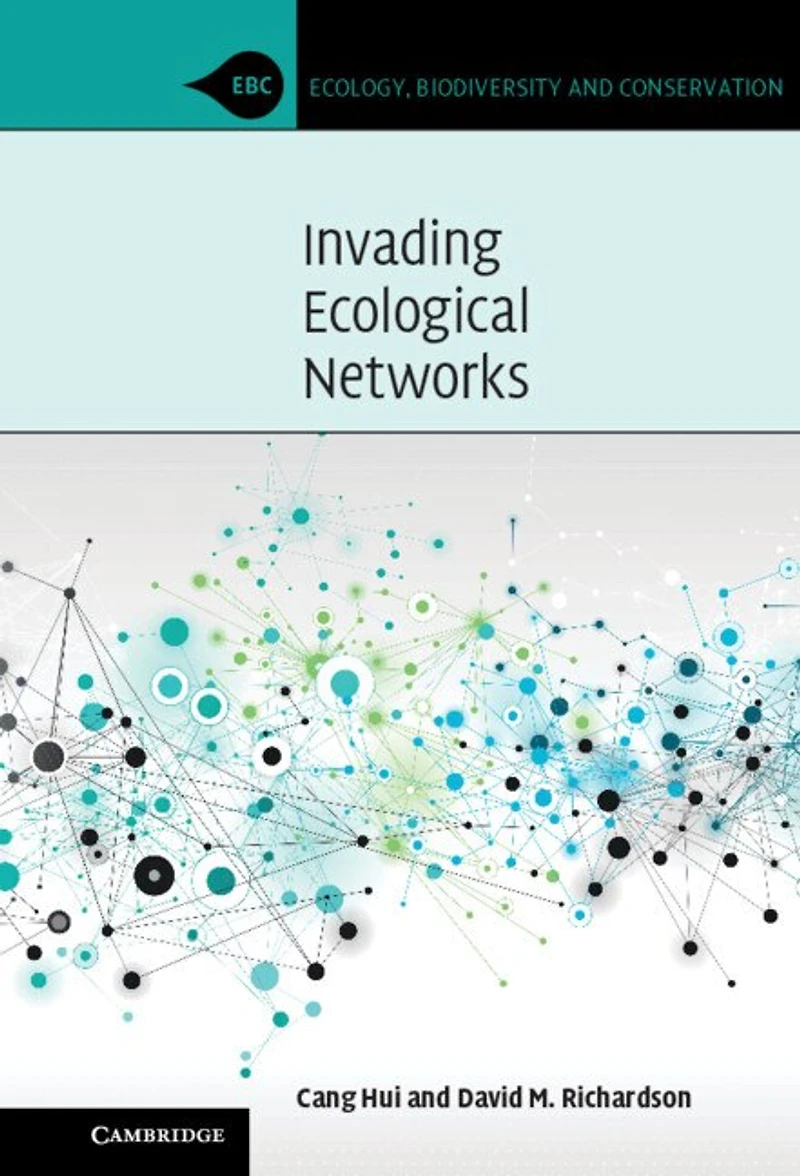
Invading Ecological Networks in Brampton, ON
Current price: $153.95
Coles
Invading Ecological Networks in Brampton, ON
Current price: $153.95
Loading Inventory...
Size: Hardcover
*Product information and pricing may vary - to confirm current pricing, availability, shipping, and return information please contact Coles. In the event of a pricing discrepancy, the retailer's price will apply.
Until now, biological invasions have been conceptualised and studied mainly as a linear process: from introduction to establishment to spread. This volume charts a new course for the field, drawing on key developments in network ecology and complexity science. It defines an agenda for Invasion Science 2.0 by providing new framings and classification of research topics and by offering tentative solutions to vexing problems. In particular, it conceptualises a transformative ecosystem as an open adaptive network with critical transitions and turnover, with resident species heuristically learning and fine-tuning their niches and roles in a multiplayer eco-evolutionary game. It erects signposts pertaining to network interactions, structures, stability, dynamics, scaling, and invasibility. It is not a recipe book or a road map, but an atlas of possibilities: a 'hitchhiker's guide'.
Until now, biological invasions have been conceptualised and studied mainly as a linear process: from introduction to establishment to spread. This volume charts a new course for the field, drawing on key developments in network ecology and complexity science. It defines an agenda for Invasion Science 2.0 by providing new framings and classification of research topics and by offering tentative solutions to vexing problems. In particular, it conceptualises a transformative ecosystem as an open adaptive network with critical transitions and turnover, with resident species heuristically learning and fine-tuning their niches and roles in a multiplayer eco-evolutionary game. It erects signposts pertaining to network interactions, structures, stability, dynamics, scaling, and invasibility. It is not a recipe book or a road map, but an atlas of possibilities: a 'hitchhiker's guide'.
You May Also Like










Find at Bramalea City Centre in Brampton, ON
Visit at Bramalea City Centre in Brampton, ON