



Gifting Made Simple
Give the Gift of ChoiceClick below to purchase a Bramalea City Centre eGift Card that can be used at participating retailers at Bramalea City Centre.Purchase HereHome
Introducing Fractals: A Graphic Guide
Coles
Loading Inventory...
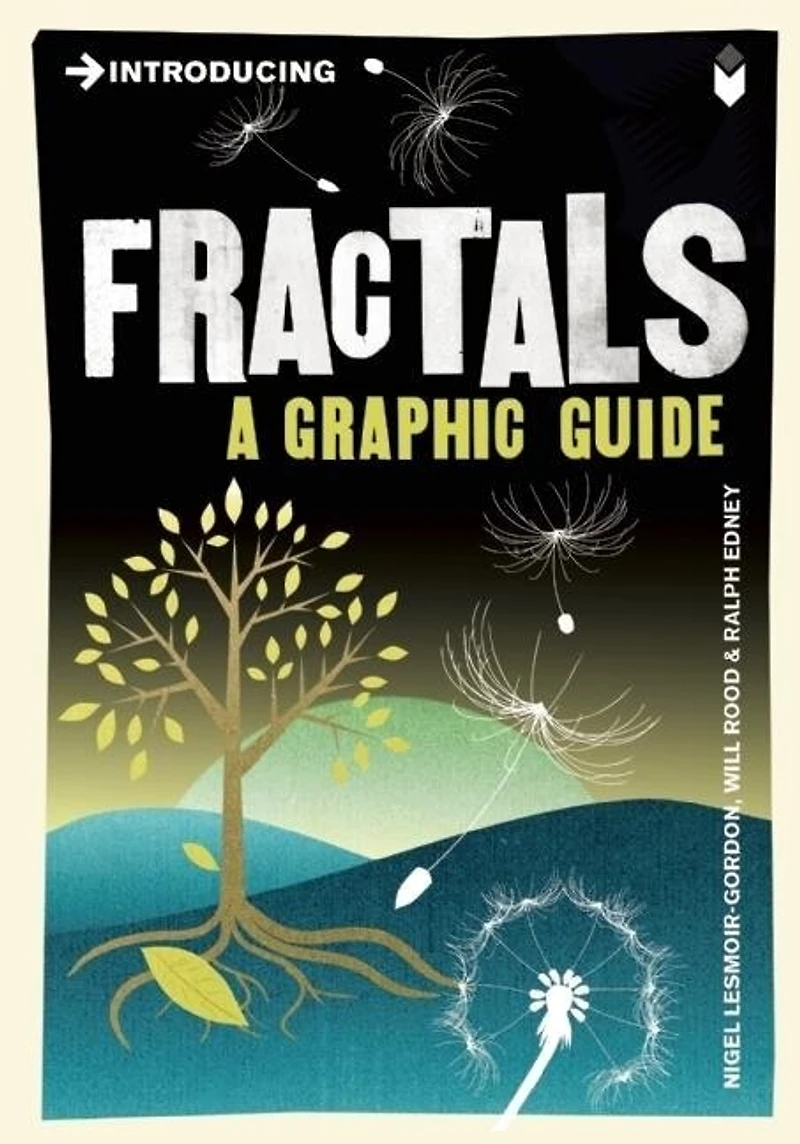
Introducing Fractals: A Graphic Guide in Brampton, ON
Current price: $20.99
Coles
Introducing Fractals: A Graphic Guide in Brampton, ON
Current price: $20.99
Loading Inventory...
Size: Paperback
*Product information and pricing may vary - to confirm current pricing, availability, shipping, and return information please contact Coles. In the event of a pricing discrepancy, the retailer's price will apply.
Fractals are the geometry of the natural world. They're about the broken, wrinkled, wiggly world- the uneven shapes of nature, unlike the idealised forms of Euclidean geometry. We see fractals everywhere; indeed, we are fractals ourselves.
Fractal geometry is an extension of classical geometry which can make precise models of physical structures, from ferns to galaxies. It can describe the shape of a cloud as precisely as an architect can describe a house.
Introducing Fractals traces the historical development of this mathematical discipline, explores its descriptive powers in the natural world, and then looks at the applications and the implications of the discoveries it has made.
As John Archibald Wheeler, protégé of Niels Bohr, friend of Albert Einstein and mentor of Richard Feynman has said, 'No one will be considered scientifically literate tomorrow, who is not familiar with fractals.'
Fractals are the geometry of the natural world. They're about the broken, wrinkled, wiggly world- the uneven shapes of nature, unlike the idealised forms of Euclidean geometry. We see fractals everywhere; indeed, we are fractals ourselves.
Fractal geometry is an extension of classical geometry which can make precise models of physical structures, from ferns to galaxies. It can describe the shape of a cloud as precisely as an architect can describe a house.
Introducing Fractals traces the historical development of this mathematical discipline, explores its descriptive powers in the natural world, and then looks at the applications and the implications of the discoveries it has made.
As John Archibald Wheeler, protégé of Niels Bohr, friend of Albert Einstein and mentor of Richard Feynman has said, 'No one will be considered scientifically literate tomorrow, who is not familiar with fractals.'
You May Also Like








Find at Bramalea City Centre in Brampton, ON
Visit at Bramalea City Centre in Brampton, ON