



Gifting Made Simple
Give the Gift of ChoiceClick below to purchase a Bramalea City Centre eGift Card that can be used at participating retailers at Bramalea City Centre.Purchase HereHome
How the West Really Lost God Lib/E: A New Theory of Secularization
Coles
Loading Inventory...
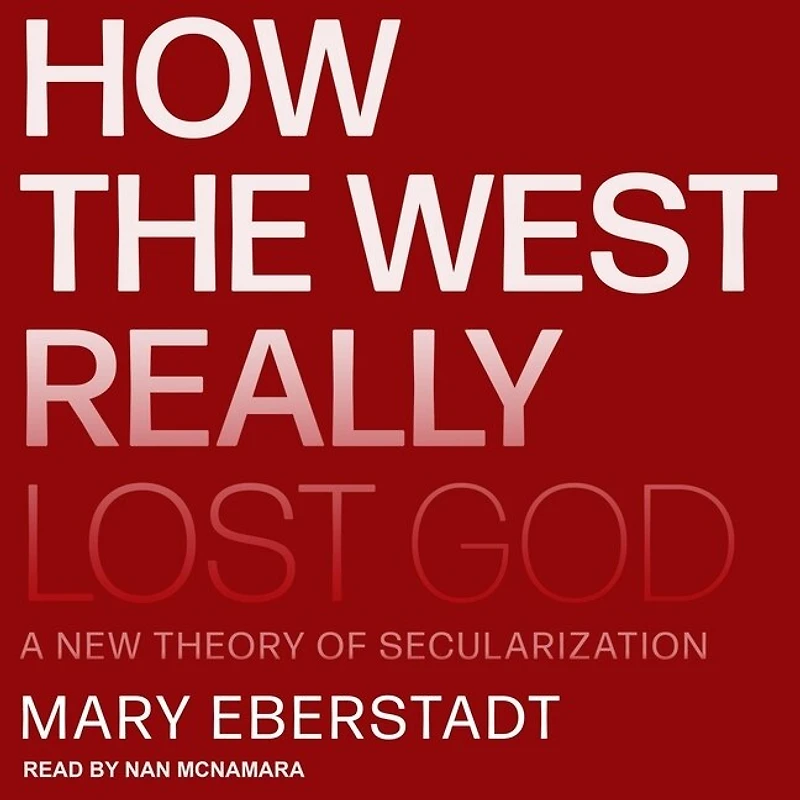
How the West Really Lost God Lib/E: A New Theory of Secularization in Brampton, ON
Current price: $25.95
Coles
How the West Really Lost God Lib/E: A New Theory of Secularization in Brampton, ON
Current price: $25.95
Loading Inventory...
Size: Audiobook (2020 A)
*Product information and pricing may vary - to confirm current pricing, availability, shipping, and return information please contact Coles. In the event of a pricing discrepancy, the retailer's price will apply.
In this magisterial work, leading cultural critic Mary Eberstadt delivers a powerful new theory about the decline of religion in the Western world. The conventional wisdom is that the West first experienced religious decline, followed by the decline of the family. Eberstadt turns this standard account on its head. Marshalling an impressive array of research, from fascinating historical data on family decline in pre-Revolutionary France to contemporary popular culture both in the United States and Europe, Eberstadt shows that the reverse has also been true: the undermining of the family has further undermined Christianity itself. Drawing on sociology, history, demography, theology, literature, and many other sources, Eberstadt shows that family decline and religious decline have gone hand in hand in the Western world in a way that has not been understood before--that they are, as she puts it in a striking new image summarizing the book's thesis, the double helix of society, each dependent on the strength of the other for successful reproduction.
In this magisterial work, leading cultural critic Mary Eberstadt delivers a powerful new theory about the decline of religion in the Western world. The conventional wisdom is that the West first experienced religious decline, followed by the decline of the family. Eberstadt turns this standard account on its head. Marshalling an impressive array of research, from fascinating historical data on family decline in pre-Revolutionary France to contemporary popular culture both in the United States and Europe, Eberstadt shows that the reverse has also been true: the undermining of the family has further undermined Christianity itself. Drawing on sociology, history, demography, theology, literature, and many other sources, Eberstadt shows that family decline and religious decline have gone hand in hand in the Western world in a way that has not been understood before--that they are, as she puts it in a striking new image summarizing the book's thesis, the double helix of society, each dependent on the strength of the other for successful reproduction.
You May Also Like















Find at Bramalea City Centre in Brampton, ON
Visit at Bramalea City Centre in Brampton, ON