



Gifting Made Simple
Give the Gift of ChoiceClick below to purchase a Bramalea City Centre eGift Card that can be used at participating retailers at Bramalea City Centre.Purchase HereHome
Epigraphica Boeotica II: Further Studies on Boiotian Inscriptions
Coles
Loading Inventory...
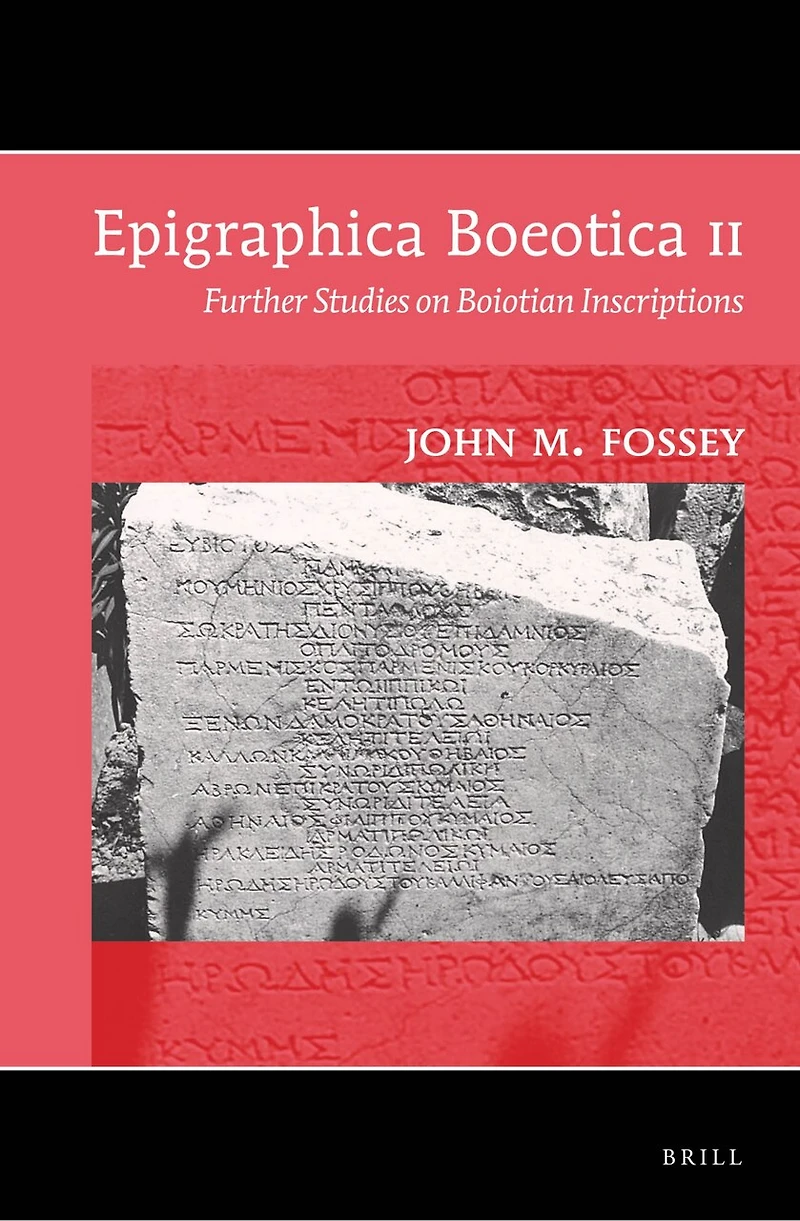
Epigraphica Boeotica II: Further Studies on Boiotian Inscriptions in Brampton, ON
Current price: $257.99
Coles
Epigraphica Boeotica II: Further Studies on Boiotian Inscriptions in Brampton, ON
Current price: $257.99
Loading Inventory...
Size: Hardcover
*Product information and pricing may vary - to confirm current pricing, availability, shipping, and return information please contact Coles. In the event of a pricing discrepancy, the retailer's price will apply.
In Epigraphica Boeotica II John Fossey continues to treat results of his nearly 50 years of research into the archaeology and inscriptions of Ancient Boiotia ( Epigraphica Boeotica I, Amsterdam, 1991). The first part of the volume discusses the relations between Boiotia and other parts of the Greek world as seen in acts of proxenia and agonistic victor lists. After a section on dedications both religious and civic, there follows a series of studies of ancient tombstones, many of them spolia used in more recent buildings, with prosopographic and onomastic commentary on the names contained in them. Discussion throughout features letter forms and one specific example of this is an epigramme by the Roman philhellene emperor Hadrianus. An unusual rupestral text concludes the volume.
In Epigraphica Boeotica II John Fossey continues to treat results of his nearly 50 years of research into the archaeology and inscriptions of Ancient Boiotia ( Epigraphica Boeotica I, Amsterdam, 1991). The first part of the volume discusses the relations between Boiotia and other parts of the Greek world as seen in acts of proxenia and agonistic victor lists. After a section on dedications both religious and civic, there follows a series of studies of ancient tombstones, many of them spolia used in more recent buildings, with prosopographic and onomastic commentary on the names contained in them. Discussion throughout features letter forms and one specific example of this is an epigramme by the Roman philhellene emperor Hadrianus. An unusual rupestral text concludes the volume.
You May Also Like










Find at Bramalea City Centre in Brampton, ON
Visit at Bramalea City Centre in Brampton, ON