



Gifting Made Simple
Give the Gift of ChoiceClick below to purchase a Bramalea City Centre eGift Card that can be used at participating retailers at Bramalea City Centre.Purchase HereHome
Elements of Advanced Manufacturing Theory
Coles
Loading Inventory...
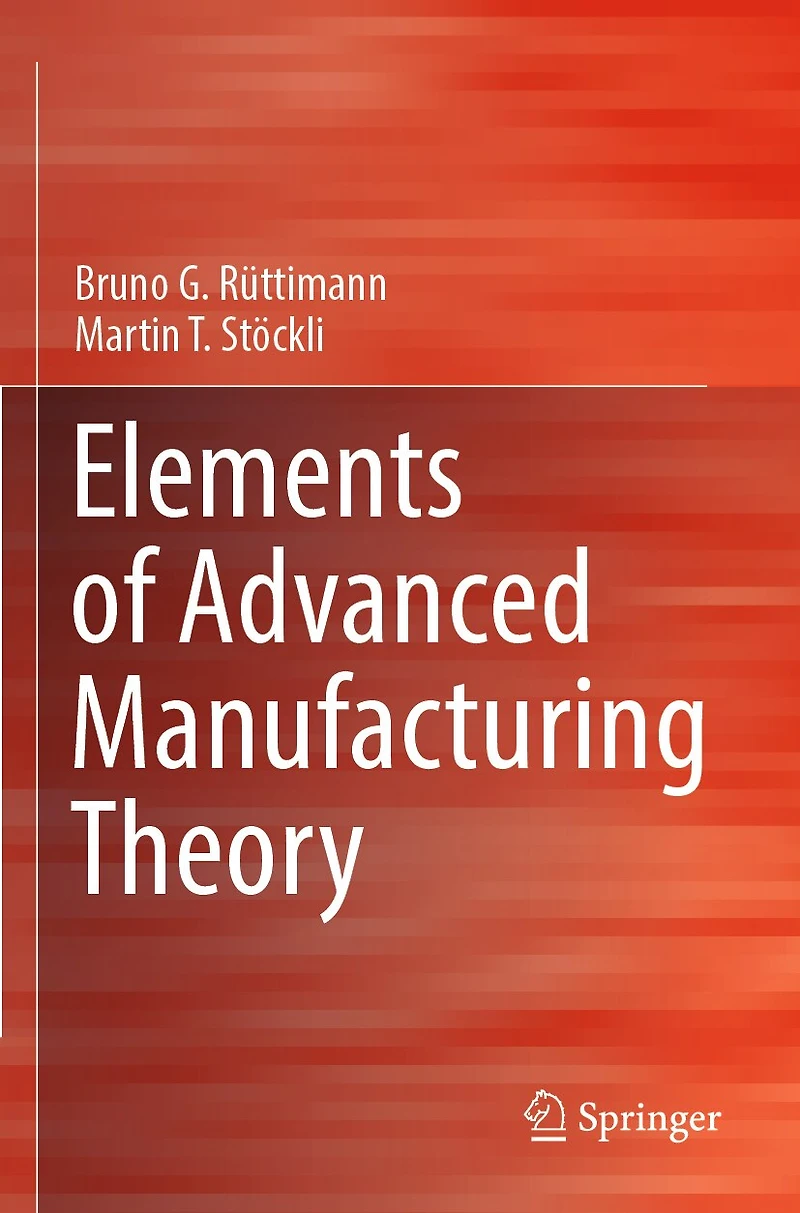
Elements of Advanced Manufacturing Theory in Brampton, ON
Current price: $160.95
Coles
Elements of Advanced Manufacturing Theory in Brampton, ON
Current price: $160.95
Loading Inventory...
Size: Paperback
*Product information and pricing may vary - to confirm current pricing, availability, shipping, and return information please contact Coles. In the event of a pricing discrepancy, the retailer's price will apply.
This book is the continuation of the textbook Lean Compendium - Introduction to Modern Manufacturing Theory . It extends the theory of mathematical modeling to batch & queue-based cyber-physical production systems. To facilitate learning, the book continues to develop a Cartesian-derived understanding of the system's behavior by applying manufacturing-specific theorems, corollaries and lemmas. A law-based description enables to model production mathematically and understand upfront their dynamics in terms of WIP generation, lead-times, exit-rates, and on-time delivery performance. While simulation alone only allows to explore the optimum solution, the development of a theory allows to gain knowledge. This improves the learning of the "physics" of manufacturing systems and contributes to a solid production's understanding and a clear and cognitive problem determination that leads to a thorough mental capture for mastering a systematic design of such highly complex systems.
This book is the continuation of the textbook Lean Compendium - Introduction to Modern Manufacturing Theory . It extends the theory of mathematical modeling to batch & queue-based cyber-physical production systems. To facilitate learning, the book continues to develop a Cartesian-derived understanding of the system's behavior by applying manufacturing-specific theorems, corollaries and lemmas. A law-based description enables to model production mathematically and understand upfront their dynamics in terms of WIP generation, lead-times, exit-rates, and on-time delivery performance. While simulation alone only allows to explore the optimum solution, the development of a theory allows to gain knowledge. This improves the learning of the "physics" of manufacturing systems and contributes to a solid production's understanding and a clear and cognitive problem determination that leads to a thorough mental capture for mastering a systematic design of such highly complex systems.
You May Also Like









Find at Bramalea City Centre in Brampton, ON
Visit at Bramalea City Centre in Brampton, ON