



Gifting Made Simple
Give the Gift of ChoiceClick below to purchase a Bramalea City Centre eGift Card that can be used at participating retailers at Bramalea City Centre.Purchase HereHome
Efficient Execution of Irregular Dataflow Graphs: Hardware/Software Co-optimization for Probabilistic AI and Sparse Linear Algebra
Coles
Loading Inventory...
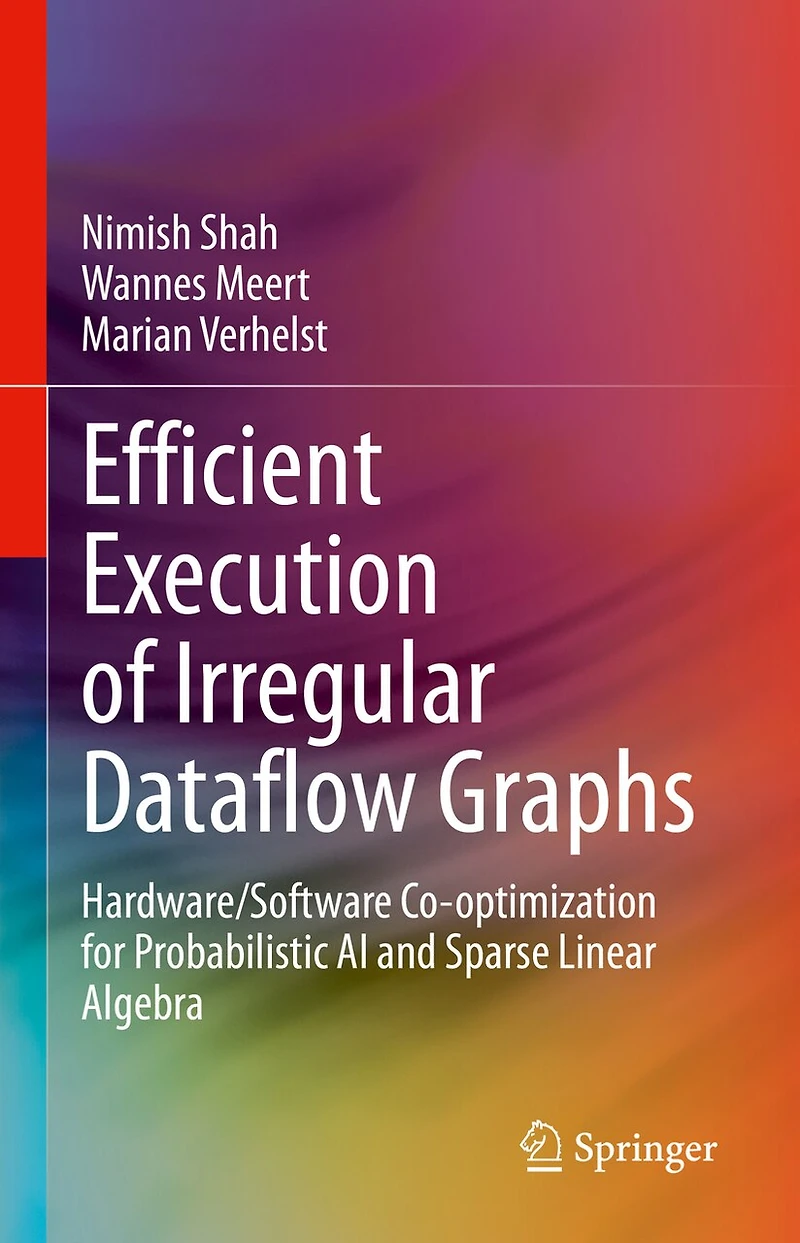
Efficient Execution of Irregular Dataflow Graphs: Hardware/Software Co-optimization for Probabilistic AI and Sparse Linear Algebra in Brampton, ON
Current price: $131.50
Coles
Efficient Execution of Irregular Dataflow Graphs: Hardware/Software Co-optimization for Probabilistic AI and Sparse Linear Algebra in Brampton, ON
Current price: $131.50
Loading Inventory...
Size: Hardcover
*Product information and pricing may vary - to confirm current pricing, availability, shipping, and return information please contact Coles. In the event of a pricing discrepancy, the retailer's price will apply.
This book focuses on the acceleration of emerging irregular sparse workloads, posed by novel artificial intelligent (AI) models and sparse linear algebra. Specifically, the book outlines several co-optimized hardware-software solutions for a highly promising class of emerging sparse AI models called Probabilistic Circuit (PC) and a similar sparse matrix workload for triangular linear systems (SpTRSV). The authors describe optimizations for the entire stack, targeting applications, compilation, hardware architecture and silicon implementation, resulting in orders of magnitude higher performance and energy-efficiency compared to the existing state-of-the-art solutions. Thus, this book provides important building blocks for the upcoming generation of edge AI platforms.
This book focuses on the acceleration of emerging irregular sparse workloads, posed by novel artificial intelligent (AI) models and sparse linear algebra. Specifically, the book outlines several co-optimized hardware-software solutions for a highly promising class of emerging sparse AI models called Probabilistic Circuit (PC) and a similar sparse matrix workload for triangular linear systems (SpTRSV). The authors describe optimizations for the entire stack, targeting applications, compilation, hardware architecture and silicon implementation, resulting in orders of magnitude higher performance and energy-efficiency compared to the existing state-of-the-art solutions. Thus, this book provides important building blocks for the upcoming generation of edge AI platforms.














Find at Bramalea City Centre in Brampton, ON
Visit at Bramalea City Centre in Brampton, ON