



Gifting Made Simple
Give the Gift of ChoiceClick below to purchase a Bramalea City Centre eGift Card that can be used at participating retailers at Bramalea City Centre.Purchase HereHome
Ecosystems of Extremes: Climate, Soils, and Sustainable Land Use in the Central-Eastern Sahara
Coles
Loading Inventory...
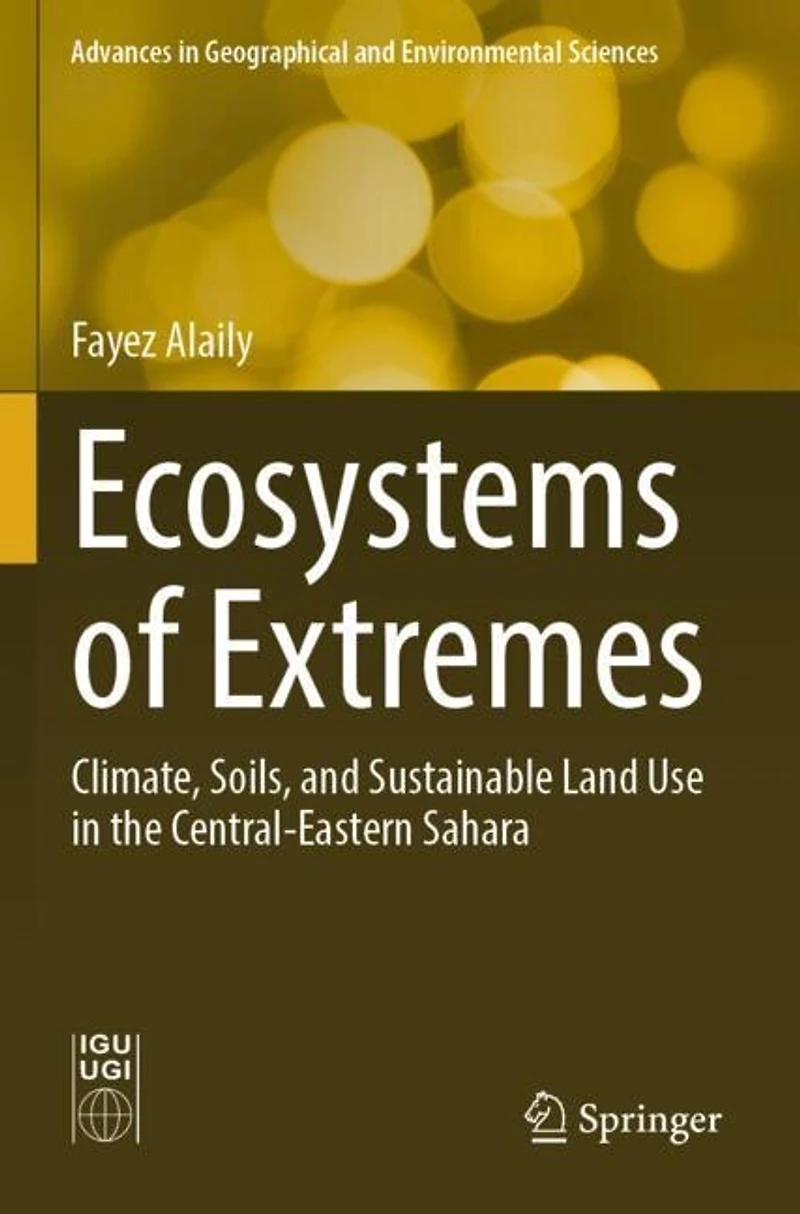
Ecosystems of Extremes: Climate, Soils, and Sustainable Land Use in the Central-Eastern Sahara in Brampton, ON
Current price: $262.95
Coles
Ecosystems of Extremes: Climate, Soils, and Sustainable Land Use in the Central-Eastern Sahara in Brampton, ON
Current price: $262.95
Loading Inventory...
Size: Paperback
*Product information and pricing may vary - to confirm current pricing, availability, shipping, and return information please contact Coles. In the event of a pricing discrepancy, the retailer's price will apply.
This book explores the environmental conditions, particularly the climate and soils, of one of the driest regions on earth, the Central-East of the Sahara. These factors control the ecosystems and determine the land's suitability for use. The area receives only 0.5 mm of precipitation annually and contains one of the largest aquifers in the Sahara, with fossil groundwater. The region's lithology includes Cretaceous formations and crystalline rocks, largely covered by quaternary sediments. Exogenous activities have shaped various landscape types, such as ergs with different dunes, deflated depressions with playas, and yardangs. Soils in the region are primarily formed through physical processes and are often shallow, sandy, and enriched with soluble salts. The book provides a detailed analysis of their physical and chemical properties, genesis, and relation to environmental factors and sociological aspects. It also discusses rare ecosystems, including those dependent on food imports and those that arise episodically and last for a few years. Considering all ecological parameters, a land assessment system for irrigated agriculture is developed, along with descriptions of suitable cultivation methods and optimal irrigation systems. The book's contents are based on data from several expeditions and laboratory work funded by the German Research Foundation.
This book explores the environmental conditions, particularly the climate and soils, of one of the driest regions on earth, the Central-East of the Sahara. These factors control the ecosystems and determine the land's suitability for use. The area receives only 0.5 mm of precipitation annually and contains one of the largest aquifers in the Sahara, with fossil groundwater. The region's lithology includes Cretaceous formations and crystalline rocks, largely covered by quaternary sediments. Exogenous activities have shaped various landscape types, such as ergs with different dunes, deflated depressions with playas, and yardangs. Soils in the region are primarily formed through physical processes and are often shallow, sandy, and enriched with soluble salts. The book provides a detailed analysis of their physical and chemical properties, genesis, and relation to environmental factors and sociological aspects. It also discusses rare ecosystems, including those dependent on food imports and those that arise episodically and last for a few years. Considering all ecological parameters, a land assessment system for irrigated agriculture is developed, along with descriptions of suitable cultivation methods and optimal irrigation systems. The book's contents are based on data from several expeditions and laboratory work funded by the German Research Foundation.
You May Also Like











Find at Bramalea City Centre in Brampton, ON
Visit at Bramalea City Centre in Brampton, ON