



Gifting Made Simple
Give the Gift of ChoiceClick below to purchase a Bramalea City Centre eGift Card that can be used at participating retailers at Bramalea City Centre.Purchase HereHome
Deep Homology?: Uncanny Similarities Of Humans And Flies Uncovered By Evo-devo
Coles
Loading Inventory...
Deep Homology?: Uncanny Similarities Of Humans And Flies Uncovered By Evo-devo in Brampton, ON
Current price: $119.95
Coles
Deep Homology?: Uncanny Similarities Of Humans And Flies Uncovered By Evo-devo in Brampton, ON
Current price: $119.95
Loading Inventory...
Size: Hardcover
*Product information and pricing may vary - to confirm current pricing, availability, shipping, and return information please contact Coles. In the event of a pricing discrepancy, the retailer's price will apply.
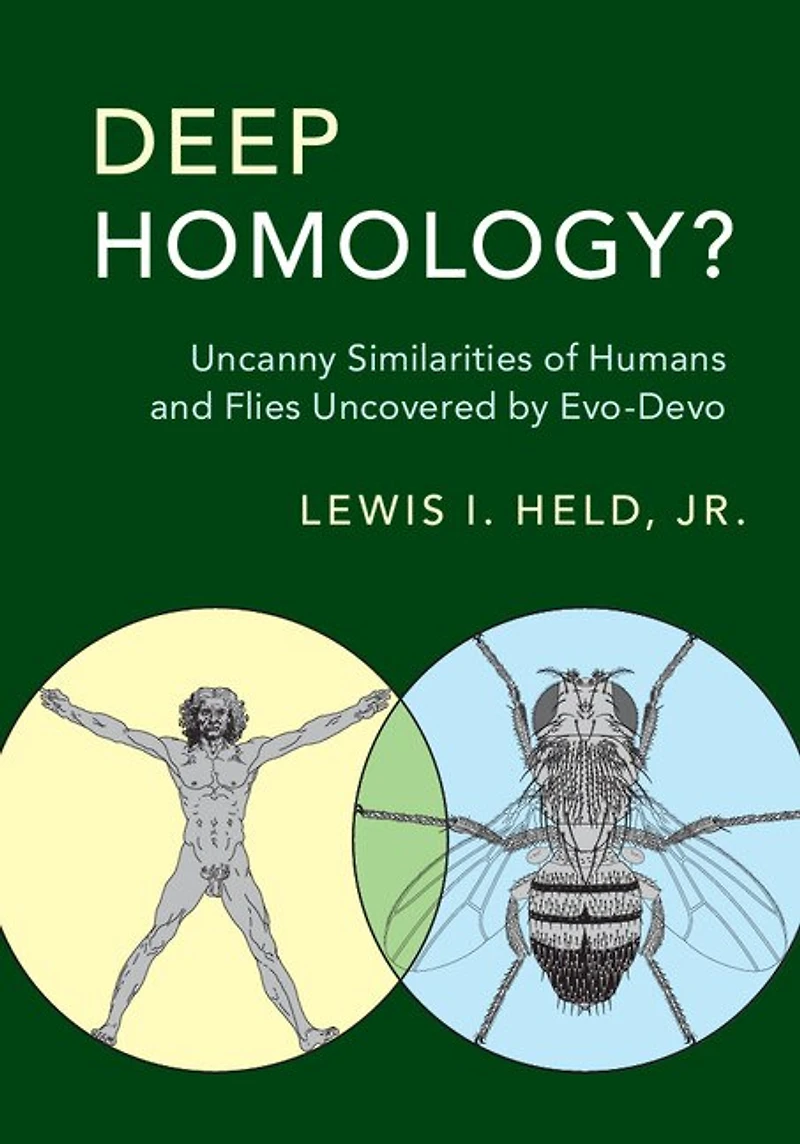
Humans and flies look nothing alike, yet their genetic circuits are remarkably similar. Here, Lewis I. Held, Jr compares the genetics and development of the two to review the evidence for deep homology, the biggest discovery from the emerging field of evolutionary developmental biology. Remnants of the operating system of our hypothetical common ancestor 600 million years ago are compared in chapters arranged by region of the body, from the nervous system, limbs and heart, to vision, hearing and smell. Concept maps provide a clear understanding of the complex subjects addressed, while encyclopaedic tables offer comprehensive inventories of genetic information. Written in an engaging style with a reference section listing thousands of relevant publications, this is a vital resource for scientific researchers, and graduate and undergraduate students.
Humans and flies look nothing alike, yet their genetic circuits are remarkably similar. Here, Lewis I. Held, Jr compares the genetics and development of the two to review the evidence for deep homology, the biggest discovery from the emerging field of evolutionary developmental biology. Remnants of the operating system of our hypothetical common ancestor 600 million years ago are compared in chapters arranged by region of the body, from the nervous system, limbs and heart, to vision, hearing and smell. Concept maps provide a clear understanding of the complex subjects addressed, while encyclopaedic tables offer comprehensive inventories of genetic information. Written in an engaging style with a reference section listing thousands of relevant publications, this is a vital resource for scientific researchers, and graduate and undergraduate students.
You May Also Like










Find at Bramalea City Centre in Brampton, ON
Visit at Bramalea City Centre in Brampton, ON