



Gifting Made Simple
Give the Gift of ChoiceClick below to purchase a Bramalea City Centre eGift Card that can be used at participating retailers at Bramalea City Centre.Purchase HereHome
Controlling Chaos: Suppression, Synchronization And Chaotification
Coles
Loading Inventory...
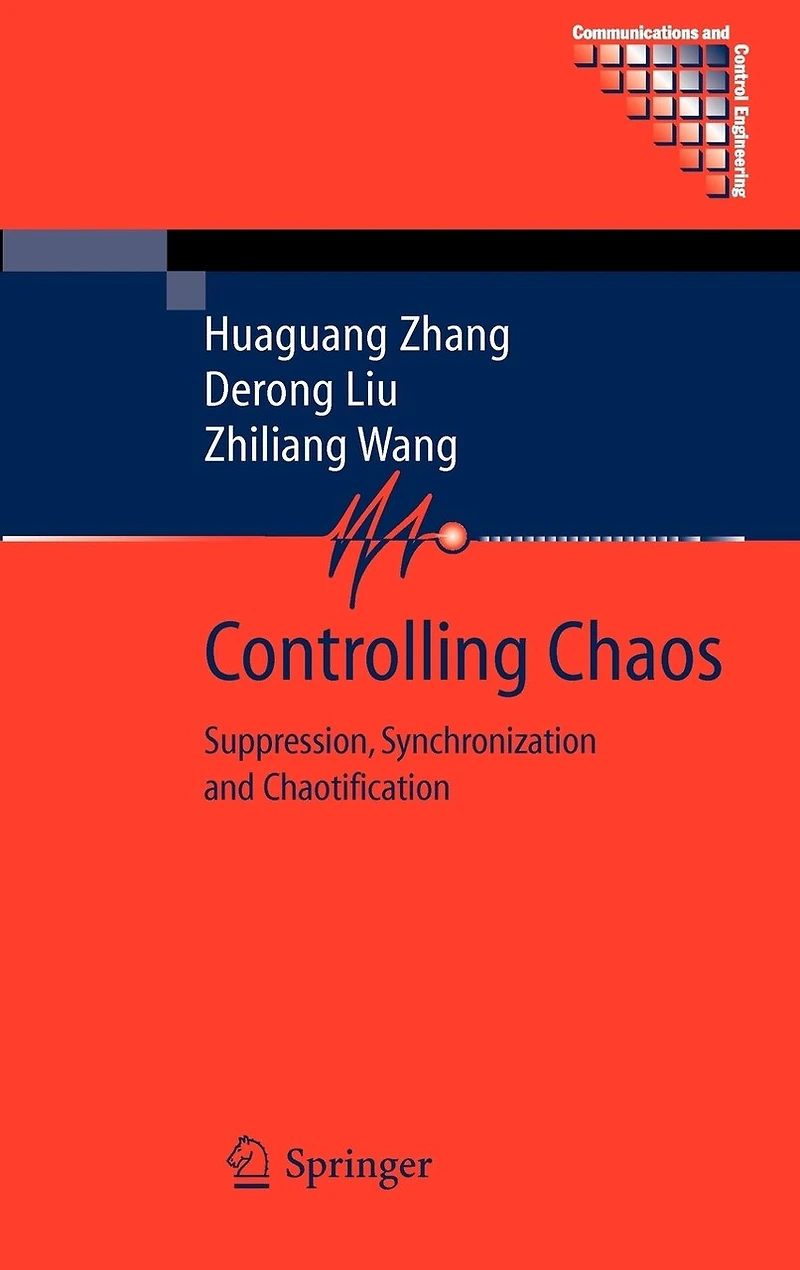
Controlling Chaos: Suppression, Synchronization And Chaotification in Brampton, ON
Current price: $248.50
Coles
Controlling Chaos: Suppression, Synchronization And Chaotification in Brampton, ON
Current price: $248.50
Loading Inventory...
Size: Hardcover
*Product information and pricing may vary - to confirm current pricing, availability, shipping, and return information please contact Coles. In the event of a pricing discrepancy, the retailer's price will apply.
Controlling Chaos achieves three goals: the suppression, synchronisation and generation of chaos, each of which is the focus of a separate part of the book. The text deals with the well-known Lorenz, Rössler and Hénon attractors and the Chua circuit and with less celebrated novel systems. Modelling of chaos is accomplished using difference equations and ordinary and time-delayed differential equations. The methods directed at controlling chaos benefit from the influence of advanced nonlinear control theory: inverse optimal control is used for stabilization; exact linearization for synchronization; and impulsive control for chaotification. Notably, a fusion of chaos and fuzzy systems theories is employed. Time-delayed systems are also studied. The results presented are general for a broad class of chaotic systems. This monograph is self-contained with introductory material providing a review of the history of chaos control and the necessary mathematical preliminaries for working with dynamical systems.
Controlling Chaos achieves three goals: the suppression, synchronisation and generation of chaos, each of which is the focus of a separate part of the book. The text deals with the well-known Lorenz, Rössler and Hénon attractors and the Chua circuit and with less celebrated novel systems. Modelling of chaos is accomplished using difference equations and ordinary and time-delayed differential equations. The methods directed at controlling chaos benefit from the influence of advanced nonlinear control theory: inverse optimal control is used for stabilization; exact linearization for synchronization; and impulsive control for chaotification. Notably, a fusion of chaos and fuzzy systems theories is employed. Time-delayed systems are also studied. The results presented are general for a broad class of chaotic systems. This monograph is self-contained with introductory material providing a review of the history of chaos control and the necessary mathematical preliminaries for working with dynamical systems.
You May Also Like












Find at Bramalea City Centre in Brampton, ON
Visit at Bramalea City Centre in Brampton, ON