



Gifting Made Simple
Give the Gift of ChoiceClick below to purchase a Bramalea City Centre eGift Card that can be used at participating retailers at Bramalea City Centre.Purchase HereHome
Contemporary Art and Capitalist Modernization: A Transregional Perspective
Coles
Loading Inventory...
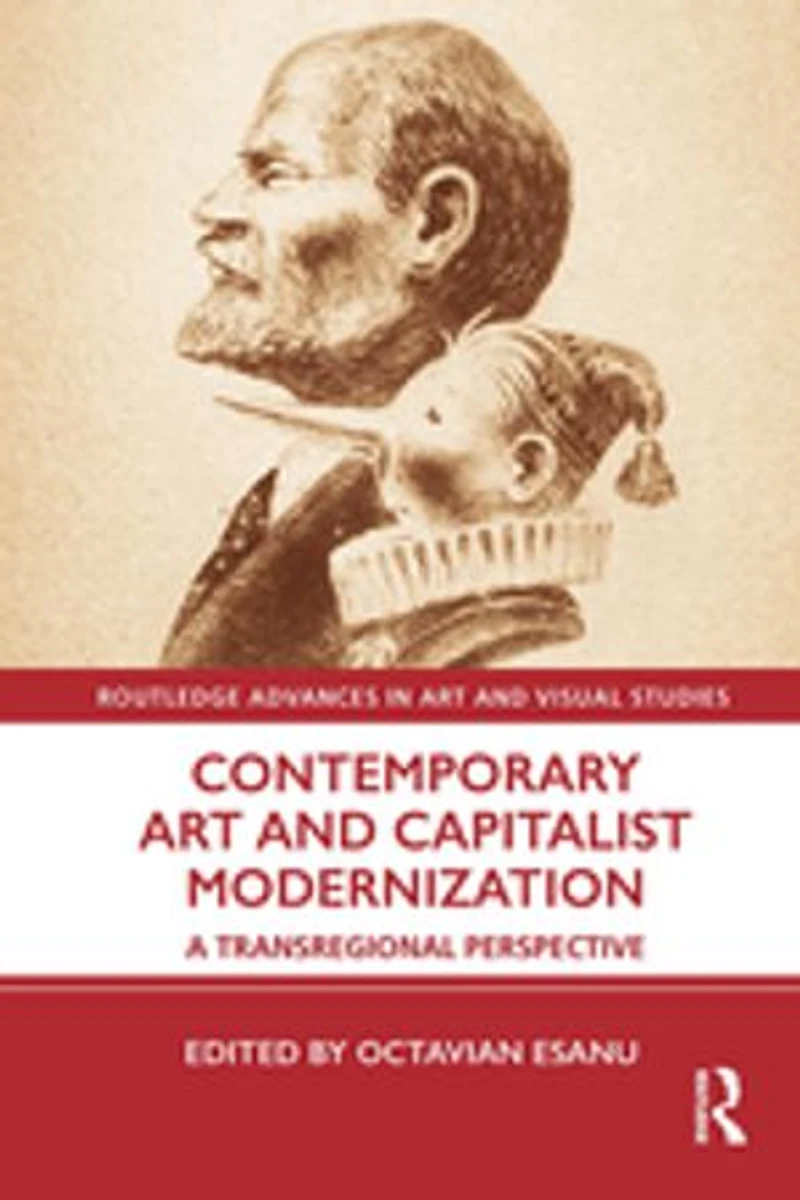

Contemporary Art and Capitalist Modernization: A Transregional Perspective in Brampton, ON
Current price: $78.71
Coles
Contemporary Art and Capitalist Modernization: A Transregional Perspective in Brampton, ON
Current price: $78.71
Loading Inventory...
Size: Kobo eBook
*Product information and pricing may vary - to confirm current pricing, availability, shipping, and return information please contact Coles. In the event of a pricing discrepancy, the retailer's price will apply.
This book addresses the art historical category of "contemporary art" from a transregional perspective, but unlike other volumes of its kind, it focuses in on non-Western instantiations of "the contemporary." The book concerns itself with the historical conditions in which a radically new mode of artistic production, distribution, and consumption - called "contemporary art" - emerged in some countries of Eastern Europe, the post-Soviet republics of the USSR, India, Latin America, and the Middle East, following both local and broader sociopolitical processes of modernization and neoliberalization. Its main argument is that one cannot fully engage with the idea of the "global contemporary" without also paying careful attention to the particular, local, and/or national symptoms of the contemporary condition. Part I is methodological and theoretical in scope, while Part II is historical and documentary. For the latter, a number of case studies address the emergence of the category "contemporary art" in the context of Lebanon, Egypt, India, Hungary, Slovenia, Croatia, Bosnia and Herzegovina, Armenia, and Moldova. The book will be of interest to scholars working in art history, globalism, cultural studies, and postcolonial studies.
This book addresses the art historical category of "contemporary art" from a transregional perspective, but unlike other volumes of its kind, it focuses in on non-Western instantiations of "the contemporary." The book concerns itself with the historical conditions in which a radically new mode of artistic production, distribution, and consumption - called "contemporary art" - emerged in some countries of Eastern Europe, the post-Soviet republics of the USSR, India, Latin America, and the Middle East, following both local and broader sociopolitical processes of modernization and neoliberalization. Its main argument is that one cannot fully engage with the idea of the "global contemporary" without also paying careful attention to the particular, local, and/or national symptoms of the contemporary condition. Part I is methodological and theoretical in scope, while Part II is historical and documentary. For the latter, a number of case studies address the emergence of the category "contemporary art" in the context of Lebanon, Egypt, India, Hungary, Slovenia, Croatia, Bosnia and Herzegovina, Armenia, and Moldova. The book will be of interest to scholars working in art history, globalism, cultural studies, and postcolonial studies.
You May Also Like













Find at Bramalea City Centre in Brampton, ON
Visit at Bramalea City Centre in Brampton, ON