



Gifting Made Simple
Give the Gift of ChoiceClick below to purchase a Bramalea City Centre eGift Card that can be used at participating retailers at Bramalea City Centre.Purchase HereHome
Contemporary Analytic And Linguistic Philosophies
Coles
Loading Inventory...
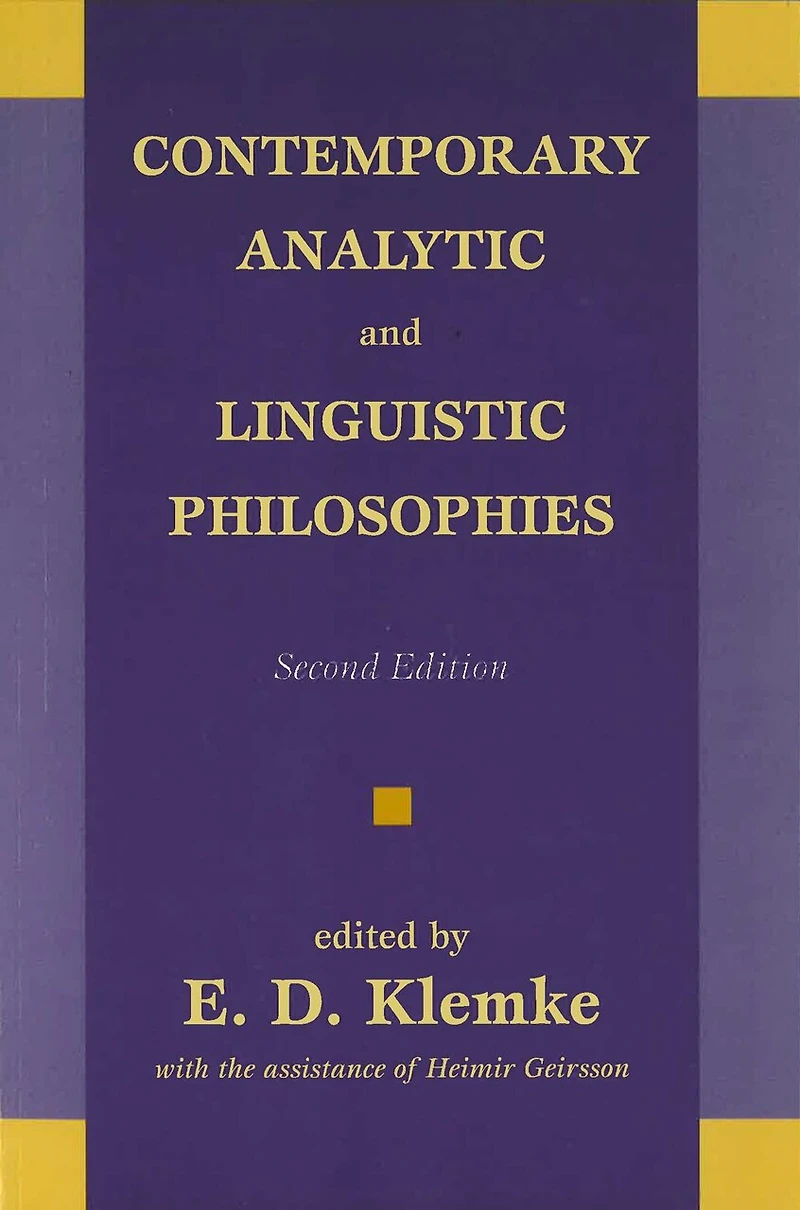
Contemporary Analytic And Linguistic Philosophies in Brampton, ON
Current price: $30.00
Coles
Contemporary Analytic And Linguistic Philosophies in Brampton, ON
Current price: $30.00
Loading Inventory...
Size: Paperback
*Product information and pricing may vary - to confirm current pricing, availability, shipping, and return information please contact Coles. In the event of a pricing discrepancy, the retailer's price will apply.
This new, second edition of the popular college textbook offers the beginning philosophy student a comprehensive introduction to several aspects of one of the most influential schools of thought in the twentieth century. Professor Klemke begins by pointing out the distinctions among the various types of analytic and linguistic philosophies, while emphasizing that they all arose as a response to the formerly predominant school of absolute idealism. After a prologue section containing a representative exposition of idealism by Josiah Royce, the following sections show the radically new philosophical approach of the analytic school in its various guises: realism and common sense (G. E. Moore); logical atomism (Bertrand Russell); logical positivism (A. J. Ayer); conceptual analysis (Gilbert Ryle, G. E. Moore, John Wisdom); logico-metaphysical analysis (Gustav Bergman, W. V. Quine); linguistic analysis (J. L. Austin, P. F. Strawson, J. R. Searle); and the recent development of new realism (Saul Kripke, Hilary Putnam, Tyler Burge, Richard N. Boyd).
This new, second edition of the popular college textbook offers the beginning philosophy student a comprehensive introduction to several aspects of one of the most influential schools of thought in the twentieth century. Professor Klemke begins by pointing out the distinctions among the various types of analytic and linguistic philosophies, while emphasizing that they all arose as a response to the formerly predominant school of absolute idealism. After a prologue section containing a representative exposition of idealism by Josiah Royce, the following sections show the radically new philosophical approach of the analytic school in its various guises: realism and common sense (G. E. Moore); logical atomism (Bertrand Russell); logical positivism (A. J. Ayer); conceptual analysis (Gilbert Ryle, G. E. Moore, John Wisdom); logico-metaphysical analysis (Gustav Bergman, W. V. Quine); linguistic analysis (J. L. Austin, P. F. Strawson, J. R. Searle); and the recent development of new realism (Saul Kripke, Hilary Putnam, Tyler Burge, Richard N. Boyd).
You May Also Like








Find at Bramalea City Centre in Brampton, ON
Visit at Bramalea City Centre in Brampton, ON