



Gifting Made Simple
Give the Gift of ChoiceClick below to purchase a Bramalea City Centre eGift Card that can be used at participating retailers at Bramalea City Centre.Purchase HereHome
Clinical Communication: the Ideal of Patient Empowerment and Reality Vulnerability Dependence
Coles
Loading Inventory...
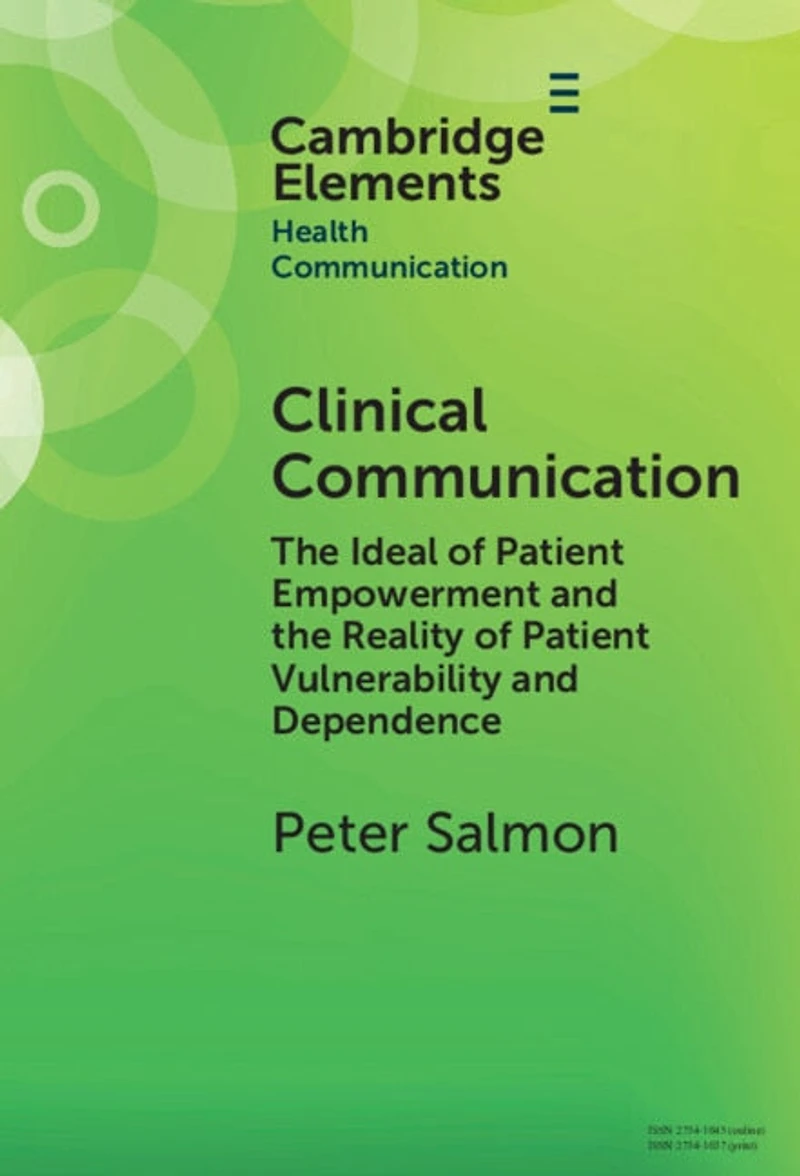
Clinical Communication: the Ideal of Patient Empowerment and Reality Vulnerability Dependence in Brampton, ON
Current price: $94.73
Coles
Clinical Communication: the Ideal of Patient Empowerment and Reality Vulnerability Dependence in Brampton, ON
Current price: $94.73
Loading Inventory...
Size: Hardcover
*Product information and pricing may vary - to confirm current pricing, availability, shipping, and return information please contact Coles. In the event of a pricing discrepancy, the retailer's price will apply.
Good communication is necessary for good clinical care, but defining good communication has been surprisingly difficult and controversial. Many current ideas that identify good communication with certain communication behaviours, or 'skills', were ethically inspired to help doctors see beyond disease to the whole patient. However, promoting specific behaviours is problematic because communication is contextually dependent. In recent decades, observational research into practitioner-patient relationships has begun to provide a scientific basis for the field, identifying patients' vulnerability and practitioners' authority as defining features of fundamentally asymmetric clinical relationships. Future educators can learn from research that explores the judgments that experienced practitioners make when they manage communication dilemmas arising from this asymmetry. In future, instead of the current emphasis on teaching communication behaviours, educators could provide practitioners with knowledge about relationships to inform those judgments, while addressing the attitudes and values that motivate and guide their communication.
Good communication is necessary for good clinical care, but defining good communication has been surprisingly difficult and controversial. Many current ideas that identify good communication with certain communication behaviours, or 'skills', were ethically inspired to help doctors see beyond disease to the whole patient. However, promoting specific behaviours is problematic because communication is contextually dependent. In recent decades, observational research into practitioner-patient relationships has begun to provide a scientific basis for the field, identifying patients' vulnerability and practitioners' authority as defining features of fundamentally asymmetric clinical relationships. Future educators can learn from research that explores the judgments that experienced practitioners make when they manage communication dilemmas arising from this asymmetry. In future, instead of the current emphasis on teaching communication behaviours, educators could provide practitioners with knowledge about relationships to inform those judgments, while addressing the attitudes and values that motivate and guide their communication.
You May Also Like














Find at Bramalea City Centre in Brampton, ON
Visit at Bramalea City Centre in Brampton, ON