



Gifting Made Simple
Give the Gift of ChoiceClick below to purchase a Bramalea City Centre eGift Card that can be used at participating retailers at Bramalea City Centre.Purchase HereHome
Challenge Of Access: Using Road Construction As A Tool In Counterinsurgency
Coles
Loading Inventory...
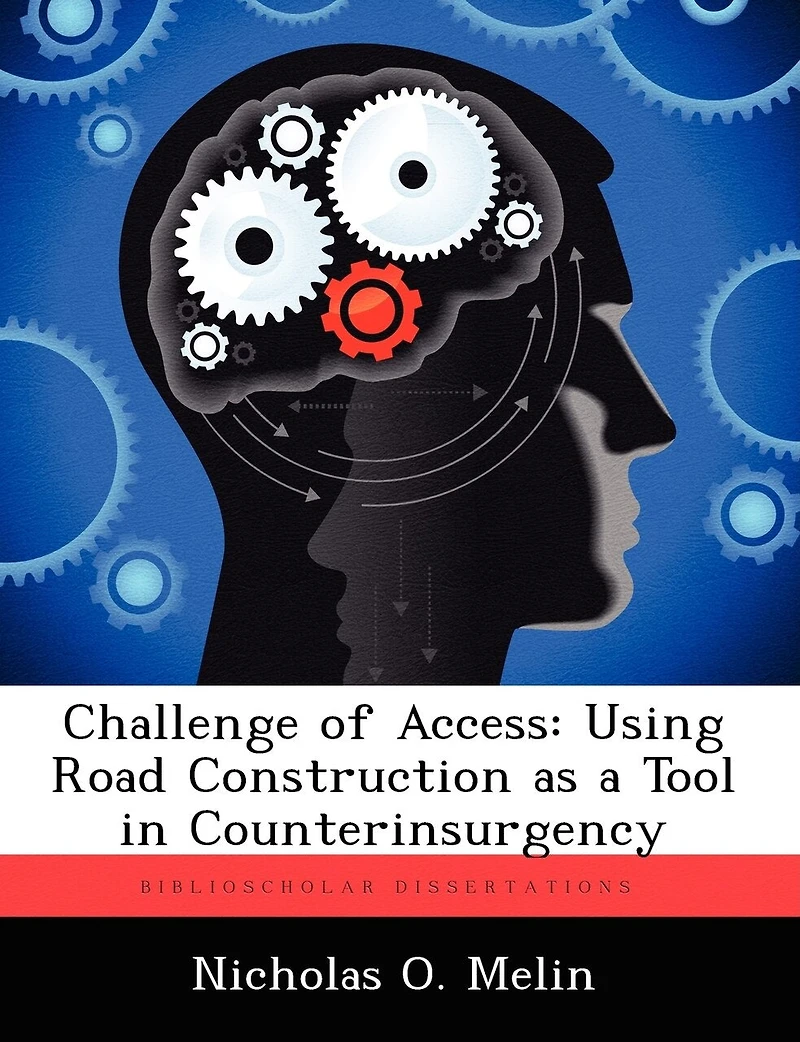
Challenge Of Access: Using Road Construction As A Tool In Counterinsurgency in Brampton, ON
Current price: $23.87
Coles
Challenge Of Access: Using Road Construction As A Tool In Counterinsurgency in Brampton, ON
Current price: $23.87
Loading Inventory...
Size: Paperback
*Product information and pricing may vary - to confirm current pricing, availability, shipping, and return information please contact Coles. In the event of a pricing discrepancy, the retailer's price will apply.
This thesis seeks to illustrate both the benefits and limitations associated with using road building in COIN campaigns in South Asia, as well as highlight factors that should be considered from planning through long-term use. When employed in a counterinsurgency, roads are tools for access and control. They are key terrain that facilitates the operations of the force that controls them. Roads are not, however, short-term tools. The process of building a road takes years to complete, and the effects of a road project on the population cannot be accurately be measured during the construction process itself. Roads require dedication by the counterinsurgent not only to the process of building the road itself, but to a population-focused COIN effort along its length long after the road itself is completed. Roads may not be acceptable to local people in all areas, and road construction without local acceptance can result in the expensive project being perceived as a tool of control rather than a conduit for development. In light of these considerations, the road construction campaign in Afghanistan and Pakistan should be curtailed, with emphasis on nesting road projects directly within the COIN effort. This work has been selected by scholars as being culturally important, and is part of the knowledge base of civilization as we know it. This work was reproduced from the original artifact, and remains as true to the original work as possible. Therefore, you will see the original copyright references, library stamps (as most of these works have been housed in our most important libraries around the world), and other notations in the work. This work is in the public domain in the United States of America, and possibly other nations. Within the United States, you may freely copy and distribute this work, as no entity (individual or corporate) has a copyright on the body of the work. As a reproduction of a historical artifact, this work may contain missing or blurred pages, poor pictures, errant marks, etc. Scholars believe, and we concur, that this work is important enough to be preserved, reproduced, and made generally available to the public. We appreciate your support of the preservation process, and thank you for being an important part of keeping this knowledge alive and relevant.
This thesis seeks to illustrate both the benefits and limitations associated with using road building in COIN campaigns in South Asia, as well as highlight factors that should be considered from planning through long-term use. When employed in a counterinsurgency, roads are tools for access and control. They are key terrain that facilitates the operations of the force that controls them. Roads are not, however, short-term tools. The process of building a road takes years to complete, and the effects of a road project on the population cannot be accurately be measured during the construction process itself. Roads require dedication by the counterinsurgent not only to the process of building the road itself, but to a population-focused COIN effort along its length long after the road itself is completed. Roads may not be acceptable to local people in all areas, and road construction without local acceptance can result in the expensive project being perceived as a tool of control rather than a conduit for development. In light of these considerations, the road construction campaign in Afghanistan and Pakistan should be curtailed, with emphasis on nesting road projects directly within the COIN effort. This work has been selected by scholars as being culturally important, and is part of the knowledge base of civilization as we know it. This work was reproduced from the original artifact, and remains as true to the original work as possible. Therefore, you will see the original copyright references, library stamps (as most of these works have been housed in our most important libraries around the world), and other notations in the work. This work is in the public domain in the United States of America, and possibly other nations. Within the United States, you may freely copy and distribute this work, as no entity (individual or corporate) has a copyright on the body of the work. As a reproduction of a historical artifact, this work may contain missing or blurred pages, poor pictures, errant marks, etc. Scholars believe, and we concur, that this work is important enough to be preserved, reproduced, and made generally available to the public. We appreciate your support of the preservation process, and thank you for being an important part of keeping this knowledge alive and relevant.
You May Also Like











Find at Bramalea City Centre in Brampton, ON
Visit at Bramalea City Centre in Brampton, ON