



Gifting Made Simple
Give the Gift of ChoiceClick below to purchase a Bramalea City Centre eGift Card that can be used at participating retailers at Bramalea City Centre.Purchase HereHome
Bribery as a Third Path to Power?: Political Selection China Beyond Performance and Patronage
Coles
Loading Inventory...
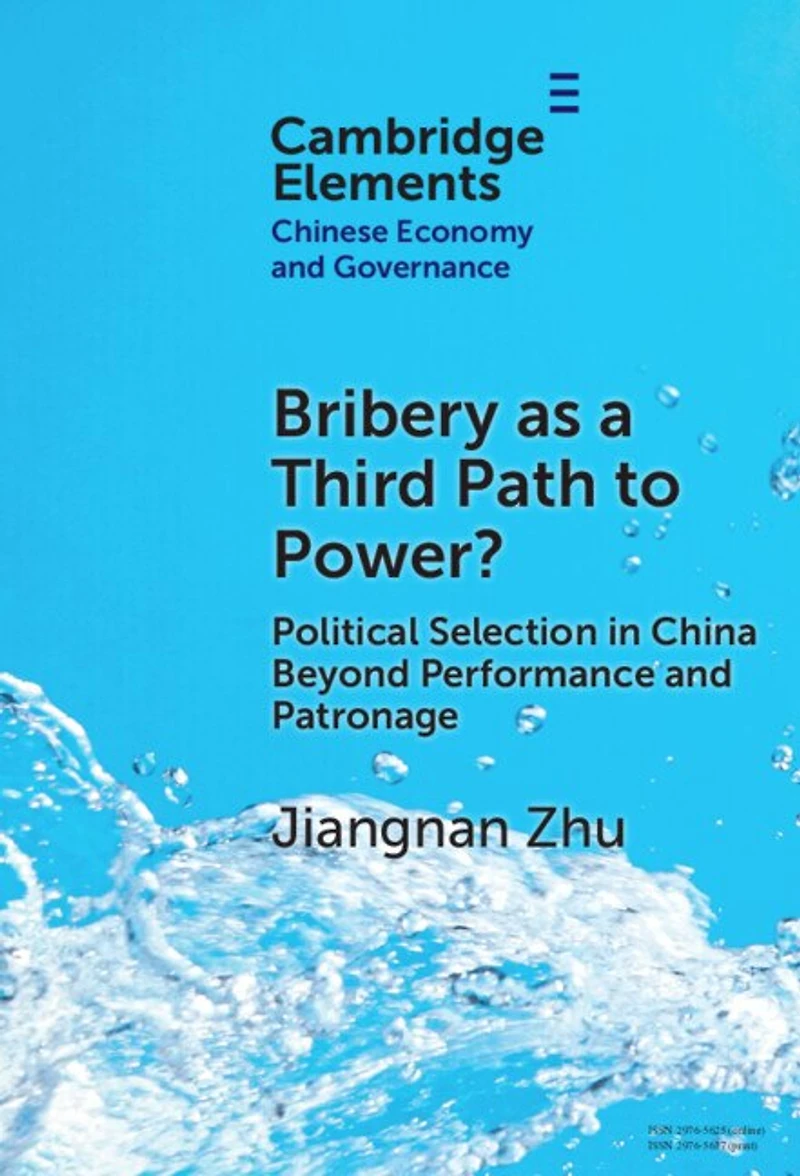
Bribery as a Third Path to Power?: Political Selection China Beyond Performance and Patronage in Brampton, ON
Current price: $94.73
Coles
Bribery as a Third Path to Power?: Political Selection China Beyond Performance and Patronage in Brampton, ON
Current price: $94.73
Loading Inventory...
Size: Hardcover
*Product information and pricing may vary - to confirm current pricing, availability, shipping, and return information please contact Coles. In the event of a pricing discrepancy, the retailer's price will apply.
While bribery has been extensively studied, the dynamics of personnel corruption in the public sector, often known as 'buying and selling of government offices,' remain underexplored. This form of corruption involves leaders' accepting or soliciting bribes from subordinates to influence recruitment, appointment, and promotion decisions, significantly impacting political selection and governance quality. This Element employs a dual perspective – corruption and elite mobility – to analyze the distribution of office-selling across the Chinese administrative matrix and its various forms and implications. Using two novel self-compiled datasets, it proposes a tripartite framework of performance, patronage, and purchase to reimagine political selection in China, highlighting the coexistence of multiple governance models: a meritocratic state prioritizing competence, a clientelist state emphasizing loyalty, and an investment state bound by money. This title is also available as Open Access on Cambridge Core.
While bribery has been extensively studied, the dynamics of personnel corruption in the public sector, often known as 'buying and selling of government offices,' remain underexplored. This form of corruption involves leaders' accepting or soliciting bribes from subordinates to influence recruitment, appointment, and promotion decisions, significantly impacting political selection and governance quality. This Element employs a dual perspective – corruption and elite mobility – to analyze the distribution of office-selling across the Chinese administrative matrix and its various forms and implications. Using two novel self-compiled datasets, it proposes a tripartite framework of performance, patronage, and purchase to reimagine political selection in China, highlighting the coexistence of multiple governance models: a meritocratic state prioritizing competence, a clientelist state emphasizing loyalty, and an investment state bound by money. This title is also available as Open Access on Cambridge Core.
You May Also Like













Find at Bramalea City Centre in Brampton, ON
Visit at Bramalea City Centre in Brampton, ON