



Gifting Made Simple
Give the Gift of ChoiceClick below to purchase a Bramalea City Centre eGift Card that can be used at participating retailers at Bramalea City Centre.Purchase HereHome
Beyond The Furnace: BTF, #208
Coles
Loading Inventory...
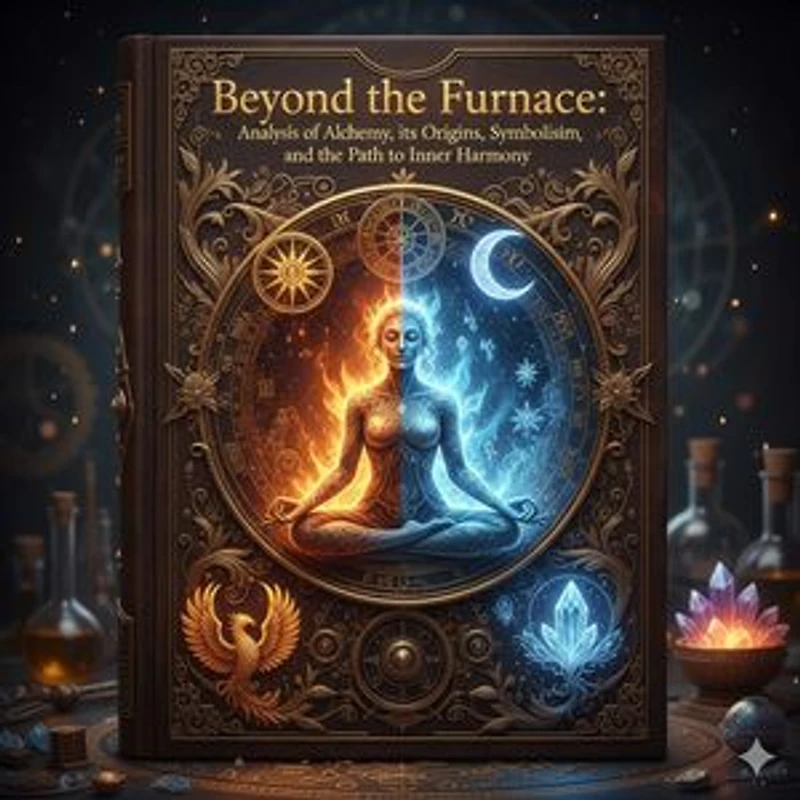
Beyond The Furnace: BTF, #208 in Brampton, ON
Current price: $6.99
Coles
Beyond The Furnace: BTF, #208 in Brampton, ON
Current price: $6.99
Loading Inventory...
Size: Kobo eBook
*Product information and pricing may vary - to confirm current pricing, availability, shipping, and return information please contact Coles. In the event of a pricing discrepancy, the retailer's price will apply.
Alchemy is often misunderstood as a primitive, failed precursor to modern chemistry—a desperate pursuit by greedy men to create physical wealth from common stones. However, as Samuel Tsoaela explores in this comprehensive analysis, the true essence of alchemy is a profound philosophical system and a spiritual technology designed to achieve the "Great Work" ( Magnum Opus ). This is the quest for the refinement of the soul, the balancing of internal contradictions, and the ultimate achievement of inner harmony.
1. The Genesis: African and Ancient Foundations
To trace the history of alchemy is to trace the history of human consciousness itself. Long before the term became popularized in European medieval manuscripts, a sophisticated body of metaphysical and practical knowledge was flourishing across the African continent and the Near East.
The etymology of "alchemy" offers a window into its origins. It is derived from the Arabic al-kīmiyā , which scholars suggest is rooted in the Greek kēmeia . However, deeper research points to the ancient Egyptian name for their own land: Khem (the Black Land). Thus, alchemy was originally "The Art of the Black Land." In ancient Egypt and Nubia, the transformation of matter was never viewed in isolation from the divine.
The African spiritual tradition views life as a "continuous process of becoming." Early practitioners—priests, healers, and metallurgists—recognized that the physical world was a mirror of the spiritual realm. When they refined gold for sacred artifacts, they were performing a symbolic act of purifying the human spirit. They believed that the same laws governing the smelting of ore governed the tempering of the human character.
Alchemy is often misunderstood as a primitive, failed precursor to modern chemistry—a desperate pursuit by greedy men to create physical wealth from common stones. However, as Samuel Tsoaela explores in this comprehensive analysis, the true essence of alchemy is a profound philosophical system and a spiritual technology designed to achieve the "Great Work" ( Magnum Opus ). This is the quest for the refinement of the soul, the balancing of internal contradictions, and the ultimate achievement of inner harmony.
1. The Genesis: African and Ancient Foundations
To trace the history of alchemy is to trace the history of human consciousness itself. Long before the term became popularized in European medieval manuscripts, a sophisticated body of metaphysical and practical knowledge was flourishing across the African continent and the Near East.
The etymology of "alchemy" offers a window into its origins. It is derived from the Arabic al-kīmiyā , which scholars suggest is rooted in the Greek kēmeia . However, deeper research points to the ancient Egyptian name for their own land: Khem (the Black Land). Thus, alchemy was originally "The Art of the Black Land." In ancient Egypt and Nubia, the transformation of matter was never viewed in isolation from the divine.
The African spiritual tradition views life as a "continuous process of becoming." Early practitioners—priests, healers, and metallurgists—recognized that the physical world was a mirror of the spiritual realm. When they refined gold for sacred artifacts, they were performing a symbolic act of purifying the human spirit. They believed that the same laws governing the smelting of ore governed the tempering of the human character.
You May Also Like














Find at Bramalea City Centre in Brampton, ON
Visit at Bramalea City Centre in Brampton, ON