



Gifting Made Simple
Give the Gift of ChoiceClick below to purchase a Bramalea City Centre eGift Card that can be used at participating retailers at Bramalea City Centre.Purchase HereHome
Beat the Lottery: A 500-year-old Kabbalist's Guide to Conquering Chance
Coles
Loading Inventory...
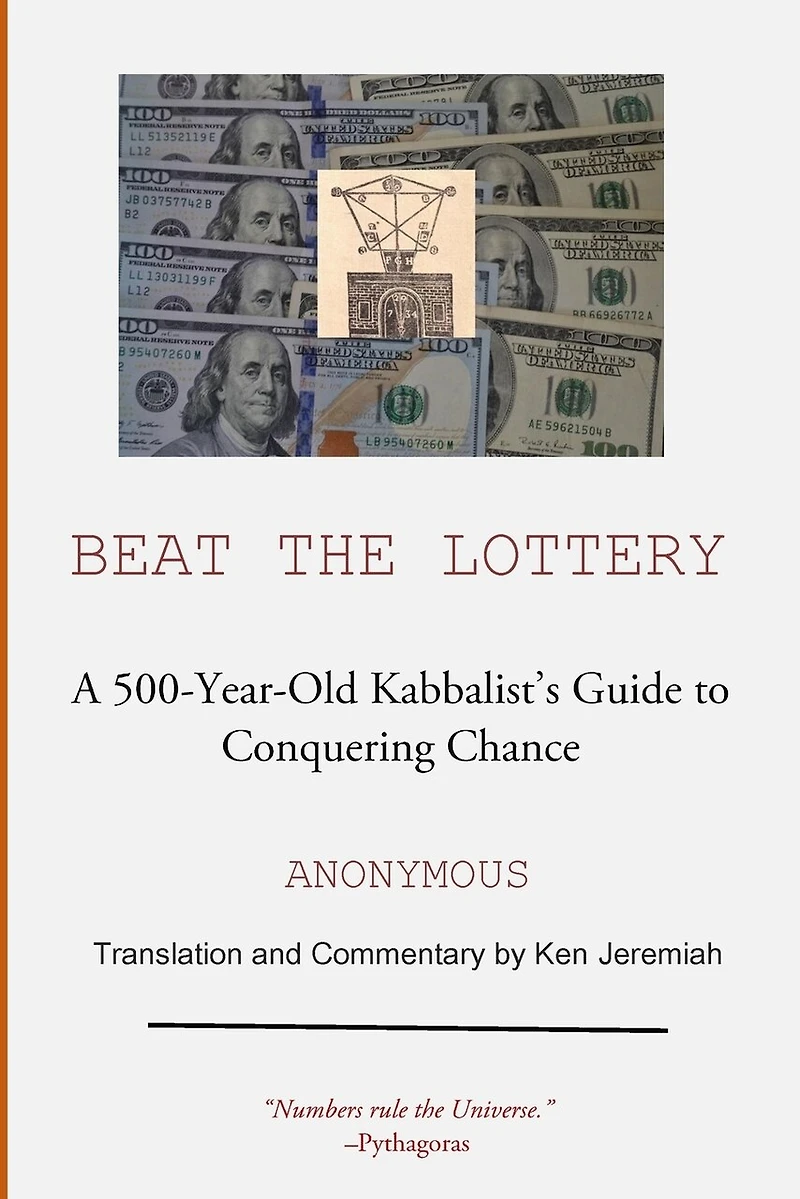
Beat the Lottery: A 500-year-old Kabbalist's Guide to Conquering Chance in Brampton, ON
Current price: $16.95
Coles
Beat the Lottery: A 500-year-old Kabbalist's Guide to Conquering Chance in Brampton, ON
Current price: $16.95
Loading Inventory...
Size: Paperback
*Product information and pricing may vary - to confirm current pricing, availability, shipping, and return information please contact Coles. In the event of a pricing discrepancy, the retailer's price will apply.
BEAT THE LOTTERY: A 500-YEAR-OLD KABBALIST'S GUIDE TO CONQUERING CHANCE is the translation of an anonymous book apparently written to assist readers while selecting numbers that are likely to emerge in lottery drawings worldwide. Some methods were passed down by Heinrich Cornelius Agrippa (1486-1535) and Giovanni Pico della Mirandola (1463-1494). Others came from astrologers and alchemists like Rutilio Benincasa (1555-1626), and Zarathustra (c. 660-583 B.C.E.), while some are credited to sibyls, who were said to preside over oracles at such places as Delphi and Dardania in Greece, and Erythrae in Ionia. Alongside the translations are lengthy notes and supplementary information provided by the translator to facilitate readers' understanding. This first English-language translation (of an exceptionally rare text) will appeal to anyone who plays the lottery, and to anyone who is interested in numerology or ancient religious practices.
BEAT THE LOTTERY: A 500-YEAR-OLD KABBALIST'S GUIDE TO CONQUERING CHANCE is the translation of an anonymous book apparently written to assist readers while selecting numbers that are likely to emerge in lottery drawings worldwide. Some methods were passed down by Heinrich Cornelius Agrippa (1486-1535) and Giovanni Pico della Mirandola (1463-1494). Others came from astrologers and alchemists like Rutilio Benincasa (1555-1626), and Zarathustra (c. 660-583 B.C.E.), while some are credited to sibyls, who were said to preside over oracles at such places as Delphi and Dardania in Greece, and Erythrae in Ionia. Alongside the translations are lengthy notes and supplementary information provided by the translator to facilitate readers' understanding. This first English-language translation (of an exceptionally rare text) will appeal to anyone who plays the lottery, and to anyone who is interested in numerology or ancient religious practices.
You May Also Like















Find at Bramalea City Centre in Brampton, ON
Visit at Bramalea City Centre in Brampton, ON