



Gifting Made Simple
Give the Gift of ChoiceClick below to purchase a Bramalea City Centre eGift Card that can be used at participating retailers at Bramalea City Centre.Purchase HereHome
Basis Sets Computational Chemistry
Coles
Loading Inventory...
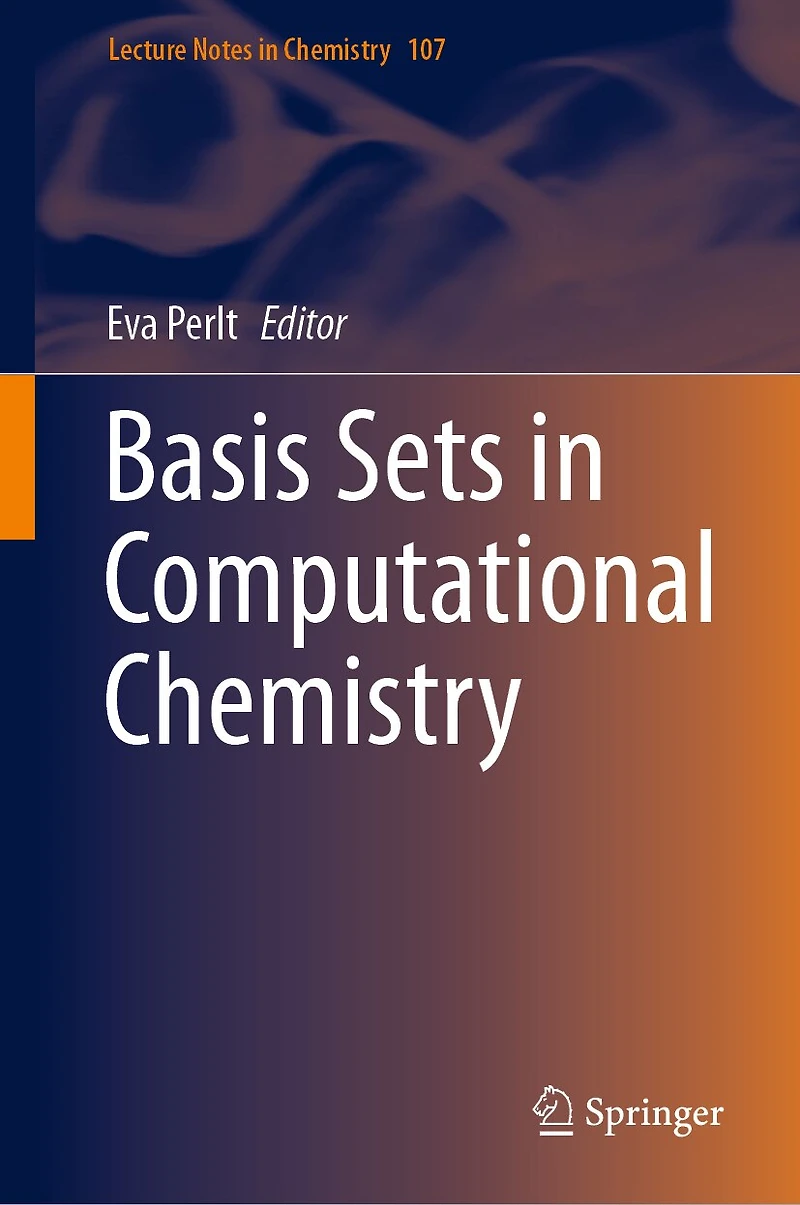
Basis Sets Computational Chemistry in Brampton, ON
Current price: $248.50
Coles
Basis Sets Computational Chemistry in Brampton, ON
Current price: $248.50
Loading Inventory...
Size: Hardcover
*Product information and pricing may vary - to confirm current pricing, availability, shipping, and return information please contact Coles. In the event of a pricing discrepancy, the retailer's price will apply.
This book addresses the construction and application of the major types of basis sets for computational chemistry calculations. In addition to a general introduction, it includes mathematical basics and a discussion of errors arising from incomplete or inappropriate basis sets. The different chapters introduce local orbitals and orbital localization as well as Slater-type orbitals and review basis sets for special applications, such as those for correlated methods, solid-state calculations, heavy atoms and time-dependent adaptable Gaussian bases for quantum dynamics simulations. This detailed review of the purpose of basis sets, their design, applications, possible problems and available solutions provides graduate students and beginning researchers with information not easily obtained from the available textbooks and offers valuable supporting material for any quantum chemistry or computational chemistry course at the graduate and/or undergraduate level. This book is also useful asa guide for researchers who are new to computational chemistry but are willing to extend their research tools by applying such methods.
This book addresses the construction and application of the major types of basis sets for computational chemistry calculations. In addition to a general introduction, it includes mathematical basics and a discussion of errors arising from incomplete or inappropriate basis sets. The different chapters introduce local orbitals and orbital localization as well as Slater-type orbitals and review basis sets for special applications, such as those for correlated methods, solid-state calculations, heavy atoms and time-dependent adaptable Gaussian bases for quantum dynamics simulations. This detailed review of the purpose of basis sets, their design, applications, possible problems and available solutions provides graduate students and beginning researchers with information not easily obtained from the available textbooks and offers valuable supporting material for any quantum chemistry or computational chemistry course at the graduate and/or undergraduate level. This book is also useful asa guide for researchers who are new to computational chemistry but are willing to extend their research tools by applying such methods.
You May Also Like










Find at Bramalea City Centre in Brampton, ON
Visit at Bramalea City Centre in Brampton, ON