



Gifting Made Simple
Give the Gift of ChoiceClick below to purchase a Bramalea City Centre eGift Card that can be used at participating retailers at Bramalea City Centre.Purchase HereHome
Bartolus of Sassoferrato: His Position in the History of Medieval Political Thought
Coles
Loading Inventory...
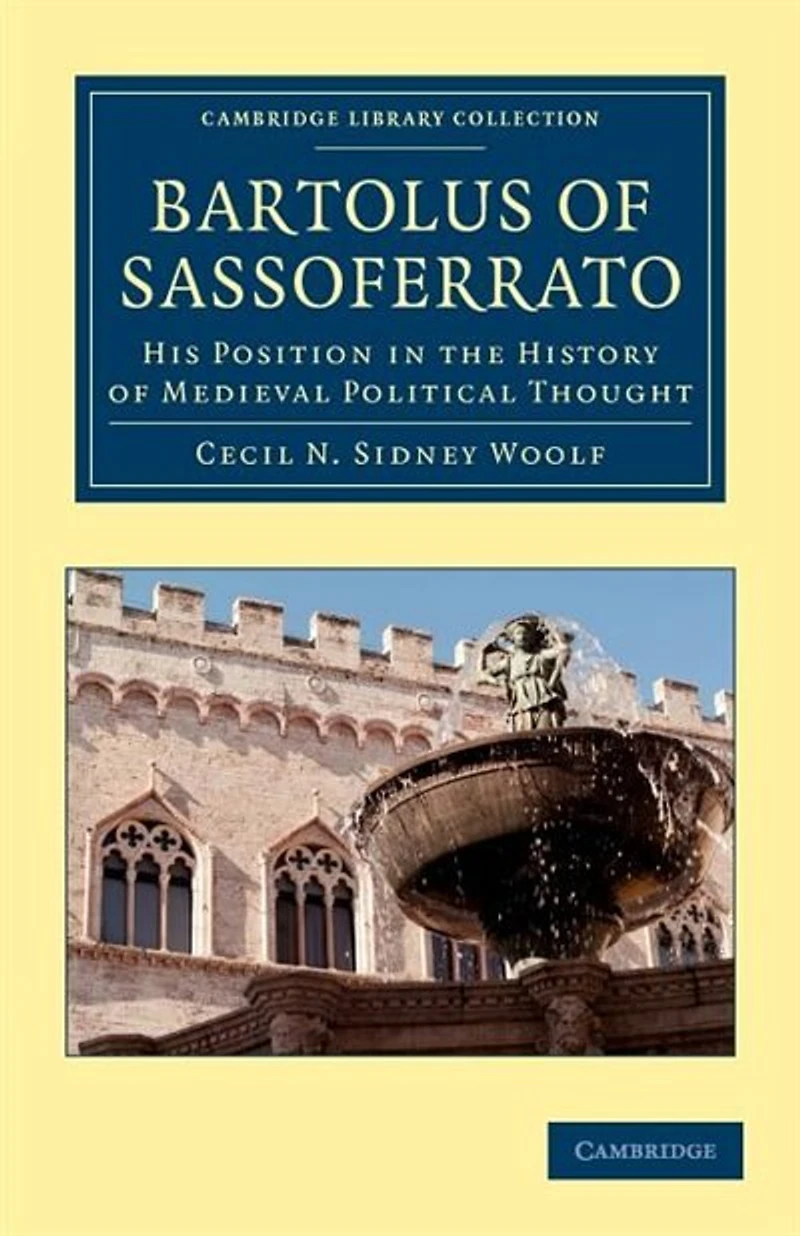
Bartolus of Sassoferrato: His Position in the History of Medieval Political Thought in Brampton, ON
Current price: $78.07
Coles
Bartolus of Sassoferrato: His Position in the History of Medieval Political Thought in Brampton, ON
Current price: $78.07
Loading Inventory...
Size: Paperback
*Product information and pricing may vary - to confirm current pricing, availability, shipping, and return information please contact Coles. In the event of a pricing discrepancy, the retailer's price will apply.
Cecil Nathan Sidney Woolf (1887–1917), Fellow of Trinity College, Cambridge, was killed in the First World War. In this prize-winning book, published in 1913, Woolf examines the way in which the medieval jurist Bartolus of Sassoferrato (1314–57) interprets the Roman Law to make it relevant to fourteenth-century Italian political reality. Considering Bartolus's treatment of the relationships between the Roman Empire and the papacy, kingdoms and city-republics, Woolf places Bartolus's thought in its wider historical context by surveying the complex problem of the empire from the mid-thirteenth century onwards. In particular, he assesses Bartolus's most famous argument that the city is its own emperor. Arguing that Bartolus's influence lasted into the early modern period, both in the practice of law and in the use made of his works by writers like Bodin and Albericus Gentilis, this book also includes a useful table explaining Bartolus's distinctions between imperium and jurisdiction.
Cecil Nathan Sidney Woolf (1887–1917), Fellow of Trinity College, Cambridge, was killed in the First World War. In this prize-winning book, published in 1913, Woolf examines the way in which the medieval jurist Bartolus of Sassoferrato (1314–57) interprets the Roman Law to make it relevant to fourteenth-century Italian political reality. Considering Bartolus's treatment of the relationships between the Roman Empire and the papacy, kingdoms and city-republics, Woolf places Bartolus's thought in its wider historical context by surveying the complex problem of the empire from the mid-thirteenth century onwards. In particular, he assesses Bartolus's most famous argument that the city is its own emperor. Arguing that Bartolus's influence lasted into the early modern period, both in the practice of law and in the use made of his works by writers like Bodin and Albericus Gentilis, this book also includes a useful table explaining Bartolus's distinctions between imperium and jurisdiction.
You May Also Like










Find at Bramalea City Centre in Brampton, ON
Visit at Bramalea City Centre in Brampton, ON