



Gifting Made Simple
Give the Gift of ChoiceClick below to purchase a Bramalea City Centre eGift Card that can be used at participating retailers at Bramalea City Centre.Purchase HereHome
Atlantis and Syracuse: Did Plato's experiences on Sicily inspire the legend? A study on Plato's later political writings
Coles
Loading Inventory...
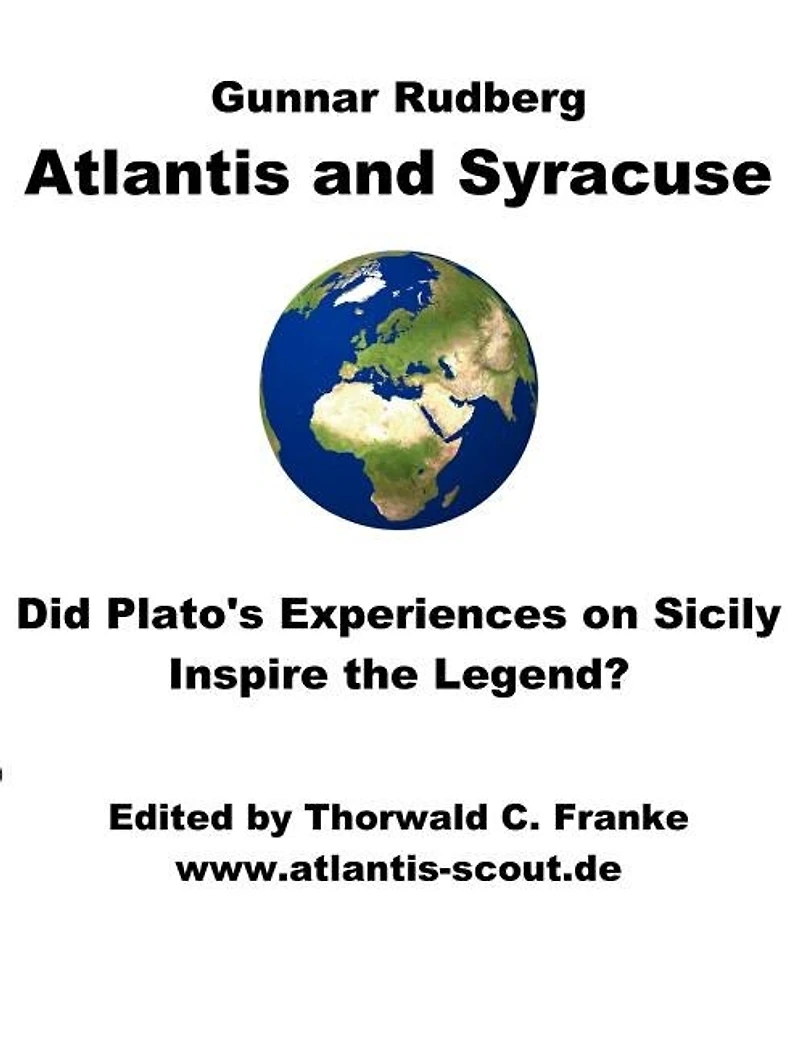
Atlantis and Syracuse: Did Plato's experiences on Sicily inspire the legend? A study on Plato's later political writings in Brampton, ON
Current price: $37.50
Coles
Atlantis and Syracuse: Did Plato's experiences on Sicily inspire the legend? A study on Plato's later political writings in Brampton, ON
Current price: $37.50
Loading Inventory...
Size: Paperback
*Product information and pricing may vary - to confirm current pricing, availability, shipping, and return information please contact Coles. In the event of a pricing discrepancy, the retailer's price will apply.
Syracuse was the place where Plato tried to approach his ideal state in reality - and failed because of the decadence and unjustness of the city and its ruler. Indeed, Syracuse shares many similarities with Plato's Atlantis: Like Atlantis, it was situated on a large and fertile island in the west, a city of abundant wealth and power. As in Atlantis, the ruler's castle and magnificent temples were gathered on a small island. As in Atlantis, there were several harbors, quarries and walls encircling the city. And like Atlantis, Syracuse waged war with Athens. But what sounds like a hot trail to decipher the enigma of Plato's Atlantis lay forgotten for a long time: As early as 1917, far ahead of his time, Gunnar Rudberg wrote this most coherent scientific analysis. The world did not, however, take notice of a Swedish text. Translated now for the first time, Rudberg's thesis is still a very good read on Plato's Atlantis, presenting not only one of the most credible solutions for Plato's Atlantis, but also offering an introduction to Atlantis research in general; the work confronts today's prevailing hypotheses with valuable criticism. Also included is a remarkable classification scheme of ancient and modern Atlantis hypotheses.
Syracuse was the place where Plato tried to approach his ideal state in reality - and failed because of the decadence and unjustness of the city and its ruler. Indeed, Syracuse shares many similarities with Plato's Atlantis: Like Atlantis, it was situated on a large and fertile island in the west, a city of abundant wealth and power. As in Atlantis, the ruler's castle and magnificent temples were gathered on a small island. As in Atlantis, there were several harbors, quarries and walls encircling the city. And like Atlantis, Syracuse waged war with Athens. But what sounds like a hot trail to decipher the enigma of Plato's Atlantis lay forgotten for a long time: As early as 1917, far ahead of his time, Gunnar Rudberg wrote this most coherent scientific analysis. The world did not, however, take notice of a Swedish text. Translated now for the first time, Rudberg's thesis is still a very good read on Plato's Atlantis, presenting not only one of the most credible solutions for Plato's Atlantis, but also offering an introduction to Atlantis research in general; the work confronts today's prevailing hypotheses with valuable criticism. Also included is a remarkable classification scheme of ancient and modern Atlantis hypotheses.
You May Also Like


















Find at Bramalea City Centre in Brampton, ON
Visit at Bramalea City Centre in Brampton, ON