



Gifting Made Simple
Give the Gift of ChoiceClick below to purchase a Bramalea City Centre eGift Card that can be used at participating retailers at Bramalea City Centre.Purchase HereHome
Athanatism: Consciousness and Immortality Under a Skeptic's Microscope
Coles
Loading Inventory...
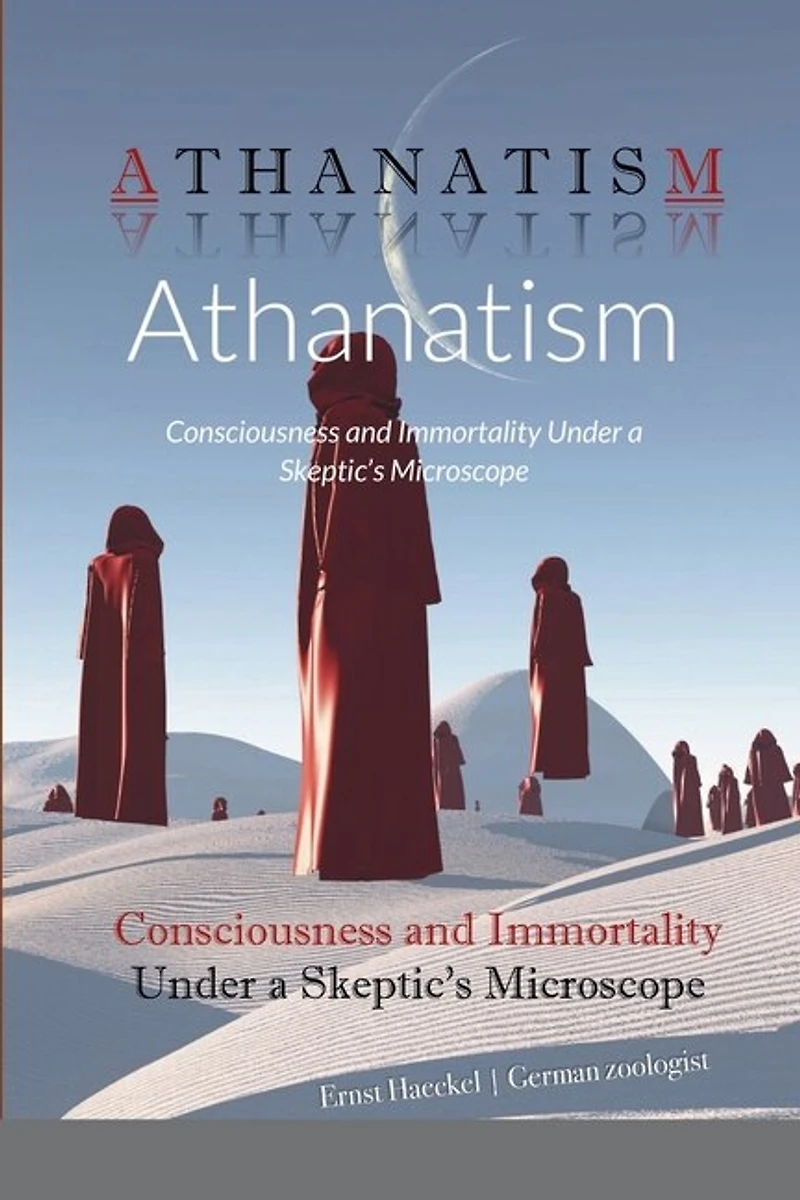
Athanatism: Consciousness and Immortality Under a Skeptic's Microscope in Brampton, ON
Current price: $11.03
Coles
Athanatism: Consciousness and Immortality Under a Skeptic's Microscope in Brampton, ON
Current price: $11.03
Loading Inventory...
Size: Paperback
*Product information and pricing may vary - to confirm current pricing, availability, shipping, and return information please contact Coles. In the event of a pricing discrepancy, the retailer's price will apply.
I find it quite remarkable that an evolutionary zoologist working in the latter part of the 19th century could be so prescient about the utility of studying consciousness from a purely physicalist perspective. While Ernst Haeckel (1834-1919) was readily aware that many of his colleagues held dualistic views on the nature of self-awareness (a soul apart from the body), he saw more clearly than most that such supernatural conjecturing was both unnecessary and non-progressive. By focusing our attention on the sensible world, and in particular the brain, we can develop a much deeper and richer understanding of how and why consciousness must have emerged in the first place. If, however, we adopt a purely spiritualist perspective, arguing that the "soul" is non-material, then we have basically put a halt to any scientific study of the very biochemistry that gives rise to varying degrees of consciousness. Haeckel points out that our own self-awareness is a natural phenomenon and not something part from the world we inhabit. As he so clearly states, "We shall see that consciousness is simply a natural phenomenon like any other psychic quality, and that it is subject to the law of substance like all other natural phenomena."
I find it quite remarkable that an evolutionary zoologist working in the latter part of the 19th century could be so prescient about the utility of studying consciousness from a purely physicalist perspective. While Ernst Haeckel (1834-1919) was readily aware that many of his colleagues held dualistic views on the nature of self-awareness (a soul apart from the body), he saw more clearly than most that such supernatural conjecturing was both unnecessary and non-progressive. By focusing our attention on the sensible world, and in particular the brain, we can develop a much deeper and richer understanding of how and why consciousness must have emerged in the first place. If, however, we adopt a purely spiritualist perspective, arguing that the "soul" is non-material, then we have basically put a halt to any scientific study of the very biochemistry that gives rise to varying degrees of consciousness. Haeckel points out that our own self-awareness is a natural phenomenon and not something part from the world we inhabit. As he so clearly states, "We shall see that consciousness is simply a natural phenomenon like any other psychic quality, and that it is subject to the law of substance like all other natural phenomena."
You May Also Like
















Find at Bramalea City Centre in Brampton, ON
Visit at Bramalea City Centre in Brampton, ON