



Gifting Made Simple
Give the Gift of ChoiceClick below to purchase a Bramalea City Centre eGift Card that can be used at participating retailers at Bramalea City Centre.Purchase HereHome
Asymmetry: The Foundation Of Information
Coles
Loading Inventory...
Asymmetry: The Foundation Of Information in Brampton, ON
Current price: $80.50
Coles
Asymmetry: The Foundation Of Information in Brampton, ON
Current price: $80.50
Loading Inventory...
Size: Hardcover
*Product information and pricing may vary - to confirm current pricing, availability, shipping, and return information please contact Coles. In the event of a pricing discrepancy, the retailer's price will apply.
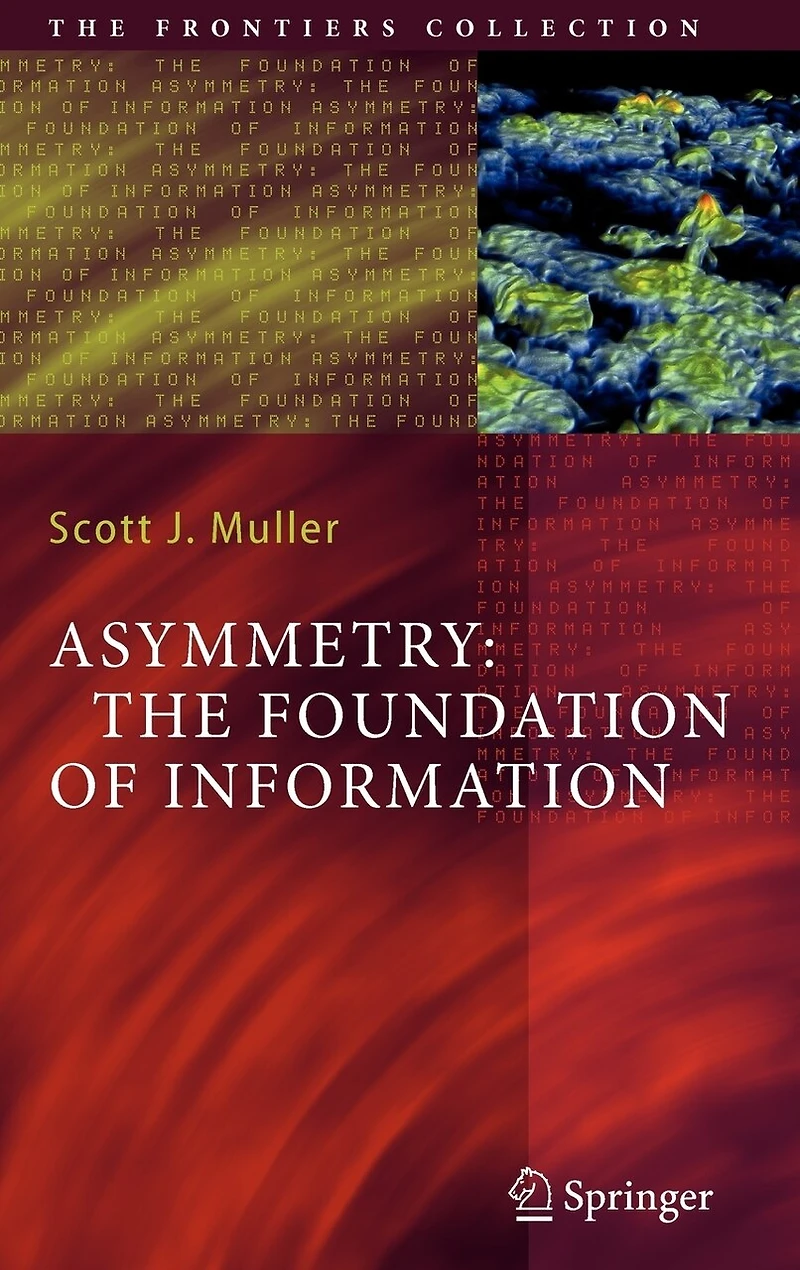
As individual needs have arisen in the fields of physics, electrical engineering and computational science, each has created its own theories of information to serve as conceptual instruments for advancing developments. This book provides a coherent consolidation of information theories from these different fields. The author gives a survey of current theories and then introduces the underlying notion of symmetry, showing how information is related to the capacity of a system to distinguish itself. A formal methodology using group theory is employed and leads to the application of Burnside's Lemma to count distinguishable states. This provides a versatile tool for quantifying complexity and information capacity in any physical system. Written in an informal style, the book is accessible to all researchers in the fields of physics, chemistry, biology, computational science as well as many others.
As individual needs have arisen in the fields of physics, electrical engineering and computational science, each has created its own theories of information to serve as conceptual instruments for advancing developments. This book provides a coherent consolidation of information theories from these different fields. The author gives a survey of current theories and then introduces the underlying notion of symmetry, showing how information is related to the capacity of a system to distinguish itself. A formal methodology using group theory is employed and leads to the application of Burnside's Lemma to count distinguishable states. This provides a versatile tool for quantifying complexity and information capacity in any physical system. Written in an informal style, the book is accessible to all researchers in the fields of physics, chemistry, biology, computational science as well as many others.
You May Also Like











Find at Bramalea City Centre in Brampton, ON
Visit at Bramalea City Centre in Brampton, ON