



Gifting Made Simple
Give the Gift of ChoiceClick below to purchase a Bramalea City Centre eGift Card that can be used at participating retailers at Bramalea City Centre.Purchase HereHome
Assessing Risks to Health: Methodologic Approaches
Coles
Loading Inventory...
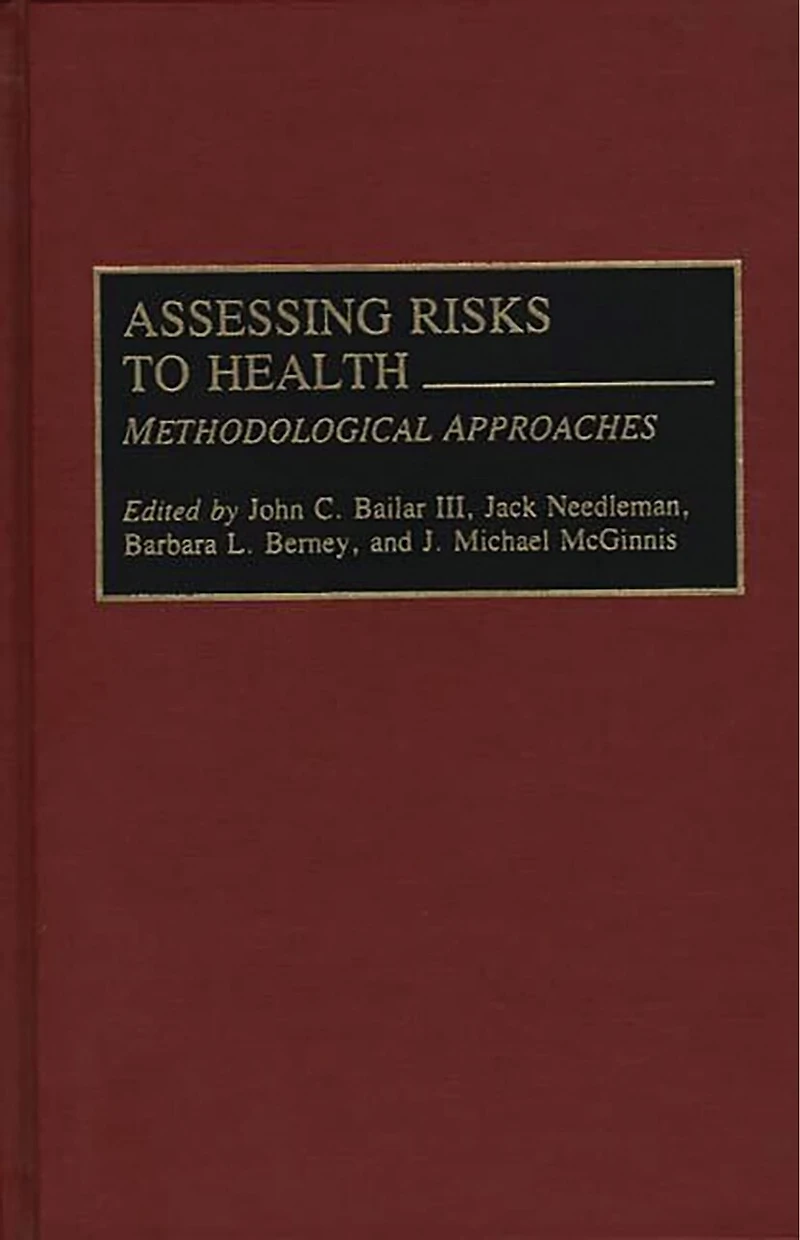
Assessing Risks to Health: Methodologic Approaches in Brampton, ON
Current price: $146.50
Coles
Assessing Risks to Health: Methodologic Approaches in Brampton, ON
Current price: $146.50
Loading Inventory...
Size: Hardcover
*Product information and pricing may vary - to confirm current pricing, availability, shipping, and return information please contact Coles. In the event of a pricing discrepancy, the retailer's price will apply.
Risk assessment is a highly important activity of numerous governmental health and regulatory bodies. It is on the accuracy of quantitative and qualitative measurement that the decisions of government policymakers depend. Those decisions, of course, are intended to manage risks. That management frequently involves regulations over a wide range of individual and environmental exposures. Bailar and his colleagues examine the methodological challenges faced by federal agencies involved in risk assessment and the sometimes controversial implications and consequences of methodological considerations. The authors query how, given a choice of methods, one is chosen; the role that method-related issues and problems may have in the acceptance of risk assessment findings; and what impact the controversies regarding methods have on the role of risk assessment in overall risk management. Ten hazards, as assessed by a range of federal agencies with a variety of assessment methods, give topicality and specificity to the analysis. Among the risks addressed are ethylene dibromide, formaldehyde, passive smoking, and the use of mammography for breast cancer screening. The authors conclude with a setting of priorities for risk assessment because risks to human health clearly outstrip resources available for accurate assessment.
Risk assessment is a highly important activity of numerous governmental health and regulatory bodies. It is on the accuracy of quantitative and qualitative measurement that the decisions of government policymakers depend. Those decisions, of course, are intended to manage risks. That management frequently involves regulations over a wide range of individual and environmental exposures. Bailar and his colleagues examine the methodological challenges faced by federal agencies involved in risk assessment and the sometimes controversial implications and consequences of methodological considerations. The authors query how, given a choice of methods, one is chosen; the role that method-related issues and problems may have in the acceptance of risk assessment findings; and what impact the controversies regarding methods have on the role of risk assessment in overall risk management. Ten hazards, as assessed by a range of federal agencies with a variety of assessment methods, give topicality and specificity to the analysis. Among the risks addressed are ethylene dibromide, formaldehyde, passive smoking, and the use of mammography for breast cancer screening. The authors conclude with a setting of priorities for risk assessment because risks to human health clearly outstrip resources available for accurate assessment.
You May Also Like










Find at Bramalea City Centre in Brampton, ON
Visit at Bramalea City Centre in Brampton, ON