



Gifting Made Simple
Give the Gift of ChoiceClick below to purchase a Bramalea City Centre eGift Card that can be used at participating retailers at Bramalea City Centre.Purchase HereHome
Applied Frequency-Domain Electromagnetics
Coles
Loading Inventory...
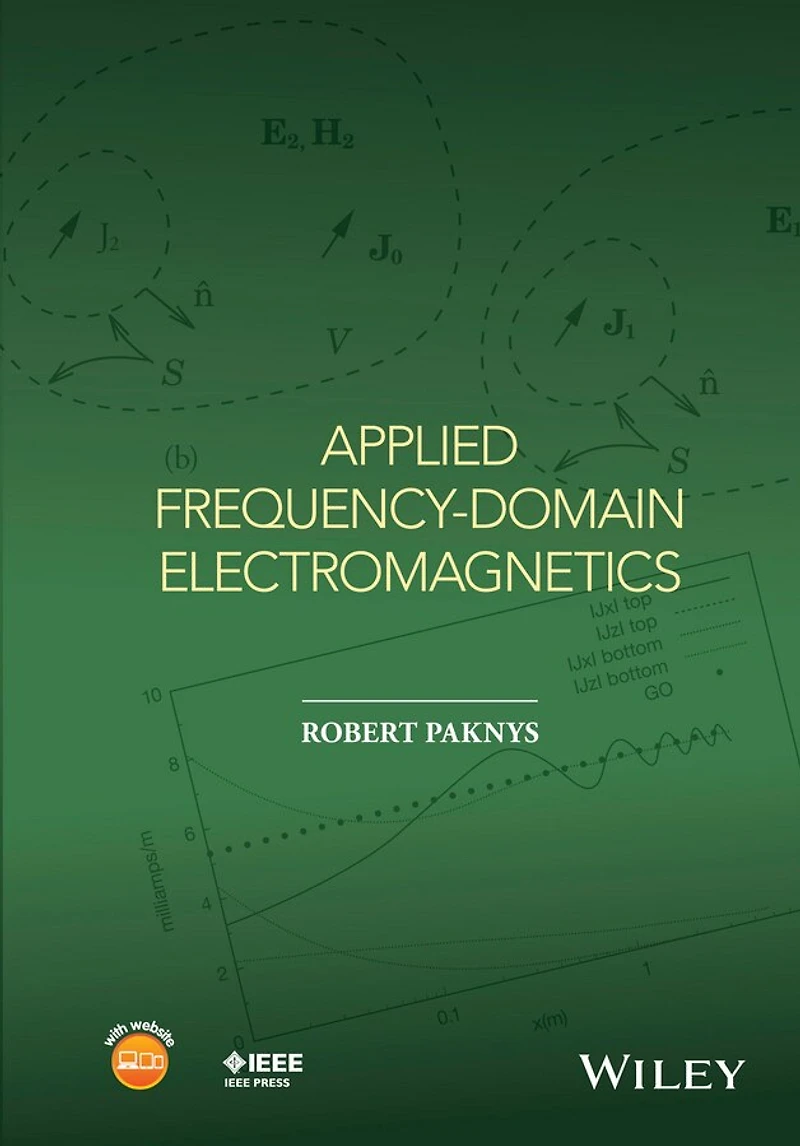
Applied Frequency-Domain Electromagnetics in Brampton, ON
Current price: $201.53
Coles
Applied Frequency-Domain Electromagnetics in Brampton, ON
Current price: $201.53
Loading Inventory...
Size: Hardcover
*Product information and pricing may vary - to confirm current pricing, availability, shipping, and return information please contact Coles. In the event of a pricing discrepancy, the retailer's price will apply.
Understanding electromagnetic wave theory is pivotal in the design of antennas, microwave circuits, radars, and imaging systems. Researchers behind technology advances in these and other areas need to understand both the classical theory of electromagnetics as well as modern and emerging techniques of solving Maxwell's equations. To this end, the book provides a graduate-level treatment of selected analytical and computational methods. The analytical methods include the separation of variables, perturbation theory, Green's functions, geometrical optics, the geometrical theory of diffraction, physical optics, and the physical theory of diffraction. The numerical techniques include mode matching, the method of moments, and the finite element method. The analytical methods provide physical insights that are valuable in the design process and the invention of new devices. The numerical methods are more capable of treating general and complex structures. Together, they form a basis for modern electromagnetic design. The level of presentation allows the reader to immediately begin applying the methods to some problems of moderate complexity. It also provides explanations of the underlying theories so that their capabilities and limitations can be understood.
Understanding electromagnetic wave theory is pivotal in the design of antennas, microwave circuits, radars, and imaging systems. Researchers behind technology advances in these and other areas need to understand both the classical theory of electromagnetics as well as modern and emerging techniques of solving Maxwell's equations. To this end, the book provides a graduate-level treatment of selected analytical and computational methods. The analytical methods include the separation of variables, perturbation theory, Green's functions, geometrical optics, the geometrical theory of diffraction, physical optics, and the physical theory of diffraction. The numerical techniques include mode matching, the method of moments, and the finite element method. The analytical methods provide physical insights that are valuable in the design process and the invention of new devices. The numerical methods are more capable of treating general and complex structures. Together, they form a basis for modern electromagnetic design. The level of presentation allows the reader to immediately begin applying the methods to some problems of moderate complexity. It also provides explanations of the underlying theories so that their capabilities and limitations can be understood.
You May Also Like










Find at Bramalea City Centre in Brampton, ON
Visit at Bramalea City Centre in Brampton, ON