



Gifting Made Simple
Give the Gift of ChoiceClick below to purchase a Bramalea City Centre eGift Card that can be used at participating retailers at Bramalea City Centre.Purchase HereHome
Ancient Rome and the Modern Italian State: Ideological Placemaking, Archaeology, and Architecture
Coles
Loading Inventory...
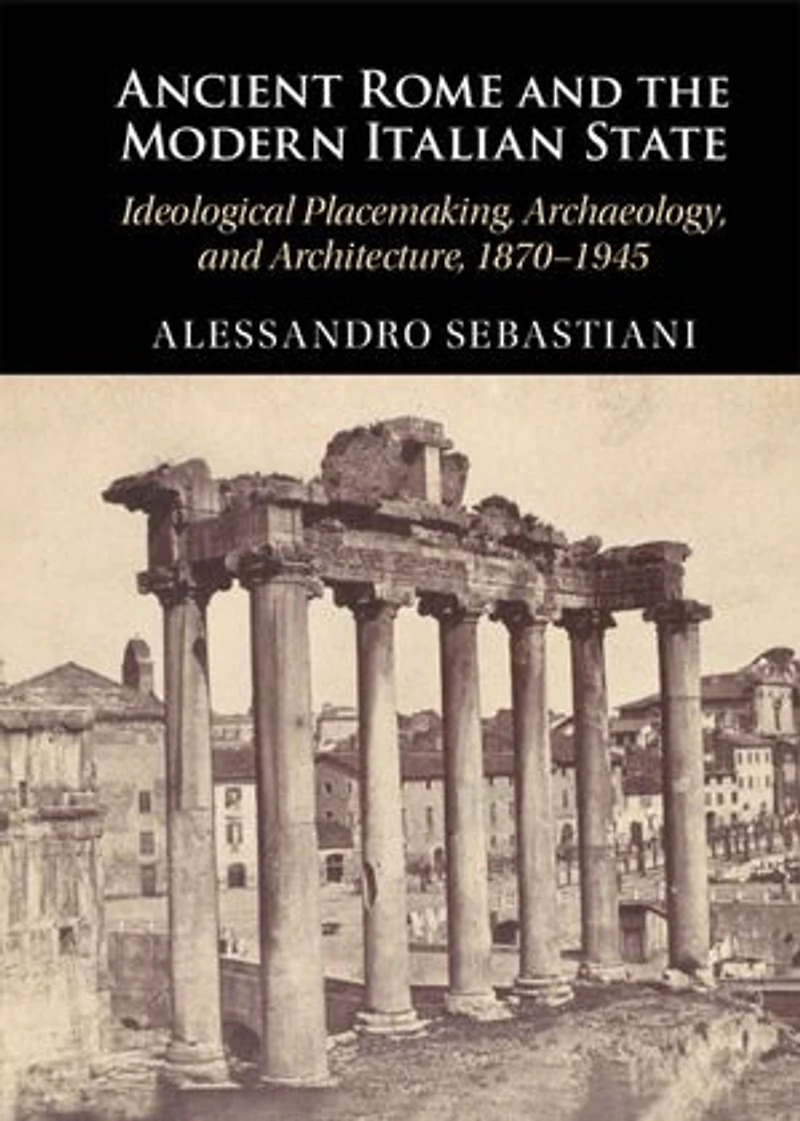
Ancient Rome and the Modern Italian State: Ideological Placemaking, Archaeology, and Architecture in Brampton, ON
Current price: $106.39
Original price: $132.95
Coles
Ancient Rome and the Modern Italian State: Ideological Placemaking, Archaeology, and Architecture in Brampton, ON
Current price: $106.39
Original price: $132.95
Loading Inventory...
Size: Kobo eBook
*Product information and pricing may vary - to confirm current pricing, availability, shipping, and return information please contact Coles. In the event of a pricing discrepancy, the retailer's price will apply.
In this book, Alessandro Sebastiani examines how architecture and urbanism can be used to construct national identity. Using Rome as his case study, he explores how the city was transformed to accommodate different political ideologies in the period from 1870 to the end of World War II. After unification, Rome's classical architecture served as a reference point, guiding transformations of the urban fabric that met contemporary needs but also supported the agenda of the newly-formed Italian state. The advent of fascist state in the 1920s ushered in a different order of ideological placemaking. The monuments of ancient Roman were isolated in order to enhance their structural elegance, a scheme that powerfully conveyed political messages in support of Mussolini's regime. Sebastiani's volume offers a new approach to understanding the sophisticated relationships between archeology, urban planning, and politics within the city of Rome. Moreover, it highlights the consequences of suppressing historical evidence from monuments and archaeological sites.
In this book, Alessandro Sebastiani examines how architecture and urbanism can be used to construct national identity. Using Rome as his case study, he explores how the city was transformed to accommodate different political ideologies in the period from 1870 to the end of World War II. After unification, Rome's classical architecture served as a reference point, guiding transformations of the urban fabric that met contemporary needs but also supported the agenda of the newly-formed Italian state. The advent of fascist state in the 1920s ushered in a different order of ideological placemaking. The monuments of ancient Roman were isolated in order to enhance their structural elegance, a scheme that powerfully conveyed political messages in support of Mussolini's regime. Sebastiani's volume offers a new approach to understanding the sophisticated relationships between archeology, urban planning, and politics within the city of Rome. Moreover, it highlights the consequences of suppressing historical evidence from monuments and archaeological sites.
You May Also Like
![Ancient Rome and Modern America [microform]: A Comparative Study of Morals and Manners](https://cdn.mall.adeptmind.ai/https%253A%252F%252Fcdn.shopify.com%252Fs%252Ffiles%252F1%252F0655%252F8980%252F5233%252Ffiles%252F1_e1d9837e-174f-40ca-b1fa-7be3cfe8629a.jpg_medium.webp)








Find at Bramalea City Centre in Brampton, ON
Visit at Bramalea City Centre in Brampton, ON