



Gifting Made Simple
Give the Gift of ChoiceClick below to purchase a Bramalea City Centre eGift Card that can be used at participating retailers at Bramalea City Centre.Purchase HereHome
An Examination of the Extent of the Social Imperative of Adults
Coles
Loading Inventory...
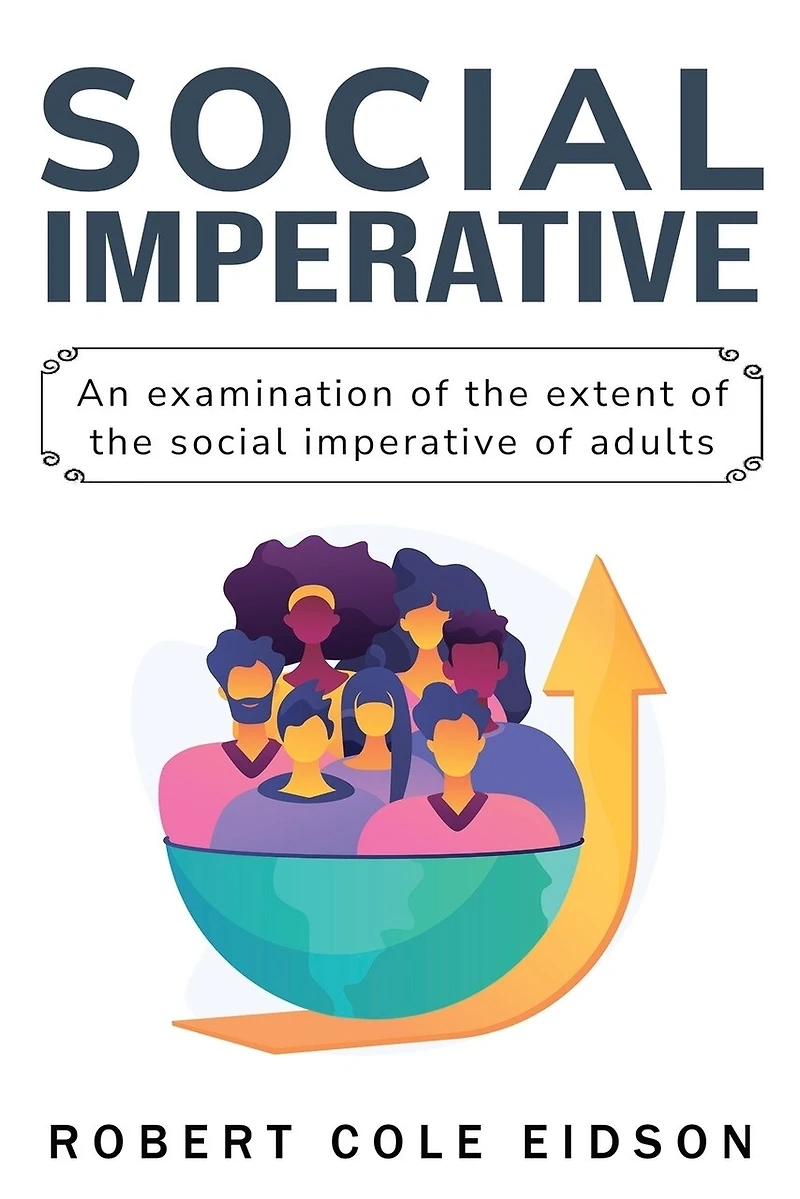
An Examination of the Extent of the Social Imperative of Adults in Brampton, ON
Current price: $61.99
Coles
An Examination of the Extent of the Social Imperative of Adults in Brampton, ON
Current price: $61.99
Loading Inventory...
Size: Paperback
*Product information and pricing may vary - to confirm current pricing, availability, shipping, and return information please contact Coles. In the event of a pricing discrepancy, the retailer's price will apply.
As human beings, we navigate a rich complicated social world every day. Separating people into any number of social categories allows us to make quick intuitive predictions about the properties that people will have, even if we know very little about them. Psychological essentialism proposes that we believe groups have an underlying essence which confers group membership and gives rise to the properties associated with that group (Medin & Ortony, 1989). These beliefs influence predictions we make about the origin of category properties (innate potential), the extent to which members of the same category will share properties (inductive potential), and our willingness to accept changes from one category to another. While previous work has examined the extent of essentialist reasoning about natural kinds such as animals (e.g., Gelman, 2003), the present work aimed to determine whether adults have these intuitive beliefs about social groups. One consequence of essentialist thinking, innate potential, is a belief that group members, by virtue of their underlying essence, will inevitably develop properties associated with their group regardless of external influence. Previous work from Eidson and Coley (2014) showed that adults reasoning under a time constraint exhibited increased innate potential compared to those under a time delay. Experiments 1 through 3 expanded on this work to determine if adults would exhibit similar increases in beliefs about innate potential under cognitive load (Experiment 1), within-subjects for reasoning about gender (Experiment 2) or for other social groups (i.e., race, gender, religion, and political affiliation - Experiment 3). To assess innate potential, participants read two switched-at-birth scenarios in which children were born to members of one social group and raised by another. Then, under cognitive load or a time constraint or time delay, participants made predictions about the child's behaviors and physical characteristics later in life.
As human beings, we navigate a rich complicated social world every day. Separating people into any number of social categories allows us to make quick intuitive predictions about the properties that people will have, even if we know very little about them. Psychological essentialism proposes that we believe groups have an underlying essence which confers group membership and gives rise to the properties associated with that group (Medin & Ortony, 1989). These beliefs influence predictions we make about the origin of category properties (innate potential), the extent to which members of the same category will share properties (inductive potential), and our willingness to accept changes from one category to another. While previous work has examined the extent of essentialist reasoning about natural kinds such as animals (e.g., Gelman, 2003), the present work aimed to determine whether adults have these intuitive beliefs about social groups. One consequence of essentialist thinking, innate potential, is a belief that group members, by virtue of their underlying essence, will inevitably develop properties associated with their group regardless of external influence. Previous work from Eidson and Coley (2014) showed that adults reasoning under a time constraint exhibited increased innate potential compared to those under a time delay. Experiments 1 through 3 expanded on this work to determine if adults would exhibit similar increases in beliefs about innate potential under cognitive load (Experiment 1), within-subjects for reasoning about gender (Experiment 2) or for other social groups (i.e., race, gender, religion, and political affiliation - Experiment 3). To assess innate potential, participants read two switched-at-birth scenarios in which children were born to members of one social group and raised by another. Then, under cognitive load or a time constraint or time delay, participants made predictions about the child's behaviors and physical characteristics later in life.
You May Also Like

















Find at Bramalea City Centre in Brampton, ON
Visit at Bramalea City Centre in Brampton, ON