



Gifting Made Simple
Give the Gift of ChoiceClick below to purchase a Bramalea City Centre eGift Card that can be used at participating retailers at Bramalea City Centre.Purchase HereHome
African(a) Queer Presence: Ethics And Politics Of Negotiation
Coles
Loading Inventory...
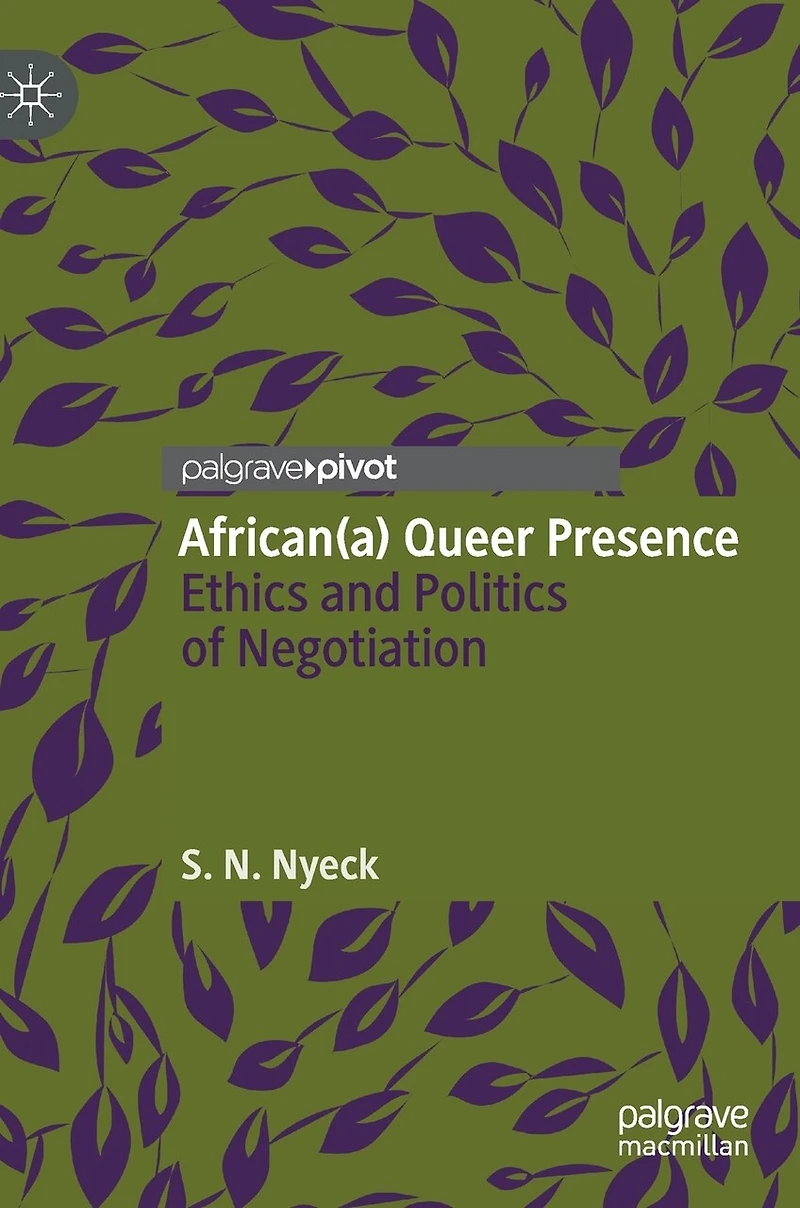
African(a) Queer Presence: Ethics And Politics Of Negotiation in Brampton, ON
Current price: $102.50
Coles
African(a) Queer Presence: Ethics And Politics Of Negotiation in Brampton, ON
Current price: $102.50
Loading Inventory...
Size: Hardcover
*Product information and pricing may vary - to confirm current pricing, availability, shipping, and return information please contact Coles. In the event of a pricing discrepancy, the retailer's price will apply.
To achieve something by way of negation is not just to state a difference. It is to impose a certain kind of violence and domination on things so ordered around for the sake of epistemic, religious, or political expediency also. The notion of queerness presented in this book takes the view that the process of conceptualizing selves "out-of-order" is fundamentally anti-dialectical, negotiated, political and spiritual. Queerness negation manifested as a form of colonial and postcolonial epistemic and political violence defines reality as the clash of ideal and non-ideal categories. The demand to achieve something by way of negation that dialectics imposes on itself is costly because it treats negation as inevitable. From an anti-dialectical standpoint, analyses of the films Proteus and Karmen Geï deal with the processes of freeing queer selves from colonial and postcolonial negation. The book reflects on the conditions and possibilities of queerness affirmation as an ethics of presence grounded in the politics of negotiation following the proposition of nego-feminism and the practical humanism of Senghor to offer an ethical and embodied vision of an ecological depth of feeling and will as foundational to relational possibilities within the African(a) world.
To achieve something by way of negation is not just to state a difference. It is to impose a certain kind of violence and domination on things so ordered around for the sake of epistemic, religious, or political expediency also. The notion of queerness presented in this book takes the view that the process of conceptualizing selves "out-of-order" is fundamentally anti-dialectical, negotiated, political and spiritual. Queerness negation manifested as a form of colonial and postcolonial epistemic and political violence defines reality as the clash of ideal and non-ideal categories. The demand to achieve something by way of negation that dialectics imposes on itself is costly because it treats negation as inevitable. From an anti-dialectical standpoint, analyses of the films Proteus and Karmen Geï deal with the processes of freeing queer selves from colonial and postcolonial negation. The book reflects on the conditions and possibilities of queerness affirmation as an ethics of presence grounded in the politics of negotiation following the proposition of nego-feminism and the practical humanism of Senghor to offer an ethical and embodied vision of an ecological depth of feeling and will as foundational to relational possibilities within the African(a) world.
You May Also Like














Find at Bramalea City Centre in Brampton, ON
Visit at Bramalea City Centre in Brampton, ON