



Gifting Made Simple
Give the Gift of ChoiceClick below to purchase a Bramalea City Centre eGift Card that can be used at participating retailers at Bramalea City Centre.Purchase HereHome
Advances in Modelling of Rainfall Fields
Coles
Loading Inventory...
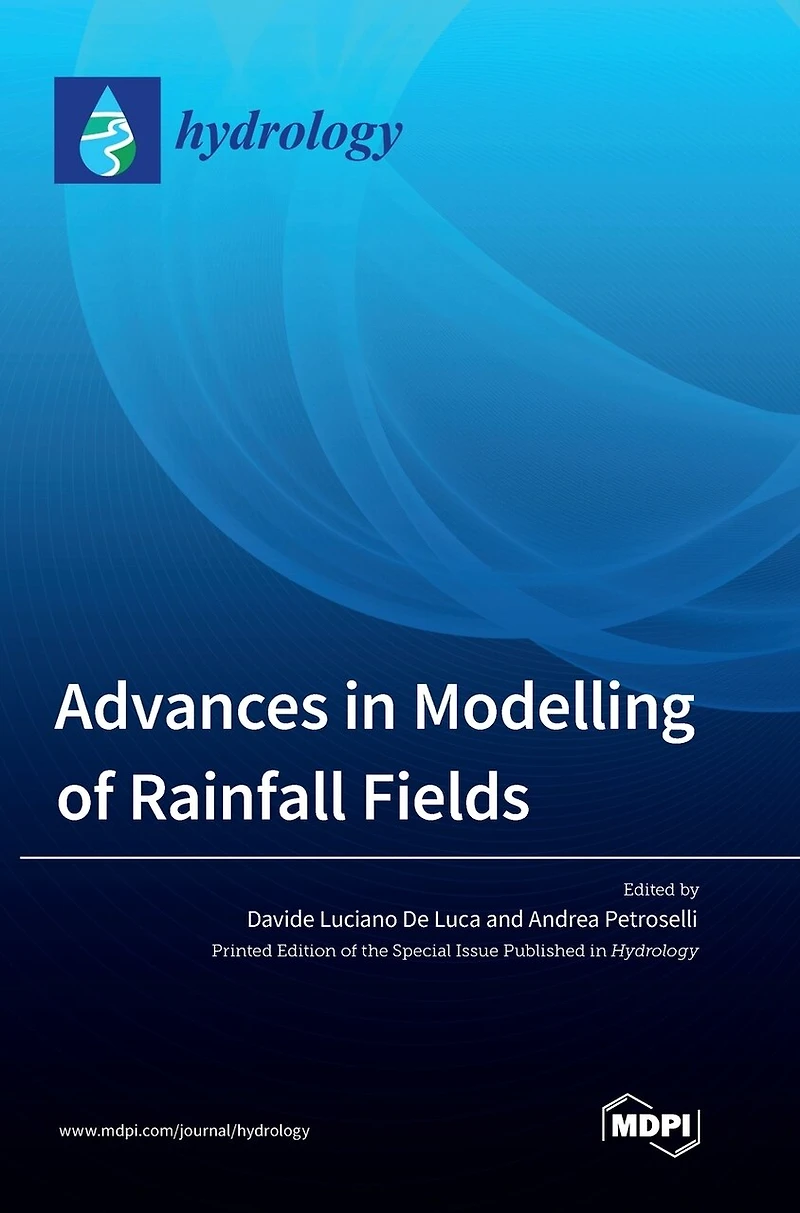
Advances in Modelling of Rainfall Fields in Brampton, ON
Current price: $106.94
Coles
Advances in Modelling of Rainfall Fields in Brampton, ON
Current price: $106.94
Loading Inventory...
Size: Hardcover
*Product information and pricing may vary - to confirm current pricing, availability, shipping, and return information please contact Coles. In the event of a pricing discrepancy, the retailer's price will apply.
Rainfall is the main input for all hydrological models, such as rainfall-runoff models and the forecasting of landslides triggered by precipitation, with its comprehension being clearly essential for effective water resource management as well. The need to improve the modeling of rainfall fields constitutes a key aspect both for efficiently realizing early warning systems and for carrying out analyses of future scenarios related to occurrences and magnitudes for all induced phenomena. The aim of this Special Issue was hence to provide a collection of innovative contributions for rainfall modeling, focusing on hydrological scales and a context of climate changes. We believe that the contribution from the latest research outcomes presented in this Special Issue can shed novel insights on the comprehension of the hydrological cycle and all the phenomena that are a direct consequence of rainfall. Moreover, all these proposed papers can clearly constitute a valid base of knowledge for improving specific key aspects of rainfall modeling, mainly concerning climate change and how it induces modifications in properties such as magnitude, frequency, duration, and the spatial extension of different types of rainfall fields. The goal should also consider providing useful tools to practitioners for quantifying important design metrics in transient hydrological contexts (quantiles of assigned frequency, hazard functions, intensity-duration-frequency curves, etc.).
Rainfall is the main input for all hydrological models, such as rainfall-runoff models and the forecasting of landslides triggered by precipitation, with its comprehension being clearly essential for effective water resource management as well. The need to improve the modeling of rainfall fields constitutes a key aspect both for efficiently realizing early warning systems and for carrying out analyses of future scenarios related to occurrences and magnitudes for all induced phenomena. The aim of this Special Issue was hence to provide a collection of innovative contributions for rainfall modeling, focusing on hydrological scales and a context of climate changes. We believe that the contribution from the latest research outcomes presented in this Special Issue can shed novel insights on the comprehension of the hydrological cycle and all the phenomena that are a direct consequence of rainfall. Moreover, all these proposed papers can clearly constitute a valid base of knowledge for improving specific key aspects of rainfall modeling, mainly concerning climate change and how it induces modifications in properties such as magnitude, frequency, duration, and the spatial extension of different types of rainfall fields. The goal should also consider providing useful tools to practitioners for quantifying important design metrics in transient hydrological contexts (quantiles of assigned frequency, hazard functions, intensity-duration-frequency curves, etc.).
You May Also Like
















Find at Bramalea City Centre in Brampton, ON
Visit at Bramalea City Centre in Brampton, ON