



Gifting Made Simple
Give the Gift of ChoiceClick below to purchase a Bramalea City Centre eGift Card that can be used at participating retailers at Bramalea City Centre.Purchase HereHome
Advanced Design Techniques for RF Power Amplifiers
Coles
Loading Inventory...
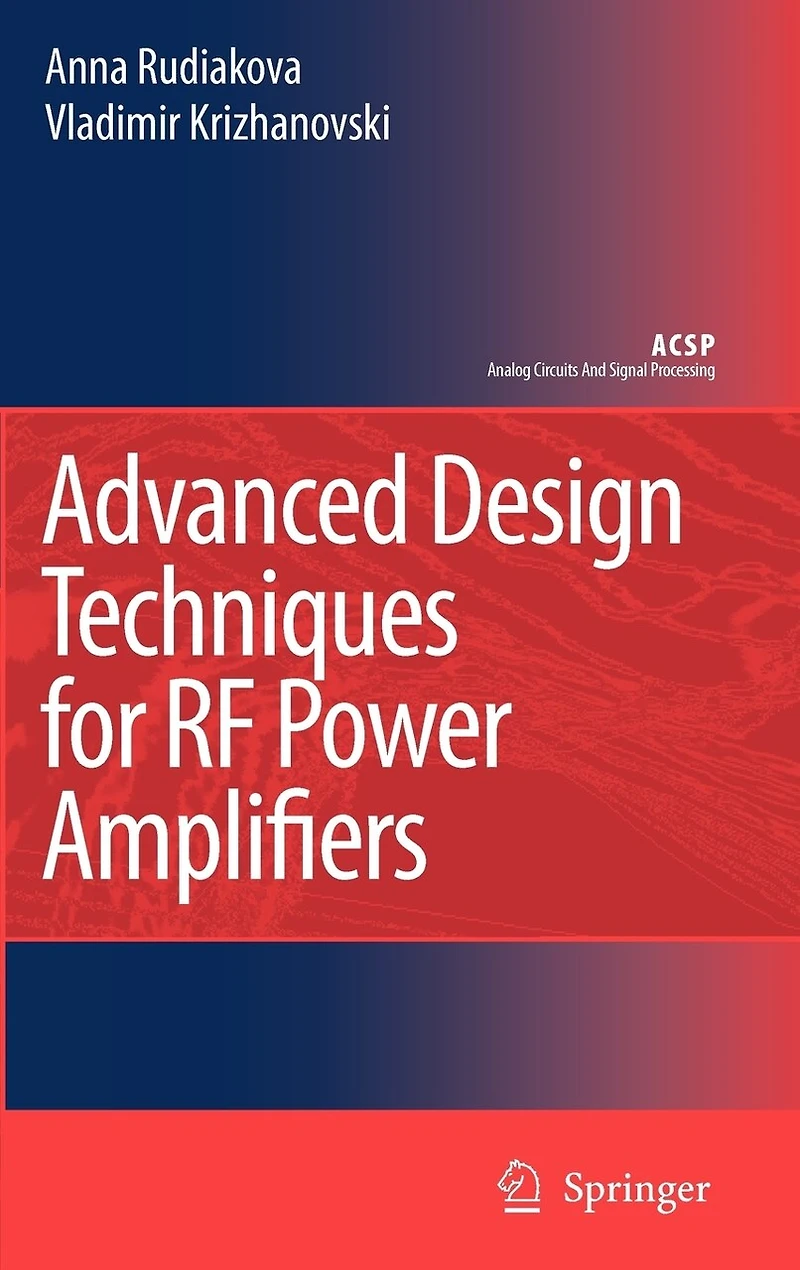
Advanced Design Techniques for RF Power Amplifiers in Brampton, ON
Current price: $160.95
Coles
Advanced Design Techniques for RF Power Amplifiers in Brampton, ON
Current price: $160.95
Loading Inventory...
Size: Hardcover
*Product information and pricing may vary - to confirm current pricing, availability, shipping, and return information please contact Coles. In the event of a pricing discrepancy, the retailer's price will apply.
Advanced Design Techniques for RF Power Amplifiers' main aim is to provide the reader with a deep analysis of theoretical aspects, modelling, and design strategies of RF high-efficiency power amplifiers. Advanced Design Techniques for RF Power Amplifiers begins with an analytical review of current state of the problem. Then it moves to the theoretical analysis of BJT class-F power amplifier near transition frequency and presents the necessary realization conditions. The next part concerns the practical verification and demonstration of the theoretical results. It is followed by the part devoted to the output networks of high-efficiency power ampifiers. The novel type of photonic band-gap structure providing improved characteristics both in the pass and stop bands is proposed. Finally, the fifth-harmonic peaking class F power amplifier design based on the above structure is presented.
Advanced Design Techniques for RF Power Amplifiers' main aim is to provide the reader with a deep analysis of theoretical aspects, modelling, and design strategies of RF high-efficiency power amplifiers. Advanced Design Techniques for RF Power Amplifiers begins with an analytical review of current state of the problem. Then it moves to the theoretical analysis of BJT class-F power amplifier near transition frequency and presents the necessary realization conditions. The next part concerns the practical verification and demonstration of the theoretical results. It is followed by the part devoted to the output networks of high-efficiency power ampifiers. The novel type of photonic band-gap structure providing improved characteristics both in the pass and stop bands is proposed. Finally, the fifth-harmonic peaking class F power amplifier design based on the above structure is presented.
You May Also Like
















Find at Bramalea City Centre in Brampton, ON
Visit at Bramalea City Centre in Brampton, ON