



Gifting Made Simple
Give the Gift of ChoiceClick below to purchase a Bramalea City Centre eGift Card that can be used at participating retailers at Bramalea City Centre.Purchase HereHome
A Study of Dim Object Detection for the Space Surveillance Telescope
Coles
Loading Inventory...
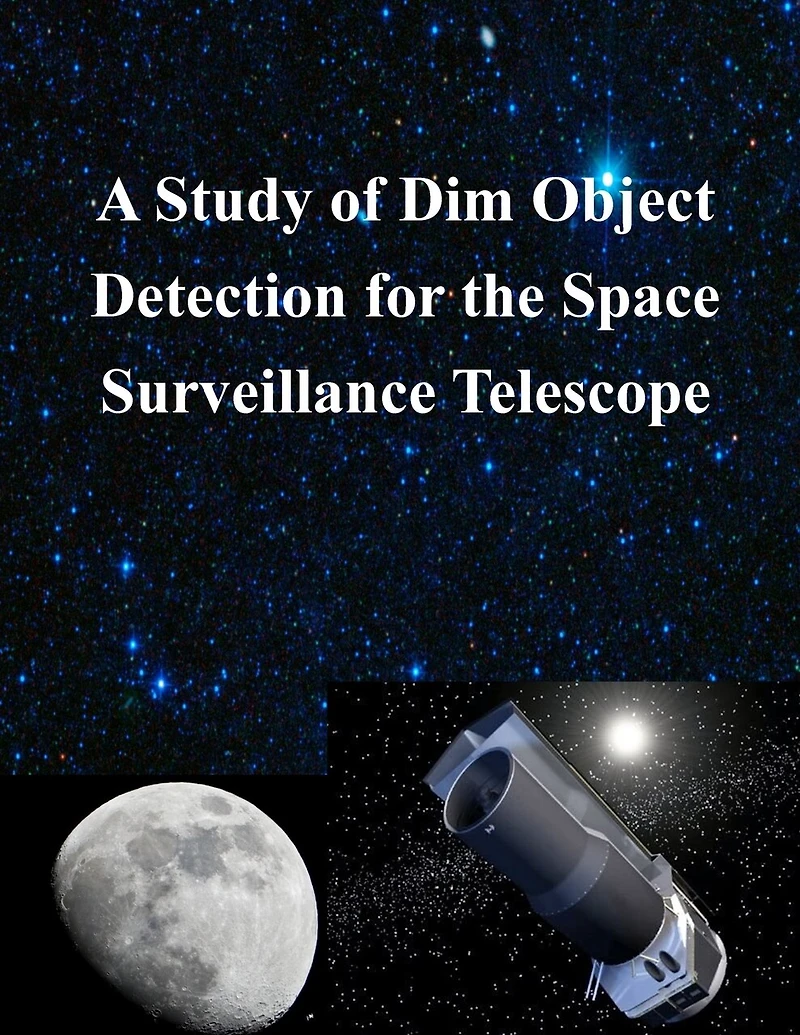
A Study of Dim Object Detection for the Space Surveillance Telescope in Brampton, ON
Current price: $16.95
Coles
A Study of Dim Object Detection for the Space Surveillance Telescope in Brampton, ON
Current price: $16.95
Loading Inventory...
Size: Paperback
*Product information and pricing may vary - to confirm current pricing, availability, shipping, and return information please contact Coles. In the event of a pricing discrepancy, the retailer's price will apply.
Current methods of dim object detection for space surveillance make use of a Gaussian log-likelihood-ratio-test-based detector that only considers the probability that a single point in an image resulted from the propagation of a point source through space. This book proposes the application of a correlating Gaussian log-likelihood-ratio-testbased detector, which makes use of all the pixels in the window, to the arena of dim object detection. The requirements for comparing these detectors using the same threshold of detection are established. The performance of the detectors is compared using images taken by the Space Surveillance Telescope in New Mexico of a geostationary satellite as it goes into and out of eclipse during the vernal equinox March 13-15, 2012. The correlator is determined to offer superior performance based on a comparison of the relative probability of both algorithms to detect objects near the threshold of detection, among other metrics. The additional computational cost of implementation of the correlating detector is analyzed and determined.
Current methods of dim object detection for space surveillance make use of a Gaussian log-likelihood-ratio-test-based detector that only considers the probability that a single point in an image resulted from the propagation of a point source through space. This book proposes the application of a correlating Gaussian log-likelihood-ratio-testbased detector, which makes use of all the pixels in the window, to the arena of dim object detection. The requirements for comparing these detectors using the same threshold of detection are established. The performance of the detectors is compared using images taken by the Space Surveillance Telescope in New Mexico of a geostationary satellite as it goes into and out of eclipse during the vernal equinox March 13-15, 2012. The correlator is determined to offer superior performance based on a comparison of the relative probability of both algorithms to detect objects near the threshold of detection, among other metrics. The additional computational cost of implementation of the correlating detector is analyzed and determined.
You May Also Like











Find at Bramalea City Centre in Brampton, ON
Visit at Bramalea City Centre in Brampton, ON