



Gifting Made Simple
Give the Gift of ChoiceClick below to purchase a Bramalea City Centre eGift Card that can be used at participating retailers at Bramalea City Centre.Purchase HereHome
A Simple Guide to Repetitive Strain Injury, Diagnosis, Treatment and Related Conditions
Coles
Loading Inventory...
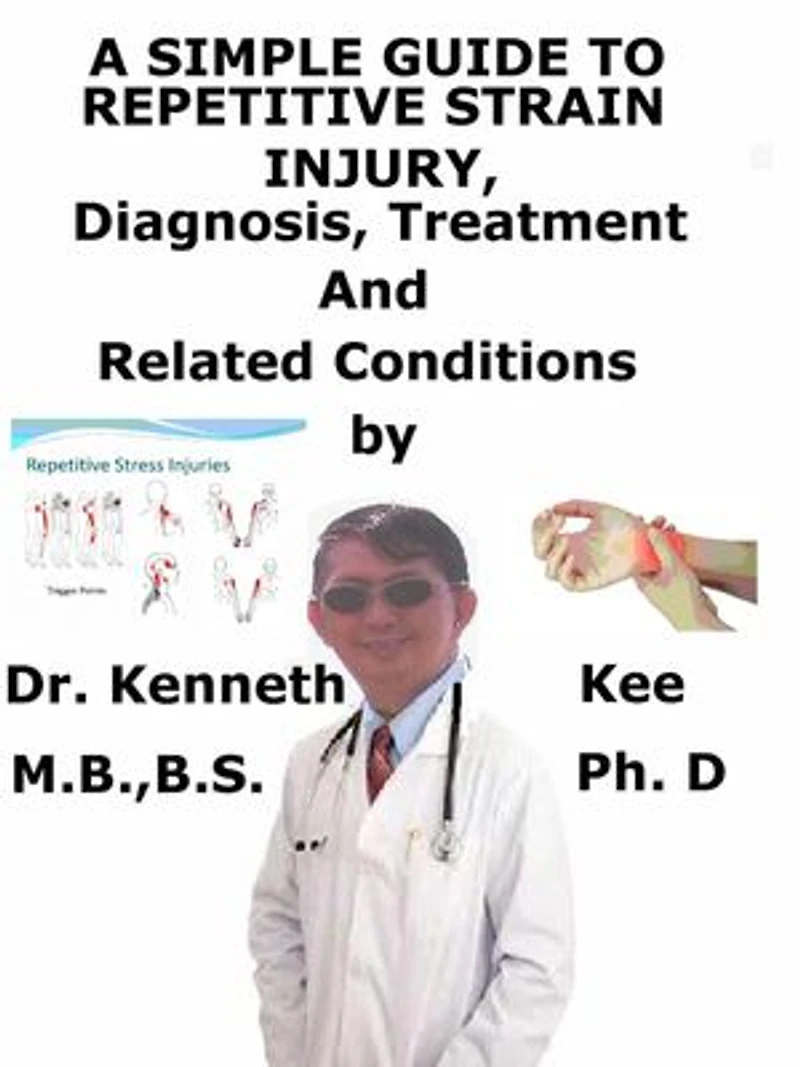
A Simple Guide to Repetitive Strain Injury, Diagnosis, Treatment and Related Conditions in Brampton, ON
Current price: $4.99
Coles
A Simple Guide to Repetitive Strain Injury, Diagnosis, Treatment and Related Conditions in Brampton, ON
Current price: $4.99
Loading Inventory...
Size: Kobo eBook
*Product information and pricing may vary - to confirm current pricing, availability, shipping, and return information please contact Coles. In the event of a pricing discrepancy, the retailer's price will apply.
This book describes Repetitive Strain Injury, Diagnosis and Treatment and Related Diseases
Repetitive strain injury (RSI), also termed Repetitive stress injury, is an injury that causes painful damage to muscles, nerves and tendons through repetitive movements and overuse.
The disorder mostly involves parts of the upper body, such as the forearm, elbow, wrist, hands, neck and shoulders, in jobs (typing) and sports that require repetitive motions (golf).
There are 2 types of RSI depending on the symptoms:
Type 1 RSI – This is when a doctor can diagnose a recognized medical disorder from the symptoms.
Type 1 RSI is a musculoskeletal disorder.
Symptoms normally involve swelling and inflammation of specific muscles or tendons.
Type 2 RSI – This is when a doctor cannot diagnose a medical disorder from the symptoms.
This is normally due to lack of obvious symptoms, apart from pain.
Type 2 RSI is also termed non-specific pain syndrome or diffuse RSI.
Type 2 RSI has a variety of causes such as nerve damage resulting from work activities.
Repetitive strain injury is normally linked with doing a particular activity repeatedly or for a long period of time.
RSI often happens in people who work with computers or perform repetitive manual work.
Certain activities are believed to elevate the risk of RSI such as:
Doing an activity for a long time without rest (prolonged periods)
Doing an activity that requires force such as lifting heavy objects
Poor posture or activities that force the person to work in an uncomfortable position
Cold temperatures
Vibrating equipment
Stress - Increased psychological stress has been shown to worsen RSI
Overuse of a particular muscle or group of muscles
Non-ergonomically designed workspace
Direct pressure to particular areas
Fatigue
The general symptoms of RSI are:
Pain and tenderness in the involved muscle or joint
Throbbing or pulsating sensation in the involved region
Tingling, especially the hand or arm
Loss of strength and sensation
Cramp
Stiffness
Doctors will always perform a physical examination and medical history evaluation, to see if the signs and symptoms can be linked to a specific repetitive activity.
Radiological imaging studies may be used to visualize bony avulsions.
MRI has been quite effective in revealing tendon, ligament, and muscle injuries.
Electro-diagnostic testing can provide evidence of the site and severity of the nerve injury.
The purpose of treatment is to relieve pain and enable the strength and mobility to return.
If the person is diagnosed with repetitive strain injury (RSI), the doctor will probably advise the person to temporarily stop doing the task or activity that is causing the symptoms.
Applying ice (or a damp heated towel) to the affected area can help decrease pain and swelling
Non-steroidal anti-inflammatory oral medicines, such as indomethacin and naproxen, may be given to help reduce the pain and swelling of Repetitive Stress Injury.
Some persons may require physical therapy exercises.
The purposes of these physical therapy exercises are to strengthen the affected muscles, improve flexibility and reduce stiffness.
It may take several months for a person to finish the physical therapy program and recover full strength and functionality
Surgery is a treatment, if non-surgical treatment methods for treating Repetitive Stress Injury are unsuccessful.
TABLE OF CONTENT
Introduction
Chapter 1 Repetitive Strain Injury
Chapter 2 Causes
Chapter 3 Symptoms
Chapter 4 Diagnosis
Chapter 5 Treatment
Chapter 6 Prognosis
Chapter 7 Writer’s Cramp
Chapter 8 Carpal Tunnel Syndrome
Epilogue
This book describes Repetitive Strain Injury, Diagnosis and Treatment and Related Diseases
Repetitive strain injury (RSI), also termed Repetitive stress injury, is an injury that causes painful damage to muscles, nerves and tendons through repetitive movements and overuse.
The disorder mostly involves parts of the upper body, such as the forearm, elbow, wrist, hands, neck and shoulders, in jobs (typing) and sports that require repetitive motions (golf).
There are 2 types of RSI depending on the symptoms:
Type 1 RSI – This is when a doctor can diagnose a recognized medical disorder from the symptoms.
Type 1 RSI is a musculoskeletal disorder.
Symptoms normally involve swelling and inflammation of specific muscles or tendons.
Type 2 RSI – This is when a doctor cannot diagnose a medical disorder from the symptoms.
This is normally due to lack of obvious symptoms, apart from pain.
Type 2 RSI is also termed non-specific pain syndrome or diffuse RSI.
Type 2 RSI has a variety of causes such as nerve damage resulting from work activities.
Repetitive strain injury is normally linked with doing a particular activity repeatedly or for a long period of time.
RSI often happens in people who work with computers or perform repetitive manual work.
Certain activities are believed to elevate the risk of RSI such as:
Doing an activity for a long time without rest (prolonged periods)
Doing an activity that requires force such as lifting heavy objects
Poor posture or activities that force the person to work in an uncomfortable position
Cold temperatures
Vibrating equipment
Stress - Increased psychological stress has been shown to worsen RSI
Overuse of a particular muscle or group of muscles
Non-ergonomically designed workspace
Direct pressure to particular areas
Fatigue
The general symptoms of RSI are:
Pain and tenderness in the involved muscle or joint
Throbbing or pulsating sensation in the involved region
Tingling, especially the hand or arm
Loss of strength and sensation
Cramp
Stiffness
Doctors will always perform a physical examination and medical history evaluation, to see if the signs and symptoms can be linked to a specific repetitive activity.
Radiological imaging studies may be used to visualize bony avulsions.
MRI has been quite effective in revealing tendon, ligament, and muscle injuries.
Electro-diagnostic testing can provide evidence of the site and severity of the nerve injury.
The purpose of treatment is to relieve pain and enable the strength and mobility to return.
If the person is diagnosed with repetitive strain injury (RSI), the doctor will probably advise the person to temporarily stop doing the task or activity that is causing the symptoms.
Applying ice (or a damp heated towel) to the affected area can help decrease pain and swelling
Non-steroidal anti-inflammatory oral medicines, such as indomethacin and naproxen, may be given to help reduce the pain and swelling of Repetitive Stress Injury.
Some persons may require physical therapy exercises.
The purposes of these physical therapy exercises are to strengthen the affected muscles, improve flexibility and reduce stiffness.
It may take several months for a person to finish the physical therapy program and recover full strength and functionality
Surgery is a treatment, if non-surgical treatment methods for treating Repetitive Stress Injury are unsuccessful.
TABLE OF CONTENT
Introduction
Chapter 1 Repetitive Strain Injury
Chapter 2 Causes
Chapter 3 Symptoms
Chapter 4 Diagnosis
Chapter 5 Treatment
Chapter 6 Prognosis
Chapter 7 Writer’s Cramp
Chapter 8 Carpal Tunnel Syndrome
Epilogue
You May Also Like












Find at Bramalea City Centre in Brampton, ON
Visit at Bramalea City Centre in Brampton, ON