



Gifting Made Simple
Give the Gift of ChoiceClick below to purchase a Bramalea City Centre eGift Card that can be used at participating retailers at Bramalea City Centre.Purchase HereHome
A Course Regression and Smoothing Methods
Coles
Loading Inventory...
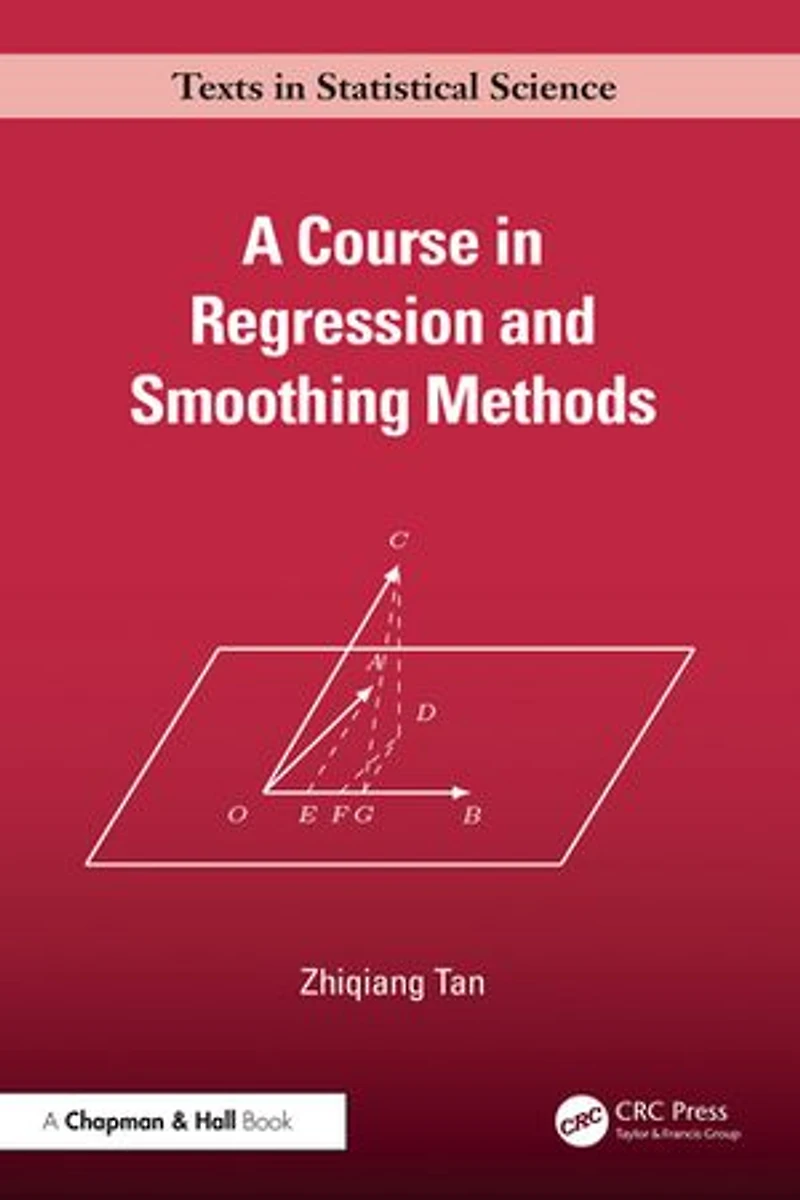
A Course Regression and Smoothing Methods in Brampton, ON
Current price: $177.95
Coles
A Course Regression and Smoothing Methods in Brampton, ON
Current price: $177.95
Loading Inventory...
Size: Hardcover
*Product information and pricing may vary - to confirm current pricing, availability, shipping, and return information please contact Coles. In the event of a pricing discrepancy, the retailer's price will apply.
This book provides a concise account of four components of regression and smoothing methods: linear regression, generalized linear models, spline and kernel methods, and generalized linear mixed models. By bringing together parametric regression and nonparametric smoothing methods, the book emphasizes connections across methods, enabling readers to recognize common structures and to adapt techniques to new problems. While standard texts often focus on the application of statistical methods from a user's perspective, this book covers the foregoing topics from a developer's perspective, with systematic attention to the mathematical, statistical, and computational ideas and results that underlie the methods. The distinction is analogous to that between a user's manual and a developer's manual for software: the goal is not only to demonstrate how to apply the methods, but also how they are derived and implemented. Assuming a basic knowledge of undergraduate statistics, the book is intended primarily as a graduate textbook for the teaching and studying regression and smoothing methods. It serves as a useful resource for students and researchers in Statistics, Data Science, and related fields who wish to move beyond routine application and study modern regression and smoothing methods at a more advanced level. Key Features:
Focuses on core and representative topics in regression and smoothing while addressing important methodological issues often omitted at the introductory level.
Presents regression and smoothing methods in a coherent, interconnected manner that highlights their common structures and relationships.
Explains and demonstrates numerical algorithms in a self-contained way, with R code that implements the methods directly rather than solely relying on existing packages.
Reinforces learning through not only end-of-chapter exercises but also questions and exercises integrated into the main text.
This book provides a concise account of four components of regression and smoothing methods: linear regression, generalized linear models, spline and kernel methods, and generalized linear mixed models. By bringing together parametric regression and nonparametric smoothing methods, the book emphasizes connections across methods, enabling readers to recognize common structures and to adapt techniques to new problems. While standard texts often focus on the application of statistical methods from a user's perspective, this book covers the foregoing topics from a developer's perspective, with systematic attention to the mathematical, statistical, and computational ideas and results that underlie the methods. The distinction is analogous to that between a user's manual and a developer's manual for software: the goal is not only to demonstrate how to apply the methods, but also how they are derived and implemented. Assuming a basic knowledge of undergraduate statistics, the book is intended primarily as a graduate textbook for the teaching and studying regression and smoothing methods. It serves as a useful resource for students and researchers in Statistics, Data Science, and related fields who wish to move beyond routine application and study modern regression and smoothing methods at a more advanced level. Key Features:
Focuses on core and representative topics in regression and smoothing while addressing important methodological issues often omitted at the introductory level.
Presents regression and smoothing methods in a coherent, interconnected manner that highlights their common structures and relationships.
Explains and demonstrates numerical algorithms in a self-contained way, with R code that implements the methods directly rather than solely relying on existing packages.
Reinforces learning through not only end-of-chapter exercises but also questions and exercises integrated into the main text.
You May Also Like








Find at Bramalea City Centre in Brampton, ON
Visit at Bramalea City Centre in Brampton, ON