



Gifting Made Simple
Give the Gift of ChoiceClick below to purchase a Bramalea City Centre eGift Card that can be used at participating retailers at Bramalea City Centre.Purchase HereHome
3-D Shape Estimation and Image Restoration: Exploiting Defocus and Motion-Blur
Coles
Loading Inventory...
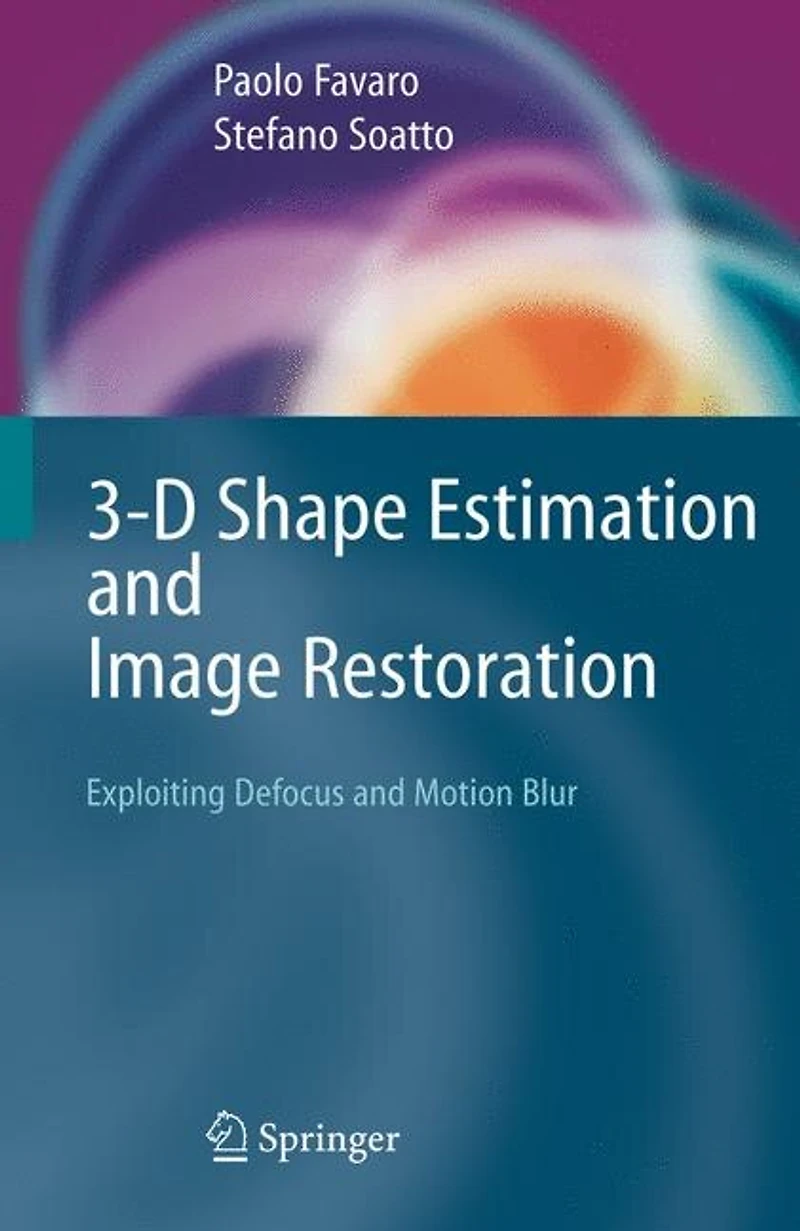
3-D Shape Estimation and Image Restoration: Exploiting Defocus and Motion-Blur in Brampton, ON
Current price: $102.50
Coles
3-D Shape Estimation and Image Restoration: Exploiting Defocus and Motion-Blur in Brampton, ON
Current price: $102.50
Loading Inventory...
Size: Paperback
*Product information and pricing may vary - to confirm current pricing, availability, shipping, and return information please contact Coles. In the event of a pricing discrepancy, the retailer's price will apply.
Images contain information about the spatial properties of the scene they depict. When coupled with suitable assumptions, images can be used to infer thr- dimensional information. For instance, if the scene contains objects made with homogeneous material, such as marble, variations in image intensity can be - sociated with variations in shape, and hence the "shading" in the image can be exploited to infer the "shape" of the scene (shape from shading). Similarly, if the scene contains (statistically) regular structures, variations in image intensity can be used to infer shape (shape from textures). Shading, texture, cast shadows, - cluding boundaries are all "cues" that can be exploited to infer spatial properties of the scene from a single image, when the underlying assumptions are sat- ?ed. In addition, one can obtain spatial cues from multiple images of the same scene taken with changing conditions. For instance, changes in the image due to a moving light source are used in "photometric stereo," changes in the image due to changes in the position of the cameras are used in "stereo," "structure from motion," and "motion blur. " Finally, changes in the image due to changes in the geometry of the camera are used in "shape from defocus. " In this book, we will concentrate on the latter two approaches, motion blur and defocus, which are referred to collectively as "accommodation cues.
Images contain information about the spatial properties of the scene they depict. When coupled with suitable assumptions, images can be used to infer thr- dimensional information. For instance, if the scene contains objects made with homogeneous material, such as marble, variations in image intensity can be - sociated with variations in shape, and hence the "shading" in the image can be exploited to infer the "shape" of the scene (shape from shading). Similarly, if the scene contains (statistically) regular structures, variations in image intensity can be used to infer shape (shape from textures). Shading, texture, cast shadows, - cluding boundaries are all "cues" that can be exploited to infer spatial properties of the scene from a single image, when the underlying assumptions are sat- ?ed. In addition, one can obtain spatial cues from multiple images of the same scene taken with changing conditions. For instance, changes in the image due to a moving light source are used in "photometric stereo," changes in the image due to changes in the position of the cameras are used in "stereo," "structure from motion," and "motion blur. " Finally, changes in the image due to changes in the geometry of the camera are used in "shape from defocus. " In this book, we will concentrate on the latter two approaches, motion blur and defocus, which are referred to collectively as "accommodation cues.













Find at Bramalea City Centre in Brampton, ON
Visit at Bramalea City Centre in Brampton, ON